
Discover Indonesia’s most sought-after expatriate enclaves. Explore detailed area guides featuring local insights, living metrics, and essential amenities to help you find the perfect place to call home.
View All Directories ›
View All Directories ›
View All Directories ›
Deciding where to live is one of the first real decisions a moving family or individual makes in Indonesia, and it shapes almost everything that follows: the length of the daily commute, which schools are realistic options, how easy it is to make friends, and how much everyday life costs. Unlike some countries, where neighborhoods differ mainly in price, Indonesia’s cities — Jakarta above all — have neighborhoods that differ enormously in character, traffic exposure, housing stock and community feel, sometimes within a few kilometers of one another. We recommend treating the neighborhood decision with the same seriousness most families give to choosing a school, and in fact the two decisions are closely linked. If you have not already looked at our schools guide, it is worth reading alongside this one, because in Jakarta especially, the school run can make or break a neighborhood choice that looks perfectly reasonable on a map.
This guide is meant as an orientation, not a substitute for the individual area guides already on this site. Jakarta, Bali and a number of regional cities each have their own dedicated pages with more granular, locally specific detail. What follows here is the bigger picture: how the major expatriate-heavy areas compare, what kind of household each tends to suit, and how to think about the trade-offs before you commit to a lease.
Before naming specific neighborhoods, it is worth being honest about what actually drives day-to-day satisfaction in Indonesia, because it is often not what people expect before they arrive.
Commute time matters more here than in most countries, because traffic in Jakarta in particular does not scale predictably with distance. A destination five kilometers away can take twenty minutes or ninety minutes depending on the time of day, the day of the week and whether there has been rain. We strongly recommend testing a prospective commute at the actual times you would be making it — school run in the morning, return trip in the evening rush — before signing anything, rather than trusting a map’s estimated travel time.
Housing stock varies by area far more than in most Western cities. Some neighborhoods are dominated by older landed houses with gardens, often on irregular street layouts that predate any formal urban planning. Others are almost entirely modern high-rise apartments and serviced residences. Neither is inherently better; it depends on whether your household values space and a garden for children or pets, or values security, amenities and a shorter commute to work.
Community and language also vary by area in ways that are easy to underestimate. Some neighborhoods have decades of accumulated expatriate infrastructure — international supermarkets, familiar restaurant chains, English-speaking clinics, established social and religious communities. Others offer a more immersive, more local experience with less English signage and fewer imported conveniences, which some households actively prefer. It is worth being honest with yourself about which end of that spectrum you actually want to live at, rather than which one sounds better in principle.
Finally, budget in Indonesia is not simply about the headline rent. Furnishing, maintenance responsibility, service charges in apartment buildings, and the cost and reliability of transport to school and work all vary by area and should be part of the comparison. We are not going to quote specific rental figures in this guide, because prices move and vary by property condition, size and negotiation, and any number we gave here would likely be out of date by the time you read it. Treat published price ranges you find elsewhere as a starting point for negotiation, not a fixed fact, and always verify current asking prices directly with agents active in the specific area you are considering.
Jakarta’s expatriate population has historically clustered in a handful of areas across South and Central Jakarta, largely because these areas developed earlier, sit closer to the international schools, and accumulated the restaurants, clinics and community infrastructure that make relocation easier. It is worth understanding the general character of each before deciding where to focus your property search.
Kemang is probably the single most recognized expatriate address in Jakarta, and has been for decades. It grew organically rather than through master planning, which gives it a distinctive mix of older houses, small commercial streets, restaurants, bars and boutique offices sitting close together rather than in separate zoned districts. This organic growth is part of its appeal and part of its downside: Kemang’s narrow, irregular roads were never designed for its current volume of traffic, and congestion at peak hours is a well-known drawback that residents generally accept as the trade-off for the area’s density of amenities and long-established community feel. Families with school-age children should check the actual commute to their chosen school carefully, since Kemang’s central location within South Jakarta can be deceptive on a map.
Senopati and the neighboring Dharmawangsa area sit just north of Kemang and have developed a reputation as a somewhat more polished, café-and-boutique version of the same general lifestyle, with a strong concentration of restaurants, coffee shops and lifestyle retail alongside a mix of housing types from older homes to newer apartments. It appeals to residents who want walkable amenities and a social scene without being quite as deep into Kemang’s older, denser core.
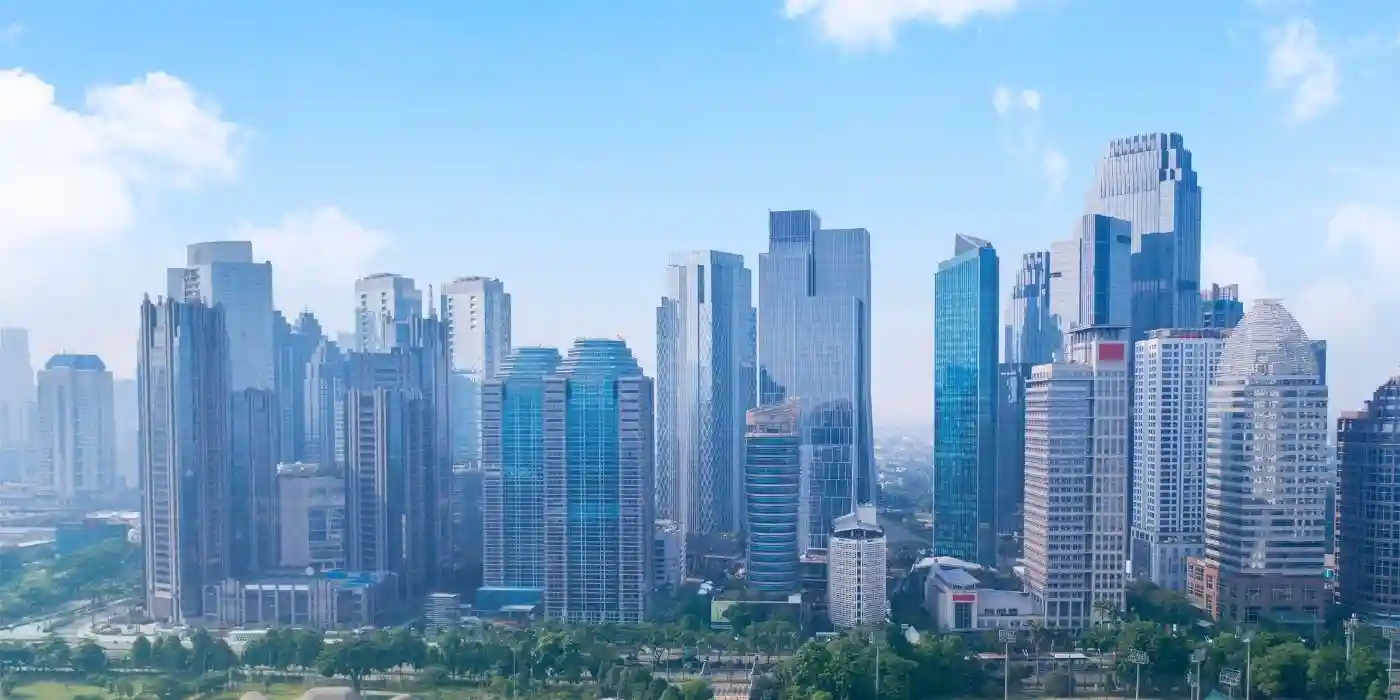
SCBD, the Sudirman Central Business District, is Jakarta’s main high-rise commercial and financial hub, and increasingly a residential option as well, with apartment towers built alongside or above office space. It suits people whose priority is proximity to work in the central business corridor, who want modern building amenities and are comfortable with a more vertical, urban lifestyle rather than a house with a garden. It tends to appeal more to single professionals and couples without school-age children than to larger families, simply because of the format of the housing stock and its distance from most of the school clusters further south.
Kuningan, adjacent to SCBD, follows a broadly similar profile: a mix of embassies, corporate offices and residential towers, generally well-connected to the toll road network and to central Jakarta. It has also become home to some newer international school campuses that have opened within its office and apartment towers, a reminder that Jakarta’s education landscape has moved beyond stand-alone suburban campuses into more urban, vertical formats in recent years.
Permata Hijau and Simprug, just west of the Kemang and Senopati cluster, are generally known as quieter, greener, more established residential areas with a mix of older houses and low-rise developments. They tend to suit families who want a calmer, more residential feel while still being within a reasonable commute of the central business districts and the main school cluster.
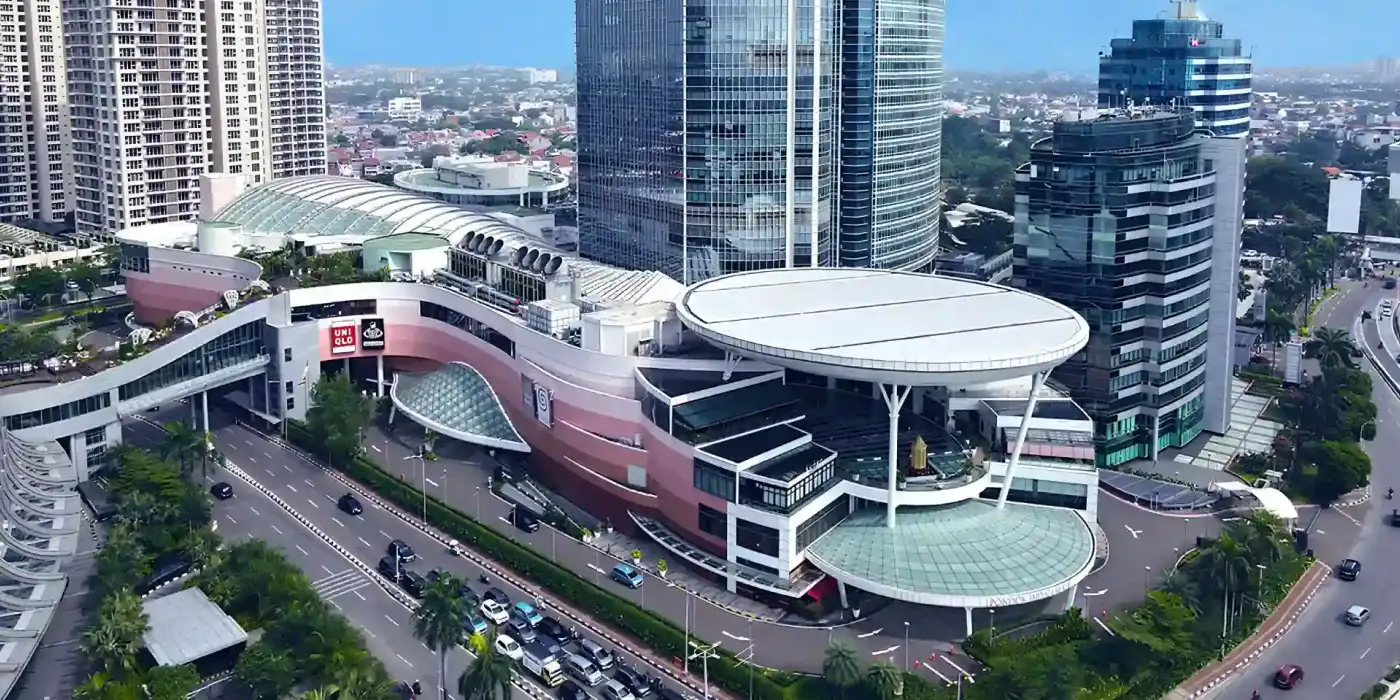
Pondok Indah is one of the more purpose-planned residential areas in South Jakarta, built up somewhat later than Kemang and generally regarded as a step more orderly, with wider roads, a large shopping mall, and closer proximity to several of the schools that South Jakarta families most commonly consider. Its housing stock includes both larger landed homes and newer apartment developments, and it is frequently mentioned alongside Cilandak as one of the areas closest to Jakarta Intercultural School’s campus. Families who want a shorter, more predictable school commute without giving up the option of a house with outdoor space often gravitate here.
Cipete, Lebak Bulus and Cilandak form a broad, somewhat less centrally located band of South Jakarta that has become popular precisely because of its proximity to several major international school campuses, including Jakarta Intercultural School and other schools that have located themselves in this southern corridor. Housing here tends to be a mix of older, spacious properties and newer developments, generally at a slightly lower density than Kemang. Families whose main priority is minimizing the school commute, rather than maximizing walkable nightlife or restaurants, often find this cluster the most practical starting point for their search, even though it can feel less immediately “expat” in day-to-day street life than Kemang or Senopati.
Menteng, in Central Jakarta, is different in character from all of the South Jakarta areas above. It is the city’s oldest planned residential district, built during the Dutch colonial period, with wide tree-lined streets and a concentration of embassies and older colonial-era houses. It carries genuine historical prestige and a strong sense of established neighborhood identity, and it appeals to residents who want a Central Jakarta location, proximity to government and diplomatic institutions, and a quieter, more architecturally distinctive setting than the newer commercial districts further south. It tends to be a longer commute to the South Jakarta school cluster, so families should weigh that trade-off carefully against Menteng’s other advantages.
Beyond these areas, some families — particularly those prioritizing newer housing stock, more space for the money, or proximity to specific schools that have chosen to locate outside the traditional South Jakarta corridor — look further out to satellite developments in Tangerang and the Bumi Serpong Damai (BSD) area, or to Bintaro. These planned townships were built with schools, malls and offices already incorporated into the masterplan, which some families find genuinely more convenient day to day, at the cost of being further from central Jakarta and from the older expatriate social infrastructure. They are not covered by their own dedicated guide on this site at present, but are worth knowing about as an alternative if the traditional South and Central Jakarta areas do not fit your household’s priorities.
Bali’s expatriate population is concentrated in the south of the island, and the different areas there have become known for genuinely distinct lifestyles rather than just different price points.
Canggu has, over roughly the past decade, become closely associated with the digital-nomad, remote-work and surf community, and it has grown extremely quickly as a result. Co-working spaces, international cafes, gyms and a young, transient international population are now well-established features of the area. That same rapid growth has brought the traffic congestion, construction activity and rising costs that tend to accompany fast, less-planned development, and there is ongoing public discussion, including among long-time residents, about whether the area is reaching a point of saturation. Families and longer-term residents considering Canggu should look closely at current road conditions and construction noise in the specific sub-area they are considering, since conditions can vary block by block.
Seminyak and the neighboring Kerobokan area are generally considered more established and more upmarket than Canggu, with a longer history as a tourism and lifestyle hub, a concentration of beach clubs, restaurants and boutique retail, and villa-style housing that ranges from older properties to newer, more polished developments. It suits residents who want Bali’s lifestyle amenities in a somewhat more built-up, resort-adjacent setting.
Kuta and the broader Denpasar area represent Bali’s older, more built-up tourism and administrative core. Denpasar in particular, as the island’s provincial capital, has more of the practical infrastructure — government offices, hospitals, larger local shopping — that a longer-term resident may need to deal with regularly, even if it is not the area most associated with the expatriate lifestyle image of Bali. Kuta itself is heavily oriented toward short-stay tourism and is generally not the first choice for a family or individual settling in for the long term, though its proximity to the airport is a genuine practical advantage for some.
Sanur, on Bali’s southeast coast, has a long-standing reputation as a quieter, calmer alternative to the Canggu and Seminyak corridor, and has become particularly associated with families and retirees who want a slower pace, a walkable beachfront, and a more settled, less transient community than the areas further west. It tends to have less nightlife and fewer co-working spaces than Canggu, which for many residents is precisely the point.
Ubud, inland and away from the coast entirely, has its own long-established identity centered on wellness, yoga, arts and a closer relationship to Balinese cultural and religious life. It draws a somewhat different expatriate population than the coastal areas — often older, often less oriented toward beach or surf lifestyle, and often drawn specifically by the wellness and cultural community that has built up there over many years. It is a meaningfully different climate and daily rhythm than the coast, being cooler and quieter, and is worth visiting in person before assuming it will suit a household used to a beach-town pace of life.
A smaller but growing number of expatriates live and work outside Jakarta and Bali entirely, usually because of a specific job posting, a business investment, or a deliberate choice to live somewhere quieter and less expensive. Each of these cities has its own dedicated guide on this site with more detail; here we simply want to place them in context.
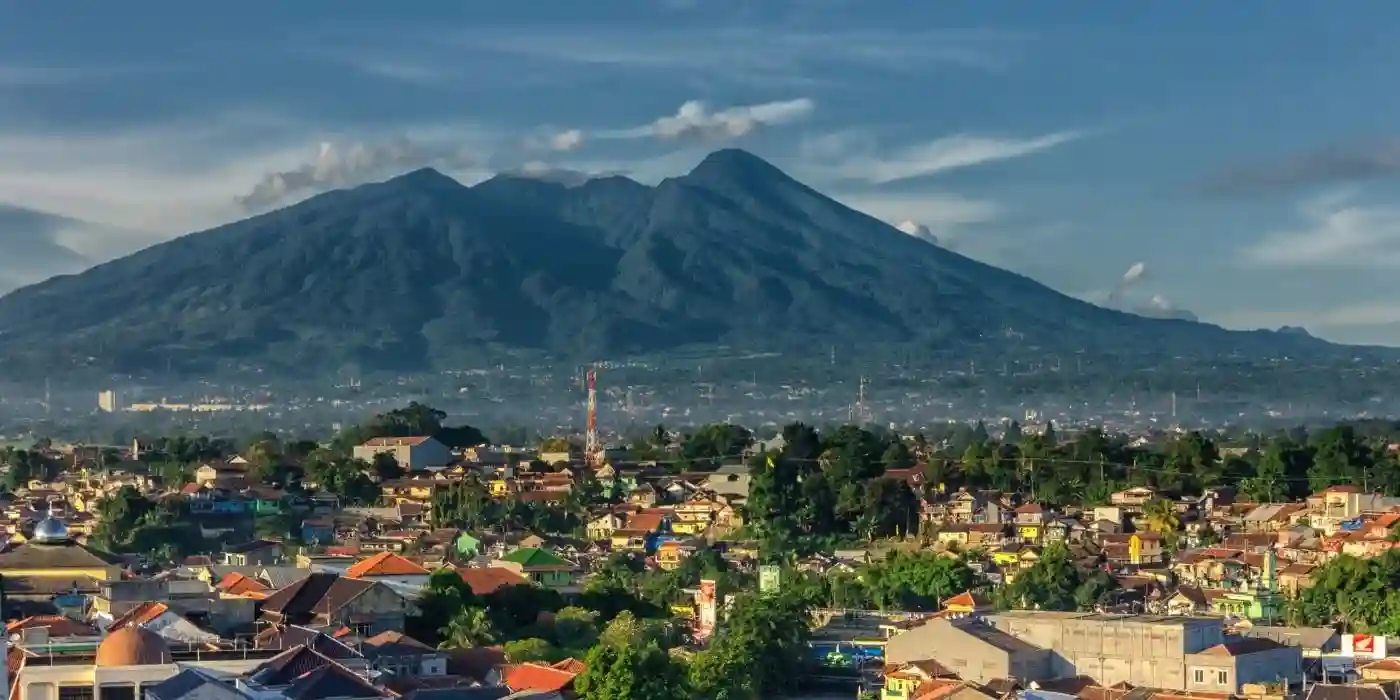
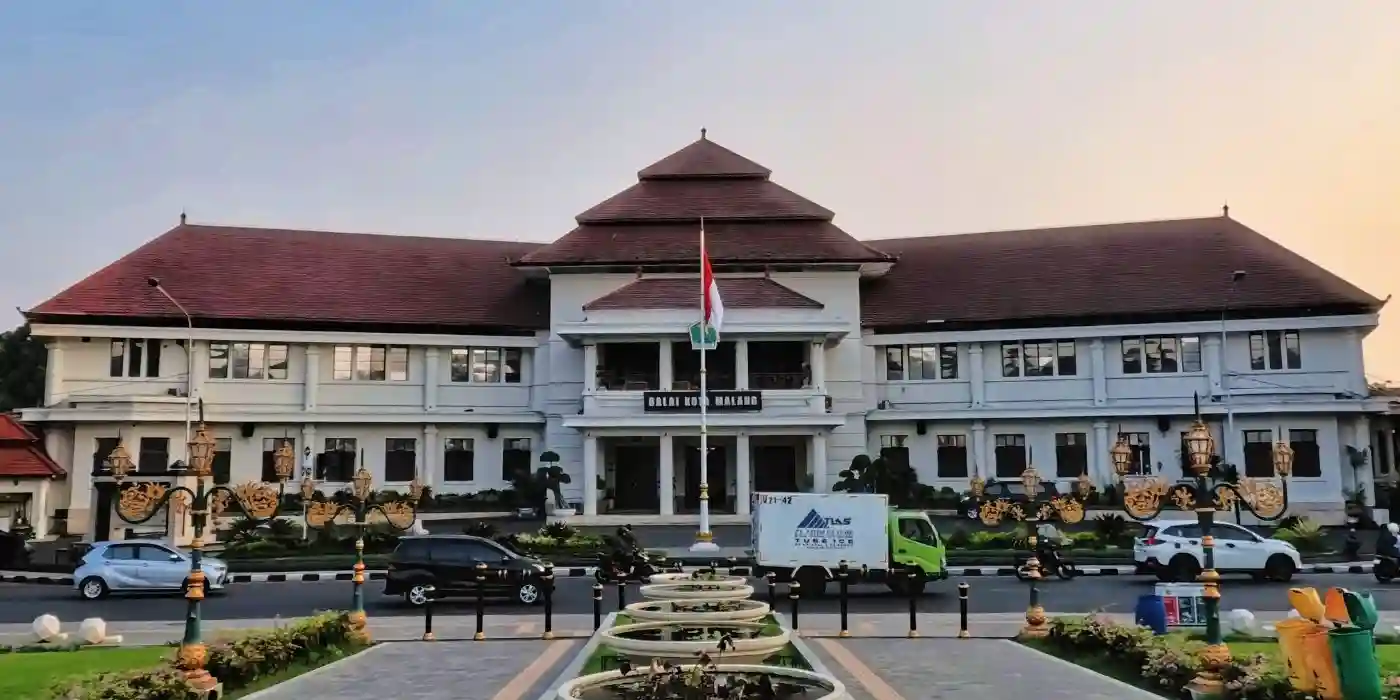
Several secondary cities on Java are common destinations for families relocating for education or lifestyle reasons rather than heavy industry. Bandung, a few hours from Jakarta by toll road, has a long-standing reputation as a cooler, university-oriented city with its own smaller international school options, including a Bandung-based international school, and is often chosen by families who want proximity to Jakarta without living in it. Bogor, similarly close to Jakarta and known for its cooler hill-station climate, has its own small but real expatriate and international-school presence and appeals to some families for similar reasons. Yogyakarta and Solo, both culturally significant cities in Central Java, attract a different profile of resident again — often connected to academia, the arts, or long-term Indonesia specialists rather than corporate relocations. Semarang, on Java’s north coast, and Surabaya, Indonesia’s second-largest city and East Java’s principal commercial and industrial hub, are more typically associated with corporate and manufacturing postings, with Surabaya in particular carrying a genuine and growing business and logistics profile that has brought a steady, if smaller than Jakarta’s, professional expatriate community. Malang, in the highlands of East Java, has a smaller profile still, generally connected to education or specific business postings rather than a large established expatriate cluster.
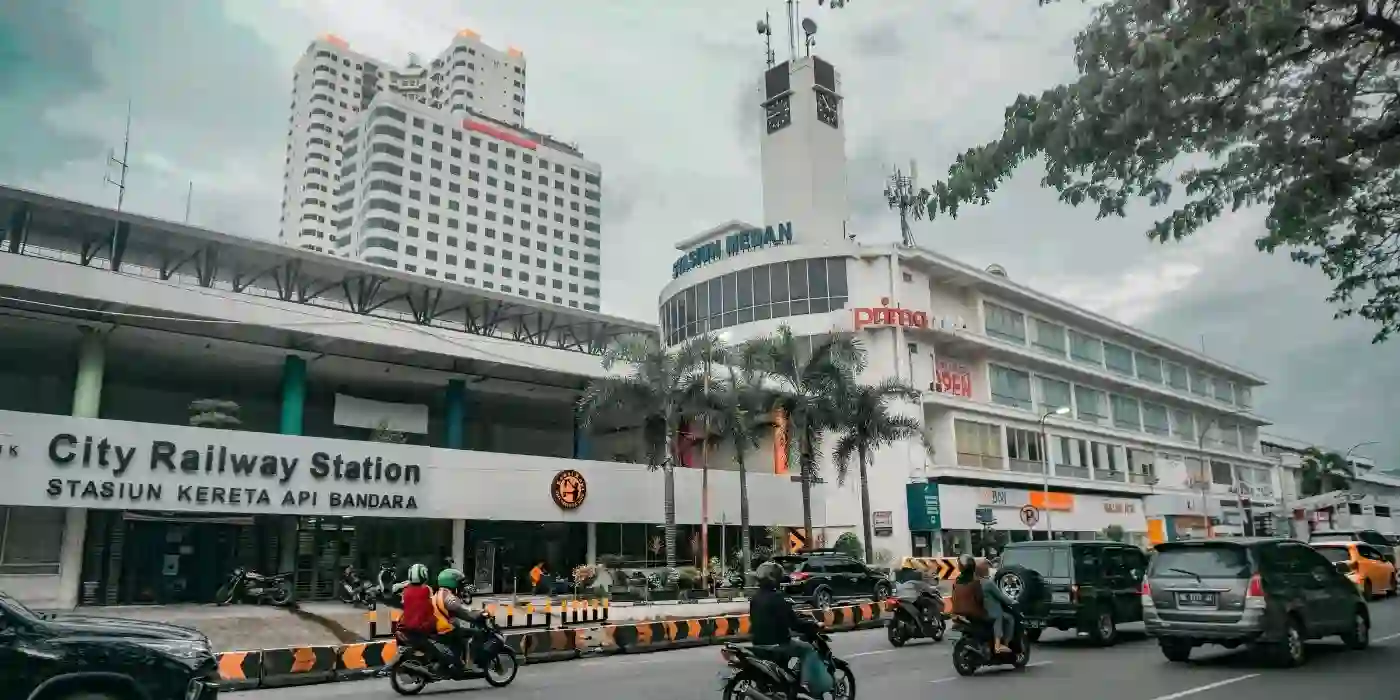
Outside Java, the pattern shifts further toward specific industries. Batam, just south of Singapore, has long been shaped by manufacturing and its proximity to Singapore, and has a distinct, more transactional expatriate population connected to that cross-border relationship. Medan, North Sumatra’s largest city, and Balikpapan, in East Kalimantan, are both closely associated with resource-sector postings, oil and gas in Balikpapan’s case in particular, and tend to attract expatriates on specific corporate assignments rather than families choosing the city for lifestyle reasons. Manado, in North Sulawesi, and Jayapura, in Papua, are smaller and more specialized destinations still, generally reflecting a specific posting, mission or business reason for being there rather than a wider expatriate community to plug into. Mataram, the main city on Lombok, sits in a different category again: closer in spirit to Bali’s coastal lifestyle appeal, and increasingly mentioned by long-term Bali residents looking for a quieter, less developed alternative within reach of similar beaches and climate.
If you are considering any of these regional cities, we recommend reading that city’s dedicated guide closely, because the practical realities of schooling, healthcare, housing quality and community size vary far more from city to city outside Jakarta and Bali than they do between neighborhoods within Jakarta itself. A posting to Surabaya and a posting to Jayapura are, in practical terms, almost entirely different experiences of living in Indonesia, and neither should be assumed to resemble what a Jakarta-based friend or colleague has described to you.
There is no single best neighborhood in Indonesia for every expatriate family, any more than there is a single best school. The right choice depends on your work location, your children’s school if you have any, your tolerance for traffic and density, your budget, and how much you want your daily life to feel familiar versus how much you are looking for something genuinely different from home. We recommend visiting any area you are seriously considering in person, at more than one time of day, and speaking directly with people who already live there about the details that never quite make it into an online guide — how the internet connection actually performs, how flooding affects the immediate street during heavy rain, how the commute really feels on a Monday morning rather than a quiet Sunday. Read the individual area guides on this site for the specific neighborhoods that interest you, and treat this overview as the starting point for that closer research, not the end of it.

e.g., KITAS, housing, schools, healthcare, transport and daily life in Indonesia