

From Bali’s world-renowned retreat centres to quiet practice in Jakarta — finding your meditation path in Indonesia.
In our busy professional and personal lifestyles we often find ourselves under pressure to meet deadlines, attend lengthy stressful meetings and fulfil the ever-growing expectations of others. Although we may not be aware of it until it has grown to dangerous levels, all of these outside demands on our time cause stress. Everyone has some level of stress in his or her life. Even a happy, carefree person will at some point experience situations that are stressful. Meditation is a valuable tool for finding a peaceful oasis of relaxation and stress relief in our demanding, fast-paced world.
For expats living and working in Indonesia, the pressures of relocation, cultural adjustment, tropical heat, traffic, and the particular intensity of life in a country as vast and stimulating as this one can make the need for mental space feel urgent. What makes Indonesia genuinely remarkable in particular is that the tools for finding that space are not just available here, they are woven into the fabric of daily life. Indonesia sits at the intersection of ancient Hindu-Buddhist spiritual traditions, a thriving modern wellness industry, and one of the world’s most celebrated meditation tourism destinations. Whether you are a seasoned practitioner or someone who has never sat still for five minutes, you are in exactly the right place.
What is Meditation?
Meditation is a technique or practice that allows the mind to slow down, deconcentrate and rest. The mind is a remarkable organ — always active, always processing, working through problems even during sleep. With meditation, we can learn to quieten that activity to a level where the mind genuinely has a chance to recover and restore itself.
In times of stress and serious illness, people are constantly worried. That worry places pressure on both mind and body, which in turn can lead to more illness and escalating stress. Meditation supports the body’s natural ability to heal by encouraging correct breathing and a calmer mental state.
The scientific evidence for meditation’s benefits has grown substantially in recent decades. Research published in peer-reviewed journals has linked regular meditation practice to measurable reductions in anxiety, depression and chronic stress. For expats navigating the particular psychological challenges of life abroad — identity displacement, social rebuilding, professional pressure in an unfamiliar environment — these findings carry real practical weight.
Our bodies depend on breath above all else. A human can survive for extended periods without food, and for days without water, but only minutes without air. Yet despite performing this function unconsciously from birth, most people use only a fraction of their actual lung capacity. This limits the oxygen and energy available to the body and restricts its ability to function, rebuild and heal at full capacity. Meditation — through its emphasis on conscious, deliberate breathing — increases oxygen flow, supports the immune system and helps the body maintain genuine health rather than simply the absence of acute illness.
Meditation in Indonesia — A Unique Setting
Indonesia offers something that few countries in the world can match: a living cultural and spiritual environment in which meditation, mindfulness and contemplative practice are not imported trends but deeply embedded traditions. The Hindu-Buddhist heritage of Java and the continuing Hindu tradition of Bali have shaped an approach to inner life that predates modern wellness culture by centuries.
For the expat or long-stay visitor, this means that meditation here is not simply a gym class with ambient music. In Bali especially, you are practising within a culture that still marks time through ceremony, that still builds temples in every family compound, and that still understands the relationship between the individual, the community and the unseen world in ways that most Western traditions have largely set aside. That context does not require you to adopt any particular belief system — but it does give meditation in Indonesia a depth and texture that is genuinely different from what you will find in a studio in London or Sydney.
Bali — The Heart of Meditation in Indonesia
No honest guide to meditation in Indonesia can avoid beginning in Bali. Since at least the early 2000s — and accelerating significantly with the global wellness tourism boom — Ubud has established itself as one of the world’s most recognised destinations for spiritual retreat, meditation and yoga. But Bali’s reputation in this space has long since outgrown any single moment or trend. It is now a mature, sophisticated wellness destination drawing practitioners from every corner of the world, with an infrastructure to match.
Ubud is the undisputed centre of meditation and wellness culture in Bali, and by most measures one of the top wellness destinations globally. The town and its surrounding rice-field villages are home to dozens of established retreat centres, many of which have been operating for fifteen years or more and have built genuine international reputations. Retreat formats available in and around Ubud include silent meditation retreats, Vipassana insight meditation programmes, Balinese Hindu spiritual immersion, mindfulness-based stress reduction, breathwork, sound healing, and combinations of yoga and meditation ranging from weekend introductions to month-long residential programmes.
While Ubud draws those seeking deeper immersion, the southern areas of the island have developed a strong yoga-and-meditation scene oriented toward shorter stays, drop-in classes and the large community of digital nomads and location-independent workers who have made Bali their base. Studios across the south of the island offer everything from early-morning meditation sessions to full weekend retreats, with a pace that is generally more social and accessible than the more contemplative atmosphere of the hills. For a fuller picture of daily life across the island, the site’s living in bali covers the practical detail that wellness visitors and longer-stay expats most often need.
For those who find the busier parts of Bali too stimulating for serious practice, the island’s east and northeast offer a quieter alternative. The coastal village of Amed and the lush inland valley of Sidemen have both attracted small but well-regarded retreat centres offering more solitary, immersive experiences — better suited to those with some existing meditation experience who are looking for genuine retreat conditions rather than a social wellness holiday.
Beyond Bali — Meditation Across Indonesia
While Bali dominates international awareness, Indonesia’s other islands and cities offer meditation experiences that are every bit as authentic and, in some cases, considerably less crowded.
Yogyakarta, Java
Yogyakarta sits at the foot of active volcanoes and within reach of Borobudur, the world’s largest Buddhist temple complex. The city has a long tradition of Javanese spiritual practice, including meditation forms rooted in the kejawen tradition — the syncretic Javanese approach to inner life that blends Hindu, Buddhist, Islamic and animist elements. For expats based in Java or visiting the region, Yogyakarta offers meditation experiences with a distinctly Javanese character that is quite different from Bali’s Hindu-inflected scene. The expat guide to Yogyakarta covers the city in more detail for those considering a longer stay.
Jakarta
Jakarta may seem an unlikely meditation destination, but the city has a well-established and growing wellness scene driven partly by the corporate sector — multinational companies operating in Indonesia have increasingly incorporated mindfulness and meditation programmes into staff wellbeing initiatives — and partly by Jakarta’s large and active expat community. Structured courses and drop-in classes are available across the city, ranging from internationally affiliated programmes to independent studios. For expats based in the capital, the Jakarta expat guide includes further information on health and wellbeing resources across the city.

Lombok and the Gili Islands
Lombok and the Gili Islands have attracted a quieter, more contemplative wellness tourism profile than Bali, with several small retreat centres offering meditation programmes in a less commercialised environment. For expats based in or travelling through the Lombok area, these offer a worthwhile alternative to Bali’s busier retreat calendar. The site’s guide to Lombok has further practical detail for those considering the region.
Practising Meditation — Practical Guidance
Meditation can be practised almost anywhere. You could sit quietly on a bus, find a corner of a park, or use your lunch hour at the office. If you have five minutes and a degree of stillness, you can meditate. Most practitioners agree that early morning and late afternoon are the most productive times — the mind tends to be quieter at these hours and in Indonesia the tropical heat makes them the most physically comfortable as well. Just twenty minutes of meditation at any point during the day can offer meaningful health benefits.
If possible, choose a place that is soothing and peaceful, and try to return to the same place each day. Some people find incense helpful for establishing a meditative atmosphere — in Bali especially, the smell of incense is so embedded in daily life that it can function as an almost instant cue for mental quietening. Soft, unhurried music can also support the process. That said, neither incense nor music should become a requirement. The goal is to develop a practice that can travel with you regardless of circumstances.
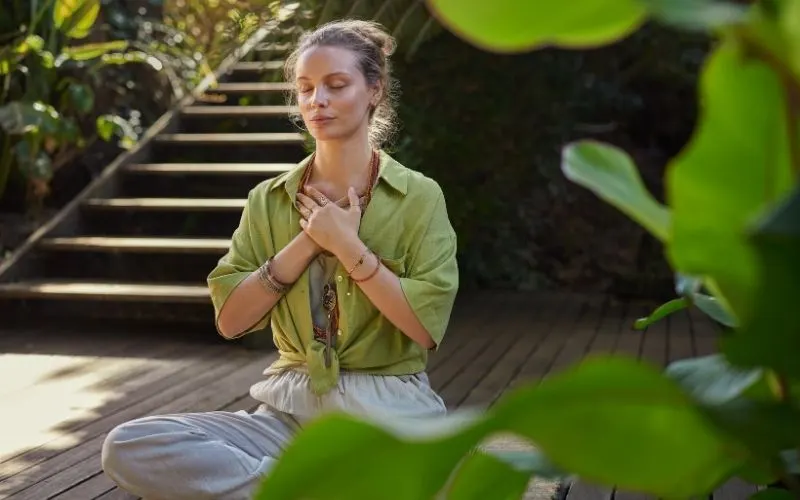
Sit on a soft mat or cushion on the floor, with light back support if needed. With your eyes partially or fully closed, allow your attention to settle on your breathing — its rhythm, its depth, the physical sensation of air entering and leaving the body. Through this focused attention, accumulated tension, anxiety and mental noise gradually release. Most people emerge from even a short session feeling both relaxed and clearer.
The range of experiences during meditation is genuinely wide. Some sessions feel calm and restorative; others feel restless or bring unexpected emotions to the surface. Both are entirely normal. The goal is not to force a particular experience but to allow whatever arises to be present without engaging with it. There is no single correct way to meditate — the practice itself, maintained with patience and regularity, is the point.
Finding a Teacher or Retreat in Indonesia
While self-guided meditation using apps or books is entirely valid, most experienced practitioners recommend beginning with qualified instruction. Indonesia — and Bali in particular — has an abundance of teachers, but as in any unregulated field, quality varies. When assessing a teacher or retreat centre, look for transparent information about the instructor’s training and background, clear programme descriptions with realistic outcomes, and reviews from verifiable previous participants. Be cautious of centres making extravagant health claims or applying pressure to commit to long or expensive programmes before you have sampled the teaching.
Retreat costs in Bali range widely. Drop-in meditation classes at established studios typically run between Rp 100,000 and Rp 250,000 per session. Weekend retreats with accommodation generally range from approximately USD 200 to USD 600 depending on the level of accommodation and the reputation of the teacher. Longer residential programmes of one to four weeks can range from USD 1,500 to well over USD 5,000 for premium centres. These figures are approximate as of early 2025 and should be verified directly with individual centres, as pricing in Bali’s wellness sector changes frequently. For broader context on the cost of living while based in Bali, the site’s Bali cost of living guide is a useful reference point.
Visa Considerations for Long-Stay Wellness Visitors
For those considering an extended meditation retreat or a longer wellness stay in Indonesia, visa options have expanded considerably in recent years. Indonesia introduced a Second Home Visa in 2022 designed for longer-term stays, and has developed visa pathways aimed at remote workers and those seeking an extended base in the country. Bali’s position as a global wellness and remote work destination makes these categories particularly relevant for anyone planning a stay of more than thirty days.
Visa regulations in Indonesia change periodically and the details that apply to your situation will depend on your nationality and the length and purpose of your stay. The site’s Indonesia visa guide covers current options in detail. We also strongly recommend verifying requirements through the official Directorate General of Immigration Indonesia website or consulting a reputable immigration agent before making firm arrangements.
Frequently Asked Questions: Meditation in Indonesia
Is Bali a good place to learn meditation?
Bali is widely considered one of the best places in the world to begin or deepen a meditation practice. The island’s Hindu spiritual tradition, its abundance of experienced teachers, and the physical beauty of its natural environment all contribute to a genuinely supportive setting for contemplative practice. Ubud in particular has an internationally recognised concentration of retreat centres and qualified instructors.
How much does a meditation retreat in Bali cost?
Costs vary considerably depending on the style of retreat, the duration and the standard of accommodation. Drop-in classes typically run between Rp 100,000 and Rp 250,000 per session. Weekend retreats with accommodation generally range from approximately USD 200 to USD 600. Longer residential programmes can range from USD 1,500 upward. All prices should be verified directly with individual centres as they change regularly.
Do I need experience to attend a meditation retreat in Indonesia?
No prior experience is necessary for most beginner and introductory programmes. Many retreat centres in Bali and across Indonesia specifically cater to first-time meditators. It is worth checking the stated level of each programme before booking, as some centres do require prior experience for advanced retreats.
What style of meditation is most common in Bali?
Bali offers an unusually wide range of meditation styles. Vipassana insight meditation, mindfulness-based practice, breathwork, Balinese Hindu spiritual meditation, Tibetan Buddhist practice and yoga-integrated meditation are all available. The most accessible entry point for most newcomers is a general mindfulness or breath-focused programme.
Can I meditate in Indonesia without joining a retreat?
Absolutely. Meditation can be practised independently almost anywhere — in your home, a garden, a park or a quiet corner of a café. Many established studios in Bali and Jakarta offer drop-in single sessions with no ongoing commitment required. Free and low-cost guided meditation resources are also widely available through apps and online platforms.
Is it safe to attend a retreat centre in Bali?
The majority of established retreat centres in Bali are reputable, professionally run and safe. As with any wellness service, it is worth researching any centre before booking — look for transparent information about the teaching approach, verifiable reviews from previous participants, and clear cancellation and refund terms. Be cautious of any centre that applies unusual pressure or makes implausible health claims.
With thanks to the many practitioners, instructors and wellness professionals across Indonesia whose knowledge has informed this guide over the years.