

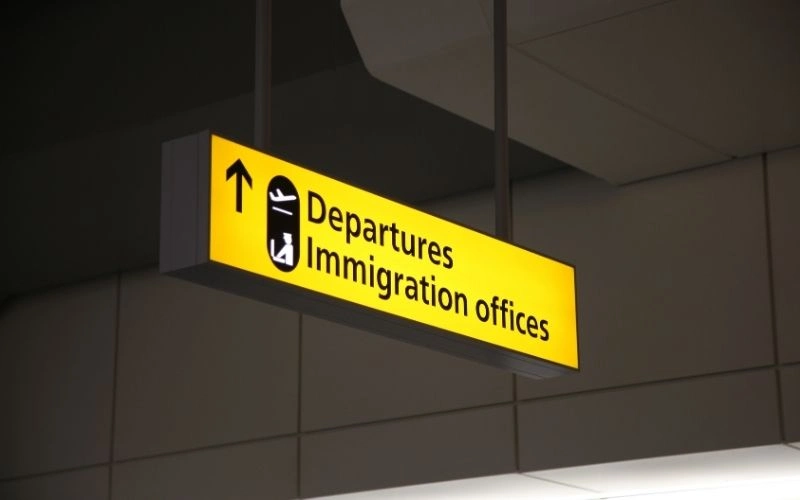

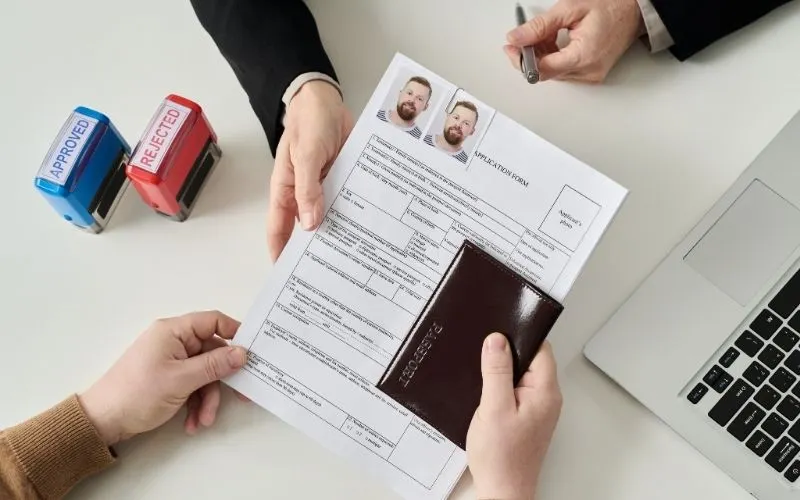









Most expat families arriving in Indonesia focus their early energy on finding a home, enrolling children in school and setting up daily life. The legal groundwork underneath all of that, however, is what determines whether the rest of the move actually holds together. Which visa you hold shapes whether you can work, how long you can stay, and how easily you can renew. If you are marrying an Indonesian citizen, the paperwork you complete in the first year of marriage can affect property ownership and inheritance decades later. None of this needs to be intimidating, but it does need to be done properly, and it is far easier to do properly at the start than to fix later.
This guide is meant as an orientation, not a substitute for the detailed articles elsewhere on this site or for advice from a licensed immigration consultant or lawyer. Indonesian immigration and family law genuinely change from year to year, so treat what follows as a map of the terrain rather than a set of fixed rules, and verify any specific figure, fee or timeline directly before you rely on it.
Indonesia’s Move to Digital Immigration
If you last dealt with Indonesian immigration more than a few years ago, expect the process to feel different now. Visa and stay permit services have moved to a largely digital framework administered by the Directorate General of Immigration, with applications, document uploads, payments and status tracking handled through an online portal rather than in person at an immigration office counter. Approved visas and permits are typically issued electronically rather than as a physical sticker in your passport, and much of the correspondence with immigration happens by email.
This shift is generally good news for expats: it removes some of the guesswork and long queues that used to characterise the process. But it also means accuracy on the application itself matters more, since there is less opportunity for a counter officer to catch a small error before it becomes a rejected application. We recommend working with a registered visa agent or immigration consultant for anything beyond the simplest renewal, particularly if your case has any complexity at all, such as a change of sponsor, a gap in your stay history, or a family member on a different visa type than your own.
Choosing the Right Visa or Permit for Your Situation
The starting question for almost every family is simple to ask and less simple to answer: which visa or stay permit actually fits our situation? The honest answer is that it depends on why you are in Indonesia, how long you intend to stay, whether you or your spouse will be working, and whether you are married to an Indonesian citizen.
Broadly, most expats living in Indonesia long-term hold some form of limited stay permit, commonly referred to by its Indonesian abbreviation KITAS, which is tied to a specific sponsor and purpose, whether that is employment, investment, retirement, or family reunification with an Indonesian spouse or working parent. These limited stay permits are generally issued for periods ranging from six months to two years at a time and require renewal, with the exact validity depending on the specific visa category you hold.
Foreigners who have held a qualifying KITAS continuously for a set number of years, and who meet other criteria, can generally apply to convert to a permanent stay permit, commonly referred to as KITAP. A KITAP removes the need for frequent renewal and is generally valid for a much longer period, though it still requires a local sponsor and periodic reporting, and the path to ITAP, as the underlying permit is formally known, is typically shorter for spouses of Indonesian citizens than for other categories. Our separate article on ITAP sponsorship walks through what a sponsor’s obligations look like in practice, and is worth reading before you begin the conversion process.
For short visits, business trips or exploratory stays before a full relocation, most nationalities can enter Indonesia through a visa-on-arrival or one of the electronic visa categories now processed through the same digital platform. These are not appropriate for anyone intending to live in Indonesia long-term or to work here, and using a short-stay visa for purposes it was not intended for is one of the more common ways expats run into trouble with immigration. If you are not yet sure whether Indonesia is a long-term move for your family, it is worth having an early conversation with an immigration consultant about which entry category fits your actual plans, rather than defaulting to whichever visa was easiest to book online.
If You Are Coming to Work
Families relocating because one parent has taken a job in Indonesia need to understand that the employer, not the employee, generally drives the work permit process. Indonesian companies hiring foreign staff are required to obtain approval for the position through the Ministry of Manpower before a foreign employee’s stay permit can be issued, a process historically built around a plan known as RPTKA. This foreign worker utilisation plan sets out the specific position, its justification, and the compensation attached to it, and the employing company is responsible for lodging and maintaining it.
If you are the trailing spouse in this scenario, your own stay permit will usually be issued as a dependent of your working spouse’s permit, which has practical consequences worth understanding early: your validity is generally tied to your spouse’s employment, and a change of job, employer, or a departure from Indonesia can affect your own status and that of your children. Our articles on expatriate compensation packages and staff salary and allowance guidelines are aimed more at the employer side of this relationship, but we recommend reading them regardless, since how your spouse’s package is structured, including which allowances are documented and which are not, can matter later for tax, insurance and even divorce proceedings.
Families who are job-hunting after arriving in Indonesia, rather than arriving with an offer already in hand, face a more delicate sequencing problem: most stay permits do not allow you to work while you search, and taking on paid work of any kind on a permit that does not authorise it is a genuine risk, not a technicality. Our article on job-hunting in Indonesia as an expat goes into this in more detail and is worth reading before you assume that a tourist or family visa gives you any latitude to freelance or consult informally while you look.
The Second Home Visa and Other Non-Work Pathways
Not every family relocating to Indonesia is coming for a job. In recent years, Indonesia introduced a long-stay option generally known as the Second Home Visa, aimed at people who want to live in Indonesia for an extended period without working locally or being sponsored by an employer. It is generally structured around a financial threshold, commonly satisfied either by holding a fixed deposit in an Indonesian state-owned bank or by owning qualifying property, and is intended for those who can support themselves independently, including retirees and remote workers whose income comes from outside Indonesia.
The appeal of this category is real for the right family: it generally allows multiple entries and exits, and dependents such as a spouse and children are usually able to obtain matching permits. The trade-off is equally real: holders are generally not permitted to take local employment or earn Indonesian-source income, which makes this the wrong choice for anyone planning to work for an Indonesian company even part time, or for anyone unable to commit the underlying deposit or investment for the full period. Because thresholds around non-work, investment-linked and long-stay categories change relatively often, and because choosing the wrong category can mean having to leave the country and reapply from outside, we recommend treating any specific figure you read online, including on this site, as a starting point for a direct conversation with an immigration consultant rather than a final answer.

Staying Compliant Once You Are Here
Getting the right permit is only the beginning. Indonesia expects foreign residents to complete a number of registration and reporting steps once they arrive, and families who skip these tend to discover the gap at the worst possible moment, usually when renewing a permit or trying to open a bank account or leave the country.
Foreign residents are generally expected to register their address and presence with local civil registration authorities, a process referred to on this site under the SKPPS foreign resident registration guide, in addition to whatever reporting your immigration sponsor handles on your behalf. This is a separate step from your visa or stay permit itself, and it is easy to assume your sponsor or agent has taken care of it when they have not; we recommend confirming directly, in writing, exactly which registration steps your sponsor is handling and which ones fall to you.
Driving in Indonesia on a foreign licence is generally only permitted for a limited period, after which residents are expected to convert to an Indonesian driver’s licence, a process our dedicated driver’s licence article covers in more detail. Families who plan to drive themselves, rather than relying on drivers, should not leave this until the last minute, since conversion typically involves its own paperwork and, in some cases, a practical test.
If your family includes children on their own limited stay permits, renewing a child’s ITAS or KITAS on schedule deserves the same attention as your own, and the sponsorship chain for a child’s permit is not always identical to a parent’s, particularly in blended families. Overstaying a visa or permit, whether by a parent or a child, carries financial penalties that accrue daily and can, beyond a certain point, lead to more serious consequences including entry bans. If a permit has lapsed, the right move is almost always to address it proactively with immigration or your agent rather than wait and hope it goes unnoticed.
Finally, a number of documents tend to surface repeatedly across visa applications, property transactions and school enrolment, most notably the police certificate of good conduct, known locally as an SKCK, and formal sponsorship letters. These are worth obtaining and keeping current proactively, rather than scrambling for them each time a new process requires one.
If You Are Marrying an Indonesian Citizen
A significant number of expat families in Indonesia are not two foreign nationals living here together but a mixed-nationality couple, one Indonesian and one foreign, and the legal considerations for these families are meaningfully different from those of a fully expat household. If you are engaged to an Indonesian citizen or already married, this is worth understanding well before questions of property, children or divorce become urgent.
Getting married in Indonesia as a mixed-nationality couple involves its own administrative sequence, generally touching civil registration, religious authorities depending on your faith, and in some cases your home country’s embassy, and our dedicated article on getting married in Indonesia walks through that sequence in detail. What deserves particular attention here is the prenuptial or postnuptial agreement, sometimes called a marriage settlement agreement locally. Under Indonesia’s basic agrarian law, foreign nationals generally cannot hold direct land rights, and property acquired during marriage without a settlement agreement is generally treated as joint marital property, which can complicate the Indonesian spouse’s ability to hold land in their own name and, in some circumstances, put that property at risk. A properly executed marriage agreement, prepared with a notary and registered as Indonesian law requires, is generally the mechanism couples use to keep property separate and preserve the Indonesian spouse’s clear ownership. This is genuinely consequential paperwork, and we recommend approaching it with a qualified Indonesian family law notary rather than relying on generic templates.
Beyond the marriage agreement itself, mixed-nationality families should think early about stepchild adoption where one spouse brings children from a previous relationship, and about the custody certificates a family may need if it later divides its time between Indonesia and another country. Our articles on stepchild adoption and custody certificates cover these in more depth and are worth reading before they become urgent.
Family Law Beyond the Wedding
The Family Law section of this hub exists because marriage, birth, custody and inheritance questions in mixed and Indonesian families raise issues distinct from immigration status, even though the two overlap constantly in practice. Questions such as how a child’s legitimacy is determined, how an unregistered religious marriage, sometimes called nikah bawah tangan, is treated under civil law, how birth registration works for a child born to a mixed-nationality couple, and how inheritance is handled for a foreign husband married to an Indonesian wife, all have real answers under Indonesian law, but those answers are fact-specific and depend on details like religion, home province, and whether a marriage was formally registered.
We do not attempt to resolve those fact-specific questions in this overview article, both because the right answer depends on your family’s particular situation and because an outdated or generalised answer here can do real harm. What we can say with confidence is that families who address these questions early, ideally before a wedding or before a first child is born, tend to have a much easier time than families who wait until a divorce, a death or a custody dispute forces the issue. The individual articles in the Family Law section go deeper on each topic, and we recommend reading the ones relevant to your situation alongside, not instead of, direct legal advice.
Staying Current as the Rules Change
One theme runs through nearly every topic in this guide: Indonesian immigration and family law are not static. Visa categories are renamed, thresholds are adjusted, and citizenship rules are, as of this writing, under active discussion at the national level, including proposals to extend the age by which dual-heritage children must choose a single citizenship and broader debate about limited dual citizenship for diaspora talent. None of this has yet changed the underlying law for most families, but it is worth watching if citizenship is a live question in your household.
Given how much of this area is genuinely in motion, we recommend building a habit of checking directly with the Directorate General of Immigration’s official channels, a registered visa agent, or a licensed lawyer before any decision that depends on a specific fee, deadline or eligibility threshold, rather than relying solely on any single article, including this one, as a final word.
There Is No Single Right Path
There is no universal correct visa, permit or legal structure for every expat family in Indonesia. The right combination of stay permit, work authorisation and, where relevant, marriage and property documentation depends on why you are here, how long you plan to stay, whether you are working, and whether your family includes an Indonesian citizen. Begin your research early, ask direct questions of immigration authorities and qualified professionals rather than relying on secondhand summaries, and revisit your family’s legal arrangements periodically rather than assuming that what was correct on arrival remains correct years later. The individual guides elsewhere in this Legal and Formalities section go deeper on each of the topics touched on here, and are the right next step once you have a clearer sense of which parts of this guide actually apply to your family.