

Unlike many countries, Indonesian law does not provide for non-religious civil marriages. The validity of marriage is governed by the Marriage Law of 1974, which came into effect on January 2, 1974. Mixed-marriage couples need to pay close attention to the legal issues surrounding their union. If something unforeseen happens in the future, failure to meet legal requirements can place you in an unfavorable position.
If the law does not recognize your marriage, you are considered not legally married. This lack of legal status can affect divorce proceedings, division of marital property, alimony, and child custody.
Religious Marriages
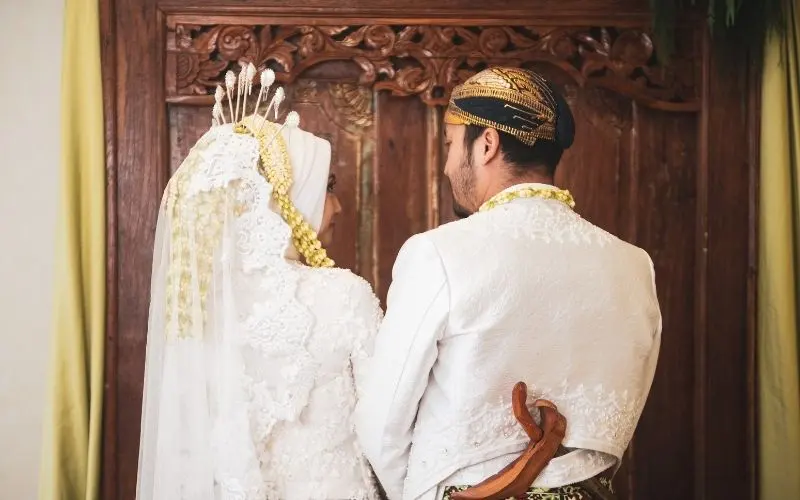
Indonesia’s Marriage Law stipulates that a marriage is legally recognized if it is conducted according to the religion of the parties involved. In Indonesia, religion plays a central role in the legal recognition of marriage.
Marriage between individuals of different religions remains legally complex. In practice, couples are generally required to share the same religion for a marriage to be officially registered. Some couples explore alternative legal pathways, such as marrying abroad or seeking court approval, but these approaches require careful consideration and professional advice.
Once you have decided to marry in Indonesia, you must choose the type of religious ceremony you intend to have.
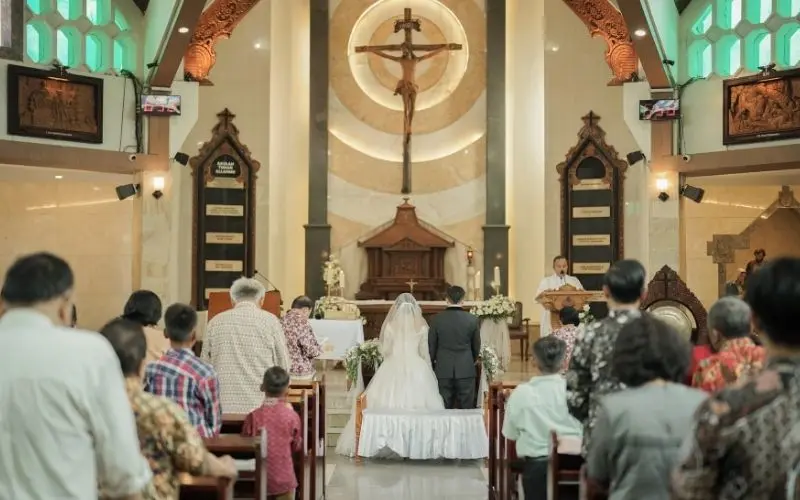
For non-Muslims, a church or temple ceremony is performed first, followed by registration with the Civil Registry Office. The Civil Registry then issues a Marriage Certificate, which serves as legal proof of marriage. A non-Muslim wedding that is not recorded with the Civil Registry is not considered legally valid. Typically, two certificates are issued: one from the religious institution and one from the Civil Registry.
For Muslim marriages, the ceremony must be registered at the local Office of Religious Affairs (Kantor Urusan Agama or KUA). Couples are issued a Marriage Book (Buku Nikah), and no separate registration with the Civil Registry is required.
Civil Weddings
Because Indonesian law does not recognize purely civil (non-religious) marriages, couples who wish to formalize their marriage through civil procedures must first present proof of a religious marriage. In some cases, foreign couples who marry abroad may later register their marriage in Indonesia through the Civil Registry.
International Recognition
Mixed-marriage couples should pay particular attention to how their marriage will be recognized internationally. The Marriage Book issued by the Office of Religious Affairs may not always be sufficient on its own for legal recognition in other countries.
Requirements vary depending on the country. In many cases, additional documentation or registration with the Indonesian Civil Registry may be required to ensure that the marriage is recognized abroad.
It is also important to understand that administrative practices can vary between regions in Indonesia, and different local offices may interpret regulations differently.
Document Legalization
Documents used for immigration or international legal purposes often require authentication or legalization.
Since Indonesia became a member of the Hague Apostille Convention in 2021, the process of legalizing documents for international use has become significantly simpler. Many documents can now be certified through an apostille, which replaces the more complex, multi-step legalization procedures previously required.
However, requirements still vary depending on the destination country, so it is important to confirm the specific requirements with the relevant embassy or authority.

Marriage Legalization
Mixed-nationality couples who marry abroad are still subject to Indonesian law. The Marriage Law stipulates that marriages conducted overseas should be reported to the Civil Registry Office upon return to Indonesia. This reporting results in the issuance of a Surat Tanda Bukti Laporan Perkawinan (STBLP), which is essential for the marriage to be recognized under Indonesian law.
This certificate can become important in many situations, including administrative processes, legal matters, and future family considerations. Failing to register your marriage may create complications later, particularly if you relocate back to Indonesia.
It may also affect processes such as registering a child’s birth in Indonesia or handling legal documentation related to family status.
In addition, property ownership for mixed-nationality couples is influenced by Indonesian regulations. Foreign spouses are subject to restrictions, and legal clarity regarding marital assets is essential.
Prenuptial and Postnuptial Agreements
Foreigners married to Indonesian citizens should be aware of property ownership regulations. Indonesian law generally requires a separation of assets for foreign involvement in property ownership.
Following a Constitutional Court decision in 2015, couples are now allowed to create postnuptial agreements (after marriage), providing more flexibility than earlier regulations, which required prenuptial agreements before marriage.
These agreements are often essential for mixed-nationality couples who intend to purchase property or manage assets in Indonesia.
Marriages Carried Out Before 1974
Marriages conducted before 1974 were governed by the Indonesian Civil Code, which was based on Dutch colonial law. These regulations classified individuals into different legal categories based on ethnicity and origin, such as European, indigenous (pribumi), Chinese, and other groups.
While these classifications reflected the legal framework of the time, many marriages conducted under this system are still considered valid today.
Frequently Asked Questions
Can foreigners legally marry in Indonesia?
Yes, but the marriage must follow religious requirements and be properly registered with the relevant authorities.
Is interfaith marriage allowed in Indonesia?
Interfaith marriage remains legally complex. Most couples either align under one religion or marry abroad and then register the marriage in Indonesia.
Do I need to register my overseas marriage in Indonesia?
Yes. To ensure legal recognition in Indonesia, marriages conducted abroad should be reported to the Civil Registry Office.
What is an apostille and do I need one?
An apostille is a certification that allows documents to be recognized internationally. Since Indonesia joined the Hague Apostille Convention, this process has become much simpler.
Our thanks to Asep A. Wijaya, Managing Director of Wijaya & Co., for sharing this information with the community.