

For expats living and working in Indonesia, navigating the national health insurance system can feel daunting at first. This guide explains how the system works, who is required to enrol, and how to get registered — whether you are a foreign worker, a spouse of an Indonesian citizen, or an employer with domestic staff.
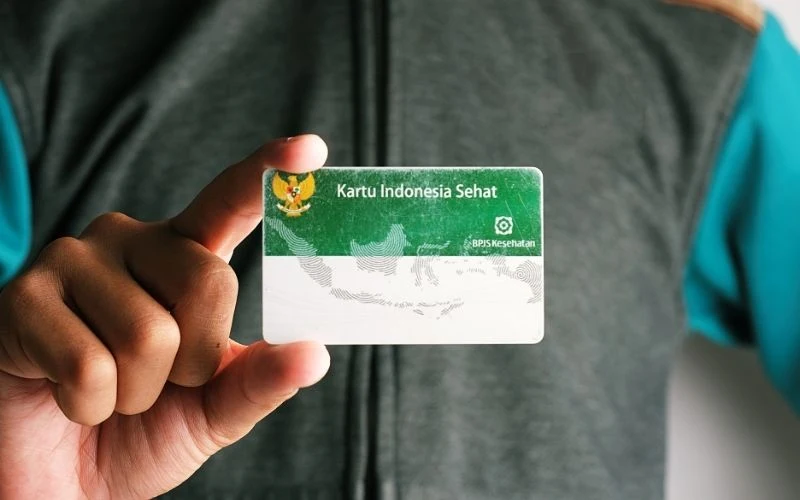
The Indonesian National Social Health Insurance (JKN: Jaminan Kesehatan Nasional) is a government-operated paid health system implemented by the BPJS (Badan Penyelenggara Jaminan Sosial). The JKN benefits are based on managed care and provide unlimited benefits for those who follow the required procedure using a primary health facility, mostly at primary public health centres.
Expat Coverage
The health insurance program is nationwide and also applies to all foreigners residing in Indonesia for more than six months on a working visa. Those who can benefit from this program include domestic staff employed by expatriates in Indonesia, as well as employees at the companies where they work.
The Manpower Minister has stated that all foreigners working in Indonesia for more than six months must become members of the social security programs run by the BPJS.
Expats follow the same procedure as Indonesians to apply for government health insurance. Check with your employer about enrolment. There is a fine for companies with 10 or more employees that fail to register their staff, including foreign workers.
BPJS Ketenagakerjaan covers employees for hospital costs arising from accidents that occur during working hours and also includes a pension and savings scheme. Expats are required to enrol in this program.
BPJS Kesehatan covers general healthcare for residents but does not cover work-related accidents. Expats are required to enrol in this program as well.
In practice, most employed expats will be enrolled in both programs through their employer. If you are unsure whether your company has registered you, ask your HR department — the fine for non-compliance falls on the employer, but it is in your interest to confirm your membership status and obtain your BPJS card as early as possible.
We have heard from community members that some BPJS officers will not accept applications from expats — even those holding a KITAP sponsored by a WNI (Warga Negara Indonesia — Indonesian citizen) spouse — if the applicant has not yet been working for six months. Experiences vary between offices, however, and some community members have been successful. Note that there is a particular code that must be added to the application for foreign spouses of Indonesian citizens; make sure the officer processing your application is aware of this.
If you are refused at one BPJS office, it is worth trying a different branch, as interpretation of the rules can vary between offices and individual officers. Bringing a complete set of documents — including your ITAS or ITAP, passport, and proof of employment or sponsorship — and remaining patient and polite tends to produce better outcomes. Some community members have found it helpful to have an Indonesian-speaking colleague or spouse accompany them.
Regulations governing the BPJS include:
- Manpower Law No. 40/2004 Article 1 Item 8
- Law No. 24/2011
- Regulation — PP no. 84 year 2013
Indonesian social security regulations are periodically revised. For the most current regulatory framework, check the official BPJS Kesehatan website at www.bpjs-kesehatan.go.id or consult your company’s HR or legal team.
Registration and Enrolment Procedure
Please note: Foreign retirees are NOT eligible to enrol in BPJS Kesehatan. This program is limited to expats holding a working visa (KITAS index 312). Expats on other visa categories — including retirement visas and second home visas — are not eligible and should ensure they hold adequate private international health insurance.
Indonesian Workers in Informal Sectors
While formal workers will be enrolled in the JKN by their employers, people working in the informal sector need to register themselves. You will want to make sure that your domestic staff — drivers, household assistants, and other informal workers — enrol with the JKN so that they and their family members benefit from basic health coverage for outpatient and inpatient care.
The registration procedure is as follows:
1. Open a bank account
Your staff member should first open a bank account with one of the banks designated by the Indonesian government for BPJS auto-debit arrangements. Designated banks include BRI, BNI, Mandiri, and BTN, among others. Your staff member should confirm with their nearest branch that it is set up to handle BPJS auto-debit, as not all branches process this equally efficiently.
A practical difficulty can arise if the address on your staff member’s KTP (Kartu Tanda Penduduk — Indonesian national identity card) shows their village of origin rather than their current city. In that case, they would normally need to open the bank account at a branch closest to that address. However, a letter of domicile signed by the local RT (neighbourhood head) in their current city is usually sufficient to allow them to open the account locally, meaning they will not need to travel back to their home village to do so.
2. Register at a BPJS office or online
Once the bank account is open, your staff member should register at their closest BPJS office. Search “kantor BPJS” and the name of your city to find the nearest branch. They should bring the following documents:
- Completed registration form
- Copy of KTP (Indonesian national identity card)
- Copy of Kartu Keluarga (KK — family registration card)
- Two passport-sized photos (3 x 4 cm) for each family member being registered
- NPWP (tax identification number) — may be requested
Registration can also be completed through the Mobile JKN app, available on Android and iOS, which avoids queuing at the BPJS office entirely. Your staff member will need their KTP number, Kartu Keluarga number, and bank account details to complete the digital registration. Alternatively, registration is available online at www.bpjs-kesehatan.go.id. If using the website, off-peak hours tend to produce a smoother experience.
It has been reported that some BPJS offices require all members listed on the Kartu Keluarga to register simultaneously. While this is not uniformly enforced, it is worth being prepared for this possibility. It will help considerably if the Kartu Keluarga is up to date — with deceased family members removed and married children listed on their own individual cards — before you begin the registration process.
3. Pay the first monthly contribution
A BPJS member can register themselves along with their spouse and up to three children. On the day of registration, the first monthly contribution must be paid. Members choose the class of coverage they wish to access, which determines both the monthly rate and the ward class in the event of hospitalisation:
| Class | Monthly Contribution (per member) | Hospital Ward |
|---|---|---|
| Class One | Rp 150,000 | First class ward |
| Class Two | Rp 100,000 | Second class ward |
| Class Three | Rp 42,000 (partially subsidised by the government) | Third class ward |
Note: These rates are set by government regulation and are subject to revision. A family of four enrolling at Class Two, for example, would currently pay Rp 400,000 per month in total. Always confirm the current rates at www.bpjs-kesehatan.go.id before enrolling. Once you have selected a contribution class, changing it later is not straightforward.
Monthly contributions can be paid through a wide range of channels, including Alfamart, Indomaret, GoPay, OVO, Dana, and most major mobile banking apps, in addition to direct bank transfer. Auto-debit from a designated bank account remains the most reliable method to avoid accidental lapses in coverage — a missed payment will suspend your membership, and there may be a waiting period before coverage is reinstated after arrears are settled.
A Note on Private Health Insurance
Many expats in Indonesia maintain private international health insurance alongside their BPJS membership. BPJS functions well for straightforward treatments at public facilities but has limitations in terms of hospital choice, waiting times, and coverage at international-standard private hospitals. Using both in parallel — BPJS as a foundation and private insurance for higher-level or specialist care — is a common and practical approach in the expat community.
Expat Family Members
Expat family members are not issued a Kartu Keluarga — this is an Indonesian family registration document issued to Indonesian citizens and permanent residents. A foreign spouse of an Indonesian citizen may be added to their Indonesian partner’s Kartu Keluarga, but expat family units without an Indonesian citizen member will not have one.
Expat members of a family register for BPJS using their ITAS (Izin Tinggal Terbatas — temporary stay permit) or ITAP (Izin Tinggal Tetap — permanent stay permit) as their primary identification document.
For questions about registration, contact the official BPJS Kesehatan national hotline on 500400.
Note: The registration procedure can take most of a day if completed in person. Using the Mobile JKN app or the online portal is recommended where possible.
Relevant Information
The following resources are available in Bahasa Indonesia:
- Summary of the registration procedure
- Registration form
- List of health centres, hospitals, and specialist hospitals registered with BPJS
Frequently Asked Questions
Is BPJS mandatory for expats in Indonesia?
Yes. Foreigners working in Indonesia on a working visa (KITAS index 312) for more than six months are legally required to enrol in both BPJS Kesehatan and BPJS Ketenagakerjaan. Responsibility for registration lies primarily with the employer.
Can I use BPJS at private hospitals in Indonesia?
BPJS Kesehatan is accepted at a network of public and some private hospitals, but not all private or international-standard hospitals participate in the scheme. Always check whether your preferred hospital or clinic is a registered BPJS provider before assuming your costs will be covered.
What happens if I miss a BPJS payment?
Missing a monthly contribution will result in your membership being suspended. You will not be able to access benefits until arrears are settled, and there may be a waiting period before coverage is reinstated. Setting up auto-debit from your bank account is the most reliable way to prevent this.
Can my domestic staff register for BPJS?
Yes. Domestic workers — drivers, household assistants, and other informal sector workers — can and should register for BPJS Kesehatan independently. See the Indonesian Workers in Informal Sectors section above for the full registration procedure.
What is the difference between BPJS Kesehatan and BPJS Ketenagakerjaan?
BPJS Kesehatan covers general healthcare for the member and their family. BPJS Ketenagakerjaan covers workplace accidents and occupational diseases and includes a pension and savings component. Employed expats are required to be registered in both.
Can foreign retirees in Indonesia join BPJS?
No. Foreign retirees are not eligible for BPJS Kesehatan. This program is restricted to holders of a working visa (KITAS index 312). Retirees and those on other visa categories should hold comprehensive private health insurance.