

Malaria risk and treatment recommendations change regularly. Always consult a travel medicine specialist or your doctor before travel to rural or remote areas of Indonesia.
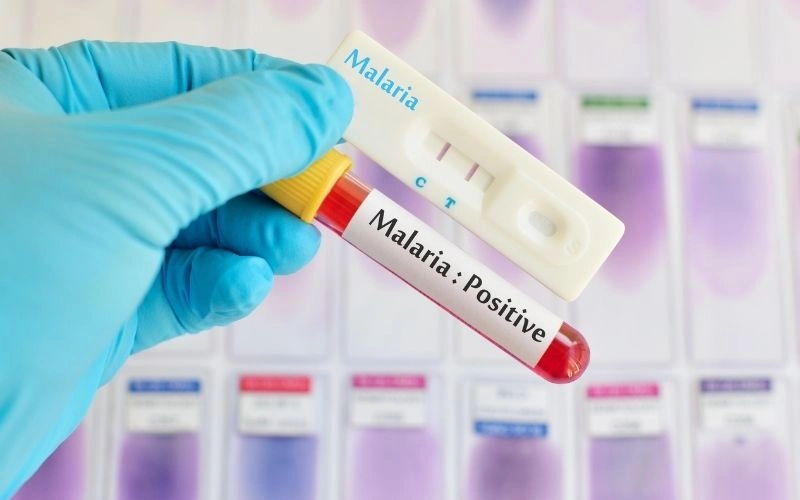
Malaria is a serious but preventable disease transmitted by the bite of infected Anopheles mosquitoes, which typically feed from dusk to dawn. Symptoms can appear as early as six days after exposure, or as late as several months later — which means you can fall ill after returning home. Early symptoms often resemble flu: headaches, body aches, fever, chills, and fatigue. Without prompt treatment, malaria can progress rapidly, causing severe anaemia, seizures, mental confusion, kidney failure, coma, and in some cases, death. If you develop a fever after visiting a rural or forested area of Indonesia, seek medical attention immediately and tell your doctor about your travel history.
⚠ IMPORTANT: If you develop a fever during or within several months of visiting a malarial area in Indonesia, see a doctor immediately and mention your travel history. Do not wait for symptoms to worsen.
Malaria in Indonesia: The Changing Picture
The good news for expats is that Indonesia has made remarkable progress in eliminating malaria. As of 2024, 85% of Indonesia’s population lives in malaria-free areas, and 398 districts and cities — 77% of the total — have received official malaria elimination certificates from the Ministry of Health. The disease has been largely eliminated from Java, most of Bali, and virtually all major urban centres.
However, malaria remains a serious and active threat in parts of the country, and this is a large, geographically diverse archipelago. Papua now accounts for more than 86% of all national malaria cases, with transmission concentrated in lowland areas with year-round rainfall. The pattern of risk has shifted significantly: what was once a broadly distributed threat across Indonesia is now increasingly concentrated in Eastern Indonesia, particularly Papua, while risk in western and central Indonesia has declined dramatically.
Indonesia has set a goal of achieving nationwide malaria elimination by 2030, supported by a Ministry of Health roadmap launched in 2025. Progress has been significant, but the challenge remains steep, particularly in remote parts of Papua.
Malaria Risk by Region
The table below provides a general guide to malaria risk by region. Conditions can change, so always verify current risk before travelling to any rural or remote area.
| Region / Area | Risk Level | Notes |
|---|---|---|
| Jakarta and greater metropolitan area | None | Officially malaria-free |
| Major cities: Bandung, Yogyakarta, Surabaya, Semarang, Medan, Makassar | None | Urban areas certified malaria-free |
| Main resort areas of Bali (Kuta, Seminyak, Ubud, Sanur, Nusa Dua) | None | Malaria-free |
| Gili Islands and Thousand Islands (Pulau Seribu) | None | No malaria transmission |
| Rural areas of Java | Low | Some rural areas including Pangandaran, Sukabumi, and Ujung Kulon retain low risk; also Menoreh Hills in Central Java |
| Areas of Bali outside main resort areas | Low | Remote and forested parts of Bali carry some residual risk |
| Urban areas of Sumatra, Kalimantan, Sulawesi, Nusa Tenggara Barat | None to Low | Cities are largely malaria-free; some peri-urban risk remains |
| Rural areas of Sumatra, Kalimantan, Sulawesi, Nusa Tenggara Barat | Moderate | Risk in rural and forested areas; chloroquine-resistant strains present |
| Lombok and Sumbawa | Moderate | Risk outside main tourist areas |
| Kalimantan (Borneo) — forested and border areas | Moderate | Zoonotic P. knowlesi malaria (from monkeys) is an emerging risk in forested areas — see below |
| Nusa Tenggara Timur (Flores, Sumba, Timor) | High | Active transmission throughout; prophylaxis recommended |
| Maluku and Maluku Utara | High | Active transmission; prophylaxis recommended |
| Papua and West Papua (Papua Barat) | High | Accounts for >86% of Indonesia’s malaria cases; highest risk in lowland areas; prophylaxis essential |
| Nusantara / IKN (New Capital, East Kalimantan) | Moderate | The development zone itself is currently malaria-free, but surrounding forest areas carry significant risk; large movements of workers from endemic regions present ongoing transmission risk — see note below |
A Note on Nusantara (IKN), Indonesia’s New Capital
Expats working on or around the Nusantara capital city development in East Kalimantan should be aware that while the core project areas are currently malaria-free, the surrounding region is a recognised malaria and biodiversity hotspot. The large-scale movement of workers — many arriving from malaria-endemic parts of Indonesia — combined with ongoing deforestation and infrastructure expansion, creates ongoing transmission risks. If you are working in or near forested areas around IKN, consult a travel medicine doctor and discuss prophylaxis before travel.
A New Threat: Zoonotic Malaria (Plasmodium knowlesi)
A type of malaria not mentioned in older guidance is now a recognised risk in Indonesia, particularly in Kalimantan (Borneo) and parts of Sumatra. Plasmodium knowlesi is a malaria parasite carried primarily by long-tailed and pig-tailed macaque monkeys. Humans can contract it through the bite of infected Anopheles mosquitoes in or near forested areas.
P. knowlesi can progress rapidly to severe disease and is not reliably detected by all standard rapid diagnostic tests. It is associated with occupational exposure — particularly logging, plantation work, watershed management, and forest trekking. Deforestation and land-use change in Kalimantan, which pushes humans and primates into closer contact, is increasing the risk. There are currently no specific preventive medications effective against P. knowlesi beyond standard mosquito avoidance measures and general anti-malaria prophylaxis. If you work in or near forests in Kalimantan or northern Sumatra, discuss this risk with your doctor.
Simple Self-Protection Measures to Prevent Malaria
Personal protective measures can greatly reduce the risk of being bitten by the Anopheles mosquito. Because malaria mosquitoes feed primarily between dusk and dawn, extra vigilance is needed in the evenings and at night. No prophylactic drug is as effective as not getting bitten in the first place.
- Mosquito netting: Use permethrin-treated bed nets if sleeping in an area without adequate air conditioning and screens. Nets treated with permethrin can retain effectiveness for up to several months. Curtains in rural accommodation can be treated similarly.
- Mosquito coils and sprays: Mosquito coils (obat anti nyamuk) and knockdown sprays containing pyrethroids are widely available in Indonesia and useful in enclosed spaces. Use in cool, dark areas where mosquitoes rest.
- Clothing: Wear long sleeves and long trousers in the evenings, particularly when outdoors. Although mosquitoes can bite through thin fabric, covering up is still worthwhile. Avoid dark-coloured clothing, perfumes, and colognes at night, as these can attract insects.
- Repellents: Apply an effective mosquito repellent to all exposed skin. Products containing DEET (diethyltoluamide) remain among the most effective. For adults, a concentration of 20–30% DEET provides good protection lasting up to four hours. Picaridin-based repellents (also known as icaridin) are a good alternative that is less irritating to skin and equally effective.
- Apply sparingly to exposed skin only
- Do not apply to wounds, rashes, or broken skin
- Do not apply to children’s hands, which may touch eyes and mouths
- For children under two, avoid DEET-based repellents; focus instead on protective clothing and netting
- Wash repellent off after returning indoors
- If skin irritation develops, wash off and seek advice
- Standing water: Mosquitoes breed in standing water. Eliminate ponds, pits, and containers that collect rainwater around your home or compound.
Anti-Malaria Chemoprophylaxis
If you are travelling to or residing in a malarial area of Indonesia, you should discuss prophylactic (preventive) medication with a doctor or travel medicine clinic. Important points to understand:
- Prophylactic medication does not offer absolute protection — bite prevention remains essential.
- For prophylaxis to be effective, medication must be taken exactly as directed, at the same time each day or week.
- Exceeding the recommended dose does not improve protection and increases the risk of side effects.
- All malaria in Indonesia should be considered resistant to chloroquine — do not use chloroquine alone as prophylaxis anywhere in the Indonesian archipelago.
Current first-line options recommended by the US CDC and international travel medicine bodies for travel to chloroquine-resistant malaria areas of Indonesia are:
- Atovaquone plus proguanil (Malarone® and generics) — currently the most commonly prescribed option for most travellers. Taken daily, starting 1–2 days before arrival in a malarial area and for 7 days after leaving. Well tolerated with few side effects. Good choice for shorter trips and last-minute travellers.
- Doxycycline (various brands) — taken daily, starting 1–2 days before arrival and continuing for 4 weeks after leaving. Widely available and inexpensive. Not suitable for pregnant women or children under 8. Can increase sun sensitivity — an important consideration in tropical Indonesia.
- Mefloquine (Lariam® and generics) — taken once weekly, starting 2 weeks before arrival. Carries a black-box FDA warning regarding neurological and psychiatric side effects including depression, anxiety, and psychosis. Should only be used after careful consultation with your doctor; not suitable for those with a history of psychiatric illness, seizures, or cardiac conditions.
- Tafenoquine — a newer once-weekly option approved since 2018. Important caution: tafenoquine can cause life-threatening haemolysis in people with G6PD deficiency. G6PD testing is required before use. Discuss this option with your doctor.
Note for long-term expats: P. vivax and P. ovale malaria can form dormant liver stages (hypnozoites) that cause relapses weeks or months after you have left a malarial area. Long-term travellers with significant P. vivax exposure may be advised to take primaquine at the end of their stay to eliminate these dormant stages. G6PD testing is required before taking primaquine. Discuss this with your doctor.
General Rules for Anti-Malaria Prophylaxis
- Always consult a doctor before starting any prophylaxis. Do not self-prescribe. Your doctor needs to consider your medical history, age, other medications, pregnancy status, and itinerary before recommending a drug.
- Check for G6PD deficiency before taking primaquine or tafenoquine. This enzyme deficiency is more common in people of Asian, Mediterranean, Middle Eastern, and African descent, and these drugs can cause severe haemolytic anaemia in G6PD-deficient individuals.
- Check for drug allergies. Inform your doctor of all known allergies, including to sulfonamide drugs.
- Start prophylaxis before travel. Atovaquone-proguanil (Malarone) can be started 1–2 days before exposure. Doxycycline should also be started 1–2 days prior. Mefloquine requires a 2-week lead time to establish adequate blood levels and allow any early side effects to occur while you are still near medical care.
- Continue prophylaxis after leaving a malarial area. Atovaquone-proguanil should be taken for 7 days after leaving. Doxycycline and mefloquine should be continued for 4 weeks after leaving. Stopping early leaves you vulnerable.
- Take enough medication for your entire stay, plus the continuation period. Specific medications may not be available in remote areas of Indonesia.
- Mefloquine use requires caution. The FDA has issued a black-box warning for neuropsychiatric side effects. Always discuss the risks and benefits with your doctor before starting mefloquine, particularly for longer stays.
Recommendations for Prophylaxis
⚠ ALWAYS check side-effects and contraindications with your doctor before taking any anti-malaria medication. Do NOT self-prescribe.
For healthy adults travelling to malarial areas in Indonesia:
Option 1 — Atovaquone-proguanil (Malarone): 1 adult tablet (250mg/100mg) once daily with food. Begin 1–2 days before entering a malarial area and continue for 7 days after leaving. Generally the preferred first-line option for most short to medium-term travellers.
Option 2 — Doxycycline: 100mg once daily with food. Begin 1–2 days before entering a malarial area and continue for 4 weeks after leaving. Note increased sun sensitivity — use sunscreen diligently. Not suitable for pregnant women or children under 8.
Option 3 — Mefloquine (Lariam): 250mg (1 tablet) once weekly. Begin 2 weeks before entering a malarial area and continue for 4 weeks after leaving. Do not use if there is any history of convulsions, depressive illness, anxiety disorders, or cardiac conduction conditions. Always discuss with a doctor before taking.
For pregnant women:
Malaria during pregnancy is particularly dangerous, carrying risks of miscarriage, premature labour, congenital infection, intrauterine foetal death, and pre-eclampsia. We strongly advise pregnant women, or those trying to conceive, to avoid travel to malarial areas of Indonesia entirely if possible.
If travel is unavoidable, the CDC recommends mefloquine across all trimesters of pregnancy as the preferred prophylaxis option for chloroquine-resistant areas. Doxycycline is contraindicated throughout pregnancy. Atovaquone-proguanil should be avoided during pregnancy unless travel to high-risk areas is unavoidable and other options are not suitable — consult your obstetrician and a travel medicine specialist.
For children:
The emphasis for young children should be on preventing bites. Children must not use DEET-based repellents under the age of two — keep infants in this group well-covered with clothing and netting.
Any antimalarial medication for children must be prescribed by a paediatrician with doses individually calculated by weight. Doxycycline is not suitable for children under 8 years. Atovaquone-proguanil (Malarone) is suitable for children weighing 5kg or more and is generally well tolerated. Mefloquine is also used in children but requires careful dosing. Chloroquine should not be used for prophylaxis in Indonesia.
Artemisinin Combination Therapy (ACT): First-Line Treatment in Indonesia
If malaria is diagnosed in Indonesia, the Indonesian Ministry of Health recommends Artemisinin Combination Therapy (ACT) as first-line treatment — a significant update from older guidance. ACT-based drugs are highly effective against P. falciparum. Treatment protocols should be managed by a qualified physician, not self-administered. Do not attempt to treat suspected malaria yourself.
Standby emergency treatment (SBET) — carrying a course of treatment-dose antimalarials to use only if you cannot reach medical care — may be appropriate for expats working in very remote areas with limited access to healthcare. This should only be done under clear medical guidance from your doctor, who will advise which medication and dose to carry and the circumstances in which to use it.
Frequently Asked Questions
Is there malaria in Bali?
The main resort areas of Bali — including Kuta, Seminyak, Ubud, Sanur, Nusa Dua, and the Gili Islands — are malaria-free. However, remote and forested areas of Bali outside the tourist centres carry a small residual risk. For a standard holiday in the main resort areas, no prophylaxis is needed. If you are trekking, doing volunteer work, or spending time in rural parts of Bali, consult your doctor.
Is there malaria in Jakarta?
No. Jakarta and its surrounding urban area are officially malaria-free. No prophylaxis is required for living or working in the Jakarta metropolitan area.
Do I need malaria tablets for Indonesia?
It depends entirely on where in Indonesia you are going. If you are staying in Jakarta, Bali’s resort areas, or other major Indonesian cities, no malaria prophylaxis is required. If you are travelling to rural Sumatra, Kalimantan, Sulawesi, or anywhere in Eastern Indonesia (Papua, Maluku, Nusa Tenggara Timur), prophylaxis is strongly recommended. Always consult a doctor or travel clinic before travel.
Is there malaria in Lombok?
Yes, malaria is present in Lombok, particularly outside the main tourist areas. Prophylaxis is recommended if you are spending time in rural parts of the island. The main resort areas such as Senggigi carry a lower risk, but consulting a doctor before travel is always advisable.
Is there malaria in Papua, Indonesia?
Yes. Papua is the highest-risk malaria region in Indonesia, accounting for the vast majority of the country’s malaria cases. Prophylaxis is essential for any visit, and mosquito bite prevention should be practised rigorously at all times.
We trust this information will assist you in making correct choices regarding your health and welfare. However, it is not intended to be a substitute for personalised advice from your medical adviser. Malaria risk in Indonesia changes over time as the country progresses towards its 2030 elimination target. Always consult a qualified travel medicine specialist or your own doctor for current advice tailored to your specific itinerary and circumstances before travelling to any malarial area.
Our appreciation to International SOS for their historical contributions to this article. Updated March 2026 by the editors of Living in Indonesia.