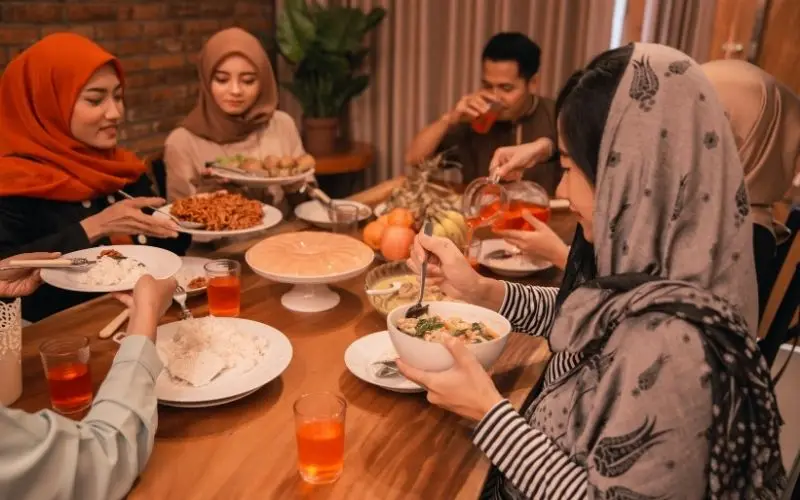


In short: In Indonesia, “sudah makan?” (have you eaten?) is usually a greeting, and “ayo makan!” from someone already eating is often politeness rather than a plan. A real invitation comes with a day, a place and a follow-up. As a rule, whoever invites pays, and the person celebrating treats everyone.
Your neighbour asks whether you have eaten. A colleague eating at her desk waves and calls out “ayo makan!” as you walk past. A new friend says you must have dinner together some time. Are these invitations, and if you go, who pays?
Food is one of the main ways people in Indonesia show warmth, so offers to eat come up all the time. Some are greetings, some are courtesy, and some are real plans. This guide explains how to tell them apart, how the bill usually works, and what to expect as a guest or at work. Indonesia is large and diverse, and habits vary by region, family, religion and workplace. Treat what follows as patterns to recognise, not rules for everyone.
When “sudah makan?” is just hello
Indonesian has a word for phrases that are said to be polite rather than to share information: basa-basi. The official dictionary, KBBI, gives “apa kabar?” (how are you?) as an example. Many food phrases work the same way.
“Sudah makan?” is the best known. It is a friendly check-in, a little like “how are you doing?”, and a sign that someone cares about you. “Sudah” (already) is a perfectly good answer, even if you have not eaten. If you answer “belum” (not yet) to a close friend or a host, be ready to be offered something.
Another phrase confuses many newcomers. When someone is about to eat in front of you, they may say “makan, ya” or “makan dulu, ya”. It sounds like an offer, but it usually means “I’m going to eat now, if you don’t mind”. The polite reply is “silakan” (go ahead). One of our readers tells the story of learning this the hard way in Indonesian Food Etiquette.
| You hear | What it usually means | A polite reply |
|---|---|---|
| Sudah makan? | Hello, I hope you’re well | Sudah, terima kasih (Yes, thank you) |
| Makan, ya / Makan dulu, ya | I’m going to eat now, if you don’t mind | Silakan (Go ahead) |
| Ayo makan! / Mari makan (from someone already eating) | Join me, said mainly out of courtesy | Silakan, terima kasih (Go ahead, thanks) |
| Mampir dulu! (Drop in!) | A friendly gesture as you pass someone’s home | Terima kasih, lain kali (Thanks, another time) |
| Kapan-kapan makan bareng, ya | Let’s eat together some time | Boleh! (Sure!), then see whether a date follows |
Accepting a courtesy offer is rarely a disaster. People are usually happy to share. But a smile and “silakan” is the reply most people expect.
Polite invitation or real plan?
The words alone don’t tell you much. “Ayo makan” can be courtesy at a desk and a real invitation at a family gathering. Look at what comes with it.
Signs that it is a real invitation:
- A specific day, time or place is mentioned.
- The person follows up, often with a WhatsApp message.
- They ask what you eat, or whether you have any dietary needs.
- Other people are told you are coming.
Signs that it is mainly courtesy:
- It is said in passing, while the person is already eating or on the move.
- It uses kapan-kapan (some time) with no date.
- Nothing follows.
If you would like to go, turn it into a plan in a friendly way: “Boleh, kapan?” (I’d love to, when?). If a date follows, it is real. If the answer stays vague, nobody is offended and you can simply leave it there.
Offers are also often repeated. Many people decline something the first time out of politeness, so a good host may offer more than once, and a guest may say no at first even if they would like it. A reader comment on our food etiquette story describes this as the “three no” pattern. If you want what is offered, it is fine to accept the second time. If you don’t, decline gently each time and give a reason, such as “sudah kenyang” (I’m already full).
Who pays: traktir, makan-makan and splitting the bill
Whoever invites usually pays. “Saya traktir” means “my treat”. KBBI defines mentraktir as buying food and drink for someone else, for example at a restaurant. If someone asks you out to eat, they will usually expect to pay. If you do the inviting, expect to pay too.
Seniority matters. At work, and often among friends of different ages, the most senior or oldest person at the table frequently pays, even if they did not do the inviting. It is polite to offer your share. If your host or a senior colleague insists, accept with thanks rather than pushing back hard, which can cause embarrassment. You can return the favour later by treating them next time.

Makan-makan means celebrating with food. The word is used for a get-together meal, often to mark good news, and the person with the news usually pays. Birthdays, a new job, a promotion or a new baby can all lead to a makan-makan or a traktiran (a treat). If colleagues tease you with “kapan makan-makan?” (when are we celebrating?) after your good news, they are congratulating you, and they may also mean it.
Friends often split. Among friends of a similar age, the bill is often shared. You may hear patungan (KBBI: pooling money together) or bayar sendiri-sendiri (each pays their own). In Jakarta, “split bill” is commonly used in English, and the money is often settled by bank transfer or e-wallet afterwards.
Restaurant bills in Jakarta often include a service charge and tax. Our guide to tipping culture in Indonesia explains what the “++” on a menu means and when to leave something extra.
At someone’s home
An invitation to someone’s home is a sign of trust. A few habits will help you feel at ease.
- Bring something small. A box of cakes, pastries or fruit is a welcome gift. Avoid alcohol and pork for Muslim hosts, and ask if you are not sure.
- Look at the door. If you see shoes outside, take yours off too.
- Accept a drink. You will usually be offered something to drink and a few snacks. Taking at least a little is polite, even if you are not hungry.
- Wait to be invited to start. Your host will usually say “silakan” or “ayo, dimakan” (please, eat) when it is time.
- Use your right hand to pass dishes and, if people are eating by hand, to eat. With rice dishes, a spoon in the right hand and a fork in the left is common.
- Say when you have had enough, with a compliment: “sudah kenyang, enak sekali” (I’m full, it was delicious). Hosts often keep offering more as a sign of generosity.
- Accept food to take home. A host may pack leftovers or extra dishes for you. Taking them with thanks is gracious.
New to the dishes themselves? Start with our guide to Indonesian food.
Office lunches and celebrations
In many Indonesian workplaces, lunch is social. Colleagues often eat together, at a nearby warung, a food court or the office pantry, and being asked to join is a good sign. You don’t have to go every day, but joining now and then helps you get to know your team.
- Halal food. Many Muslim colleagues eat halal food only and don’t drink alcohol. When you organise a team meal, choose a venue that works for everyone, and ask about other dietary needs such as vegetarian food.
- Fridays. Many Muslim men attend Friday prayers around midday, so Friday lunches may start later or be shorter. Avoid booking important lunch meetings then.
- Ramadan. During the fasting month, many Muslim colleagues fast from dawn to sunset, and lunch plans in the office change. Follow your colleagues’ lead. Invitations to buka bersama (breaking the fast together) at sunset are common and well worth accepting.
- Office celebrations. For an anniversary, an opening or another milestone, some offices hold a syukuran (a thanksgiving gathering), often with tumpeng, a cone of yellow or white rice surrounded by side dishes. The most senior person present usually cuts the top.
- Your own good news. A promotion or a birthday at work may come with gentle teasing about makan-makan. Ordering snacks or lunch for your team is a simple way to join in.
For more on eating out, from food courts to delivery apps, see our guide to dining out in Jakarta.
Still not sure what an invitation means?
Every newcomer gets a few of these wrong at first, and most hosts are happy to explain. If you have a question about everyday life in Indonesia, from invitations and greetings to settling in, get in touch and tell us what you would like to know. For more on the values behind daily habits, read our guide to Indonesian cultural habits.
Frequently asked questions Food Invitations in Indonesia
What does “sudah makan?” mean in Indonesia?
“Sudah makan?” literally means “have you eaten?”. In everyday use it is a friendly greeting and a sign of care, much like “how are you?”. Nobody expects details. “Sudah, terima kasih” (yes, thank you) is a polite answer. If you say “belum” (not yet) to a friend or host, they may offer you food.
Is “ayo makan” a real invitation?
Sometimes. Said by someone already eating, “ayo makan” (come and eat) is usually courtesy, and “silakan, terima kasih” (go ahead, thanks) is the expected reply. It is a real invitation when it comes with a day, a time or a place, or a follow-up message. If you would like to go, ask “kapan?” (when?).
Who pays when you eat out with Indonesian friends or colleagues?
Usually the person who invites. At work, the most senior person at the table often pays. When someone has good news, such as a birthday or promotion, they usually treat everyone. Among friends of a similar age, splitting the bill is common. It is polite to offer your share, but accept graciously if your host insists.
What does traktir mean?
“Traktir” means to treat someone to food or drink. Indonesia’s official dictionary defines “mentraktir” as buying food and drink for another person, for example at a restaurant. “Saya traktir” means “my treat”, and “traktiran” is the treat itself, often to celebrate good news. A simple thank you is the right response.
What should I bring when invited to an Indonesian home?
A small gift of food is ideal, such as a box of cakes, pastries or fruit. Avoid alcohol and pork if your hosts are Muslim, and ask if you are unsure. Take off your shoes if you see others at the door, accept a drink, and wait for your host to invite you to start eating.