

Editor’s Note:
This article is a humorous opinion column written by Aida Greenbury, whose writing became popular for its witty observations about everyday life in Indonesia. Some cultural references and scientific understanding have evolved since this article was first published. The article has been lightly updated for accuracy while preserving Aida’s original humour, storytelling style and satirical observations.
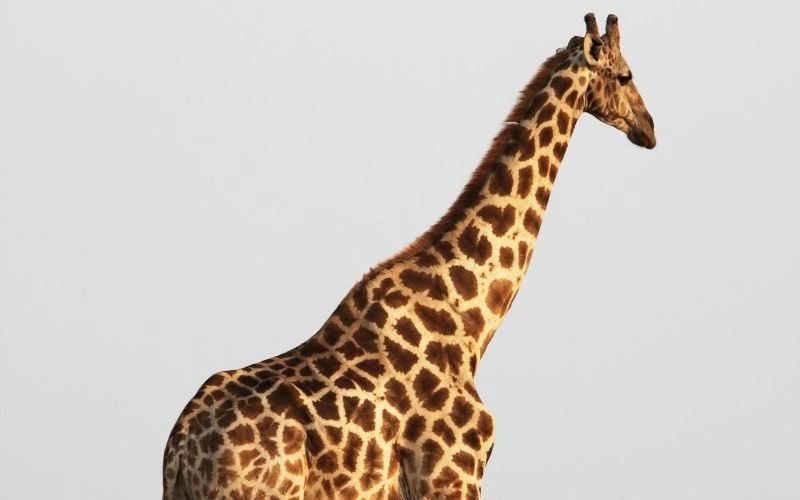
The world and its helpless living creatures are still evolving. My grandma used to tell me a story about how giraffes ended up with long necks. According to her version, generations of giraffes stretched higher and higher to nibble on the young leaves growing at the tops of African trees until, eventually, all giraffes had long necks. Modern biology explains it rather differently through evolution and natural selection, but somehow I have always preferred Grandma’s version.
Similar stories can be found elsewhere. I once read about women from the Kayan communities of northern Thailand and neighbouring Myanmar who traditionally wear brass rings around their necks to enhance their appearance. Their husbands must be grateful the rings aren’t made of gold, otherwise keeping those material girls would be far too expensive. The number of rings increases with age. This custom has always puzzled me. Perhaps they believe that the older you become, the more sins you accumulate and the heavier the burden around your neck should be. Apparently the rings are only removed during bathing and sleeping. I imagine drowning during bath time because your jewellery weighed more than you did would be a rather embarrassing way to go.
The secret behind the illusion of the long neck is not that the neck itself grows, but that the clavicles and upper rib cage are gradually pressed lower, making the neck appear longer. I also heard that some adventurous men from other parts of the world experimented with similar techniques for their nether regions—but abandoned the idea after discovering that the extra weight created some rather unfortunate balance issues.
I believe the world is constantly evolving and its creatures are changing, whether we realise it or not. Take Japan, for example. I remember how Japanese businessmen were often portrayed in old cartoons—short, bespectacled men constantly bowing while speaking exaggerated English. Visit Japan today and you’ll quickly realise how outdated those stereotypes have become. Hollywood has evolved too. Instead of celebrating the glamorous curves of actresses from the 1950s, today’s celebrities seem to chase impossibly thin figures. Some don’t appear to walk anymore—they simply float. They also seem to spend an extraordinary amount of time disappearing into bathrooms after dinner.
A couple of weeks ago I read another article about dengue fever in Indonesia. Scientists regularly identify different circulating strains of the dengue virus, reminding us that viruses, like everything else in nature, continue to evolve. Apparently even mosquitoes are keeping up with modern trends. They don’t need social media influencers—they’ve been upgrading their business model for centuries. Climate, urbanisation and changing environmental conditions have all helped these tiny flying assassins become one of humanity’s most persistent enemies.
So if evolution and adaptation have affected mosquitoes, Hollywood celebrities, Thai women and even giraffes with their famously long necks, what about us? Are we, the ordinary people trying to survive in this wonderfully polluted city, somehow immune? Or are we quietly changing without even noticing? Perhaps, like our buzzing little mosquito friends, we’ll soon find convenient excuses for every one of our own mutations.
I know for certain that I have mutated.
There are the matters of health and personality.
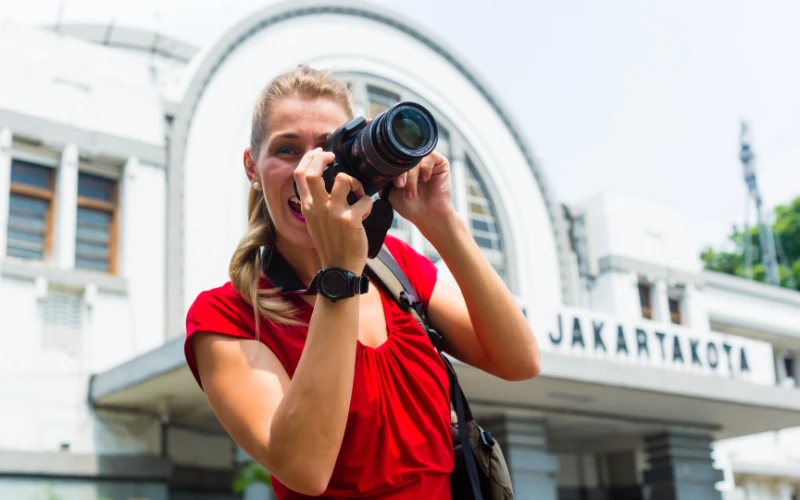
When I first arrived in Jakarta almost a decade ago, despite being younger, I was also considerably healthier. I rarely suffered from anything. I lived in my first house in Central Jakarta, surrounded by the Dutch’s brilliant legacy of open drainage canals—now inhabited by millions of mutant mosquitoes, adventurous rats and enough unpleasant smells to convince your nose to resign permanently.
I realised I had adapted when I sprayed Issey Miyake perfume one day and thought, “What an unusual smell.” Once your senses have adjusted to open drains, luxury perfume suddenly feels strangely foreign.

As my standards for pleasant smells declined, so did my health. I developed a stress-related sinus infection and recurring heartburn that couldn’t be fixed by simply swallowing a couple of Bodrex and Promag tablets. It felt as though I lived on one course of antibiotics after another. Of course, these days we know antibiotics don’t work against viruses, but back then they seemed to be prescribed for almost everything. Meanwhile the mosquitoes were probably celebrating. As far as they were concerned, humanity had just handed them another excuse to keep evolving.
Fortunately, that was the only mutation affecting my health.
My personality, however, underwent a much more dramatic transformation.
Ten years ago I moved from Yogyakarta—a peaceful city surrounded by lush green mountains and the vast Indian Ocean—to Jakarta. (Enough said about this city.)
Back then I was a soft-spoken, humble and gracious—although admittedly rather strong-headed—Javanese woman. It took almost a year to adjust to the traffic, the pollution and, most importantly, the beautiful people of Jakarta. As a melting pot of countless cultures, ethnic groups and nationalities, Jakarta is a city overflowing with opportunity. But it is also an incredibly tough place to compete and survive. It proved far harsher than one innocent Javanese woman had anticipated.
After a few slaps in the face, several betrayals and enough metaphorical carpet burns to last a lifetime, I discovered that I could barely finish a sentence without inserting the F-word at least once.
One thing I learned from the mosquitoes is that we all change—sometimes we even mutate if necessary, for better or worse. But living alongside millions of other people, animals, plants and microscopic creatures, very few of us change in isolation. We change because the world around us changes. Everything influences everything else. It’s one enormous Catch-22.
So the next time I decide to frighten the weasel-like creature that has been living in our roof since the previous century—perhaps by leaving out a piece of meat generously infused with two dozen Viagra pills—I should probably remember that even the smallest actions might trigger another round of mutations somewhere down the line.
What about you?
Do you still have those ingrown toenails?
They could be the first sign of mutation.