

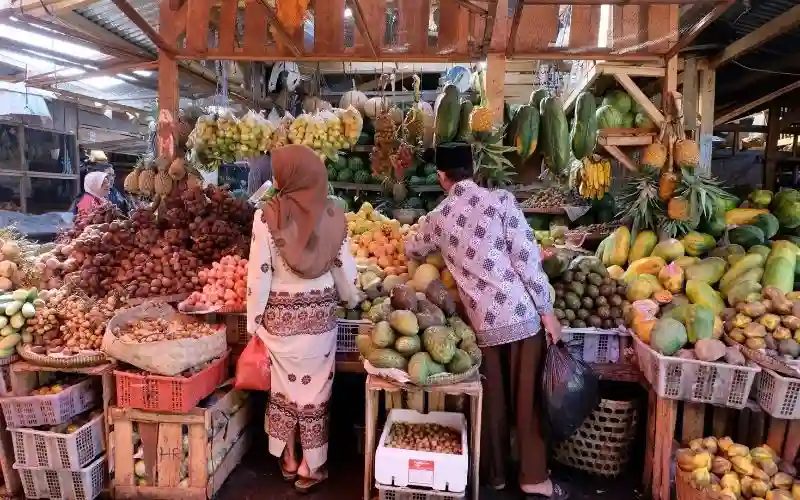
Traditional markets, known as pasar, are an integral part of daily life in Indonesia. They are found in every city, town and village and offer a fascinating glimpse into local culture, food and social interaction.
While modern supermarkets and shopping malls are widely available in major cities, traditional markets remain an important part of daily shopping for many Indonesians, especially for fresh produce, meat and household goods. In recent years, some traditional markets have undergone government-led revitalization, resulting in cleaner, better-organized spaces while still maintaining their traditional character.
The Market Experience
Walking through a traditional market is a sensory experience. Vendors call out their prices, customers bargain, and the air is filled with the smells of fresh herbs, spices, meat and prepared foods.
Most transactions have traditionally been conducted in cash, and it is still advisable to bring small denominations of rupiah. However, in many urban areas, some vendors now accept digital payments using QRIS (QR code payments) and e-wallets such as GoPay, OVO, or Dana. Availability varies widely depending on the market and the individual vendor.
Products Available
Traditional markets offer a wide variety of goods, including fresh fruits and vegetables, spices, meat, poultry, fish, tofu, tempeh, and household items. Many shoppers prefer traditional markets for their freshness and competitive pricing, particularly for locally sourced products.
Bargaining and Prices
Bargaining is a common practice in traditional markets, particularly for non-food items. For everyday food items, prices are often negotiable, but typically only within the range of the current market price.
As an expat, you may sometimes be quoted a higher price. This is not necessarily an attempt to take advantage of you, but rather an assumption that you have a higher purchasing power. For this reason, it is helpful to visit the market with a general understanding of the price per kilo of the items you intend to buy.
It is important to approach bargaining with a friendly attitude. A smile and light conversation go a long way. In many cases, long-term customers are given better prices over time. Also note that in some markets, especially in larger cities or renovated markets, bargaining may be less common than in the past.
Hygiene and Cleanliness
Traditional markets vary widely in terms of cleanliness. Some are well-maintained, while others may appear crowded and less organized.
Fresh meat and fish are often displayed without refrigeration, and floors may be wet from washing or melting ice. Since the pandemic, there has been increased awareness of hygiene in many markets, with some vendors adopting improved handling practices. However, standards still vary significantly.
It is advisable to wash fruits and vegetables thoroughly before consumption and to ensure that meat and fish are cooked properly.

Tips for Shopping in Traditional Markets
Bring small bills, as vendors may not have change for large notes. Going early in the morning will give you access to the freshest products and a more comfortable shopping experience. Dress comfortably and be prepared for warm temperatures and crowded conditions. Footwear with good grip is recommended, as floors can be wet and slippery.
Reusable shopping bags are recommended, as plastic bag use is being reduced in many areas. If you are new to Indonesia, visiting the market with a local friend, driver, or household staff member can make the experience more enjoyable and help with communication.
Expat Tip
If you are concerned about hygiene or food handling, start by purchasing items that are peeled or cooked before consumption. Over time, as you become more familiar with your local market and trusted vendors, your comfort level will increase.
Cultural Insight
Traditional markets are not just places to shop. They are social hubs where relationships are built. Regular customers often develop friendly connections with vendors, which can lead to better service and sometimes better prices.
Safety and Comfort Considerations
While traditional markets are generally safe, it is advisable to remain aware of your surroundings in crowded areas. Keep personal belongings secure and avoid carrying large amounts of cash. As with any busy environment, a bit of awareness will help ensure a smooth and enjoyable experience.
Frequently Asked Questions About Traditional Markets in Indonesia
Are traditional markets safe for expats in Indonesia?
Yes, traditional markets are generally safe. As in any crowded area, it is wise to keep an eye on your belongings and be mindful of your surroundings.
Do you need to bargain in Indonesian markets?
Bargaining is common for non-food items but less so for fresh produce. It is usually done in a friendly and respectful manner.
Can foreigners shop at traditional markets?
Absolutely. Expats are welcome, and many vendors are friendly and accommodating, even if there is a language barrier.
What should I bring to a traditional market?
Bring small cash, reusable bags, and wear comfortable clothing. Going early in the morning is recommended.
Are digital payments accepted in traditional markets?
Some vendors, especially in urban areas, accept QRIS and e-wallet payments, but cash remains the most reliable option.