

Welcome to Indonesia! Much has been said about the friendliness of the Indonesian people and how welcome they make you feel as a visitor to their country. But little has been written about the unwanted critters that might greet you upon your move into a new home in Indonesia.
If you come from a temperate climate and are new to the tropics, the rats, shrews, ants, cockroaches, termites, mosquitoes, cecak and lowak that take up residence in your home may provide quite an unwelcome surprise! Thank goodness their presence in your home can be controlled.
Health Concerns
Besides the aesthetic concerns of having little critters running around your house and popping up or scurrying about at odd moments to startle you … there are health concerns with respect to particular pests in your home environment.
In most unplanned housing areas in Indonesia (kampung), there are no sewer systems. The homes most expats live in don’t fall into this category as they will have a septic tank/hole. However, the kampung just down the street won’t have septic tanks and may feed raw sewage and garbage into street-side gutter systems. Even if your neighborhood gutters are clean, rats will travel from neighboring areas and track filth in with them. This makes it all the more important to put as many barriers as possible between your home and theirs.
Garbage
Household garbage is put in street-side open dumpsters near each house. While the garbage area may have a cover/door … scavengers will pull the door open and take the garbage out to look for items they can recycle. If the garbage is in a bag, they will undoubtedly rip open the bag to see what they can salvage/recycle out of it. While this may be great for the recycling efforts, this exposes your garbage to pests.
Dogs, cats, rats and flies will also feast on your rotting garbage. In a tropical climate, the organic garbage rots very quickly. If your garbage isn’t picked up daily, this can result in a very unhygienic situation in close proximity to your home. Unfortunately pests will track this rotting garbage into your living environment, if you don’t set up barriers to their entry. Some people prefer not to put the garbage outside the gate until they see or hear the garbage man coming. This may work well if the garbage collector is predictable. However if the garbage pick up is erratic, this may cause garbage to pile up in your home.
Mosquitoes
The two primary dangers from mosquitoes are dengue fever and malaria. The Aedes aegypti mosquito, which carries dengue fever, is a daytime biter, most active between 8–10 a.m. and 3–5 p.m. Malaria is transmitted by night-biting Anopheles mosquitoes.
Jakarta and the island of Java have been officially certified as malaria-free by Indonesia’s Ministry of Health, a significant public health achievement. However, malaria remains endemic and a very real risk in many other parts of the archipelago, particularly in Papua, East Nusa Tenggara, Kalimantan, and parts of Sumatra and Sulawesi. If you travel outside Java for work or leisure, consult a travel medicine clinic about prophylaxis before you go.
Dengue fever is a concern throughout the country, including Jakarta, and the situation has worsened in recent years. Indonesia recorded over 257,000 dengue cases and nearly 1,400 deaths in 2024, making it the leading contributor to dengue-related fatalities in Asia. The Aedes aegypti mosquito that carries dengue must have bitten an infected person before it can spread the virus. It breeds in clean stagnant water, making it more of a threat during the rainy season — but given changing rainfall patterns, vigilance is now warranted year-round. A dengue vaccine exists in Indonesia, though it is currently limited to individuals who have already had a previous dengue infection and is not covered under the national health insurance program (JKN). Ask your doctor whether it is appropriate for your situation.
Expat Tip: Jakarta is currently piloting a promising new approach to dengue control: the release of lab-bred Aedes aegypti mosquitoes carrying Wolbachia bacteria, which significantly reduce the mosquito’s ability to transmit the dengue virus. First proven effective in Yogyakarta, where it reduced dengue incidence by 77% since 2017, this initiative is now being expanded across Jakarta. It won’t eliminate the need for personal protection, but it’s an encouraging development for the city.
Adequate screening of windows and doors, and taking care not to leave these open during dawn and dusk periods when mosquitoes are swarming, is advised. Mosquitoes will also seek out dark places in closets and cupboards. Electrified bug zappers and electrified tennis rackets (widely available in Indonesia) can be an effective way to help tackle the problem too.
A product called “Abate” — based on the active ingredient temephos — is a larvicide that comes in powder form and can be added to water storage units or any pool of standing water you suspect might be a breeding ground for mosquitoes. It effectively manages mosquito larvae before they hatch. Abate can be purchased from most pharmacies in powder form.
Recommended usage is:
- Use 1 gram of Abate powder per 10 liters of water.
- For a 100-liter water tank, use 10 grams of Abate (approximately 1 tablespoon).
- One tablespoon contains approximately 10 grams of Abate.
When you need less than 10 grams, try this way:
Take 1 tablespoon of Abate and pour the powder on a piece of paper. Then divide it into 2, 3, or 4 parts according to the dose needed. The effect of Abate powder (to kill mosquito larvae) lasts from 4 weeks to 3 months in the water. During that period, when the water tank is cleaned or drained, it’s advised not to brush the inside wall of the water tank. The water remains safe to drink as long as the correct dosage of Abate is used.
Many Indonesians use mosquito coils (obat nyamuk bakar), which contain pyrethroid compounds that repel and can knock down or kill mosquitoes in the area. Unlike what older advice may suggest, modern coil formulations don’t merely keep mosquitoes away — they can also kill them on contact. That said, the smoke carries real health risks, particularly in enclosed spaces. Research has found that burning a single coil indoors can produce fine particle pollution (PM2.5) equivalent to smoking many cigarettes. If you use coils, do so outdoors or in well-ventilated areas, and avoid burning them in rooms where young children or people with respiratory conditions are sleeping. Keep them away from flammable materials and never leave them unattended.
Many Indonesians also apply minyak kayu putih to their exposed skin to keep mosquitoes from biting. It has a pungent odor, but is quite effective.
My Indonesian mother-in-law taught us to use a small amount of cooking oil to coat the inside of a big pan lid, and use that to swipe at mosquitoes flying around inside the house. It’s a safe and effective way to kill mosquitoes quickly, assuming your aim is good. And it doesn’t bring harmful chemicals into your home environment! They had a family member whose young child died after a widely used chemical was sprayed from the can in their child’s room, so we took her advice to heart.
Some people have tried mosquito repelling plants with some success.
Rats and Shrews
Rats and shrews scuttle about in dirty places and could track filth in if you don’t block their access into your living environment. Rats not only spread disease, but are also a nuisance as they like to chew through doors, window screens, cables on appliances and computers, electric cables in your attic and even deserted cars where the seats become their nest. If possible, use steel grates with very fine mesh over any drainage holes that could give these pests access to your home. Rat poisons and rat glue could offer another solution to control varmints that have already gained access to your home. These products can be purchased at Ace Hardware and some supermarkets. Be cautious using these products if you have young children or pets.
Cockroaches and Termites
Cockroaches live in unclean conditions, where garbage is open and there is access to food. Many new residents are startled by the scurrying of cockroaches into cracks and crevices whenever they enter a room and turn on the light. Some products that can help control cockroaches are insect sprays. However, some people prefer to use Kapur Ajaib (Magic Chalk), a product that resembles blackboard chalk. If you draw a line with it, cockroaches and ants will not cross the line. Many people draw lines around their cabinets to create a barrier around their cupboards. Note that modern Kapur Ajaib products (such as the widely-sold “Bagus” brand) contain deltamethrin, a synthetic pyrethroid insecticide — they are effective, but should be applied away from food preparation surfaces and out of reach of children and pets.

Termites, as in any tropical climate, can threaten the very structure of your home, if they are not detected early and taken care of. If you see very fine piles of sawdust, you need to investigate further as termites can destroy furniture and wood moldings very quickly. Contact your landlord at the first sign of termites and ask that the infected woodwork be professionally sprayed and treated as soon as possible.
Cecak
Cecak (wall lizards or gecko) are actually quite helpful creatures as they consume the mosquitoes that live in your home … but some people don’t like them scurrying about the walls and ceilings of their home or leaving their droppings on the furniture or walls.
Lowak or Musang
Lowak (a nocturnal raccoon-like animal or civet cat) find their way into your attic through air vents and set up residence. They also shove aside or damage roof tiles to gain entrance to your attic areas. The fruit they bring back to their nest to eat draws cockroaches and rats into your attic as well. Their urine stains the ceiling below their nest and lets forth a pungent vanilla-like scent.
Cats and Dogs
Due to Muslim religious beliefs, there are few dogs in urban neighborhoods on Java (the situation is very different in predominantly Hindu Bali and Christian areas of Northern Sumatra). There may be an occasional Balinese family with their dogs laying around their homes, and some wealthier families like to raise purebred animals. But, in general there is little bother from neighborhood dogs. There are however, many seemingly wild neighborhood cats, whose nighttime mating snarls keep families up all over the city. The most appropriate response to the noise is to get your household help to throw a bucket or dipper of water at the cats and drive them away!
Be aware that most pets in Indonesia do not have the same level of hygiene, healthy diets and veterinary care as well cared for pets in the West. Many people also dislike dogs and cats and will abuse them. Because of this treatment, dogs and cats are often wary of humans and may seem distant. Caution your children about approaching dogs and cats, due to diseases and the potential for bites and scratches.
What this means for expats: Jakarta is officially rabies-free, and active vaccination programs for animals are maintained there. However, rabies is endemic in 26 of Indonesia’s 38 provinces, and remains a serious health threat — particularly in East Nusa Tenggara, Bali, West Java, and parts of Kalimantan and Sulawesi. Between January and July 2024, 71 Indonesians died from rabies, and WHO data shows that the vast majority had not sought medical care after being bitten. If you or a family member is bitten or scratched by an animal anywhere outside Jakarta, seek medical attention immediately — do not wait for symptoms. Wash the wound thoroughly with soap and water first. Read more about Pets in Indonesia and Rabies.
Ants
Controlling ants is a constant challenge in Indonesia. Their industrious efforts to sustain their nests mean that trails of ants into your home may be a fact of life during your stay. Spraying trails of ants in your home is totally ineffective. Ants make their nests in your yard, in the attic or in your neighbor’s yard and attic. Only a direct attack on the nest will eradicate it. Fortunately there is a more environmentally friendly alternative to spraying Baygon on the ant nest … trails of ants are relatively easy to eradicate by placing a simple mixture of a small amount of borax glycerin, put in a sweet liquid and set near the ant trail. They will consume the borax and take it back to the nest to feed the queen ant … and the nest will die. Indonesian drink syrup works great with the borax! You can obtain borax glycerin crystals from your neighborhood apotik (pharmacy). Kapur Ajaib (Magic Chalk) also is very effective to build a barrier to keep ants out.
Bed Bugs
These blood sucking insects live in wood and natural fibers like kapok (silk cotton) which is used to stuff mattresses and pillows. I’ve also been bitten by them (in the butt) when riding in the 3rd class section on a train decades ago. They lived in the cane that was used on the benches and the surrounding wood framing.
“When we had an infestation of them in my helper’s quarters we tried everything we could think of to get rid of them including bug spray. The only thing that finally worked was to get rid of the bed (they had bored into the wood and were nesting there) and wait for a few weeks to make sure the bugs died off … and then replace the bed. Our first clue that there was a problem was the streaks of blood on the wall where the helpers had killed bugs that had bitten them in the night, and were crawling up to the attic where they were nesting.”
They can also lay eggs and live in a sleeping mat or in the building structure of the house. You should squash each one of these bugs that you find immediately to try to keep the population down, but that will not solve the problem. They can move quickly, so as soon as you suspect they have infected another area, immediately spray or wipe the area with rubbing alcohol to kill them.
Before You Move In
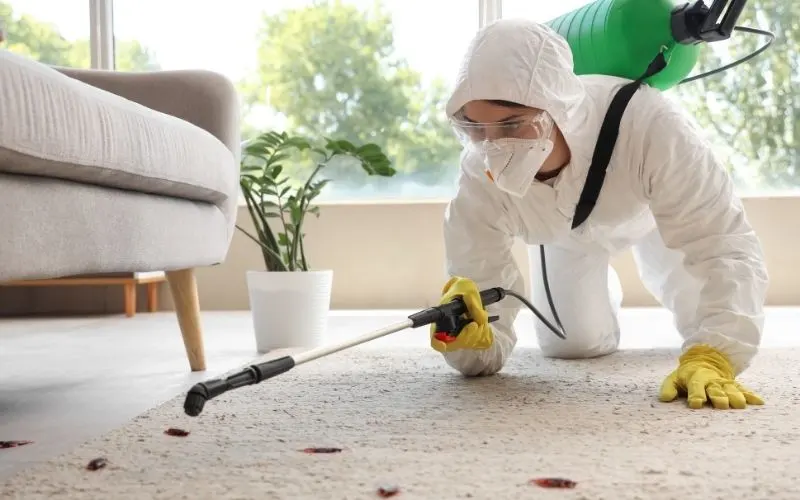
Prior to moving into a new home, call upon a professional pest control service to thoroughly inspect the home and look for evidence of pest infestation. They can quickly assess the extent to which your new home has been invaded by various pests and give you an idea of what will have to be done to eradicate the pests. Ask their advice on additional barriers that could keep pests out of your living environment. It is recommended that thorough pest control is conducted on a regular basis.
Barriers to Pests
Homes in Indonesia are constructed with different standards than what you would be used to at home. Some of these cost-cutting measures mean that door and window frames don’t fit snugly in the wall, gaps appear in strange places, such as around air conditioners and TV cables. Suffice it to say that there are a multitude of ways that pests can enter your home.
But, don’t despair, you can do much to prevent the entry of pests from your house by simply establishing barriers to their entrance into your domain. Ask your housing maintenance contractor to install these barriers. These could include: grates on the drains that lead into the yard from the streets, screens on all windows, screen doors on doors that may tend to be left open, grates or heavy chicken wire in areas that rats may tend to enter your house and screens on drain openings within the home (set in bathroom floors). Frequently flush out your drains with a bleach or disinfecting solution and consider keeping the plug in the drain even when there is no water in the basin. These relatively simple measures will make a big difference in reducing your pest population.
Do not neglect your household staff’s areas. Keeping them healthy means keeping your family healthy as they handle your food and are in constant contact with family members. Do what you can to create pest barriers into their part of the house as well.
Dangers of Pest Control
Be certain to consult a reputable pest control firm. Ask friends for advice on who they’ve used to eradicate pests in their home. Taking the time to find a good pest control firm will pay off later in keeping your home environment safe for human habitation.
In Indonesia, controls are lax on chemicals used for pest control. Unknowledgeable operators may spray toxic chemicals in your living environment, chemicals that would be banned in your home country. We’ve even heard the story of a family that had their house sprayed for termites (mind you that never works) and ended up having to walk away from all their possessions as an independent analyst determined that the toxicity of the chemicals that had soaked into their personal belongings was far beyond safety levels.
While we often think that pest control involves dangerous sprays, there are a variety of safe, ‘green’ pest control options including the out-of-the-way laying of chemicals that the pests ingest, baiting, trapping, application of powders in pest breeding or resting places and deterrent devices. A good pest control firm will undoubtedly offer you these ‘green’ options.
Many of the workers that come to your home to eradicate pests will only speak Bahasa Indonesia, so you will not be able to inquire as to what chemicals are being used. Be sure that you thoroughly discuss with the salesman exactly what chemicals, if any, will be used in your home.
Expect the representative of a reputable pest control firm to provide good advice on how to keep pests from your living environment, utilize safe methods for eradicating pests and provide follow-up services to be sure that your home environment is free of unwanted pests.
For more information on how to control pests in your home, read the ‘Varmints and Critters’ section of AWA’s Introducing Indonesia, A Guide for Expatriates.
Mini Glossary
| English | Bahasa Indonesia |
|---|---|
| rat | tikus |
| shrew | cecurut |
| wall lizard | cecak |
| mosquito | nyamuk |
| cockroach | coro, kecoa |
| civet cat | lowak, musang |
| ant | semut |
| termite | rayap |
| pest control | pembasmi serangga |
| chemicals | kimia |
| poison | racun |