

The rainy season in Jakarta and much of western Indonesia typically runs from November through March, with peak rainfall usually occurring between December and February. At this time of year, Jakarta is subject to heavy, sustained downpours. In addition to problems with street flooding (see Rainy Season Woes), Jakarta residents often experience problems with roof leaks. Following are common questions related to roof leaks and suggestions for what can be done.
Why are roof leaks such a common problem in Jakarta?
Heavy rains, combined with varying construction standards and materials, mean that roof leaks are relatively common in Indonesia, particularly in older properties or homes with lower construction standards.
The most common roofing materials used in Indonesia include ceramic and clay tiles, along with newer materials such as concrete tiles and metal roofing systems. Many traditional tiles are still manufactured with slight variations, which can affect how tightly they fit together and allow for shifting over time with heavy winds or minor structural movement.
Roof tiles are not always installed with proper waterproof sheeting underneath (such as tar paper or modern membranes), and the rafters they sit on are not always perfectly level.
The roof ridge and joints are typically sealed with mortar and may lack sufficient waterproofing.
What does all this mean?
There are often small gaps or pathways where water can enter. Be aware that water does not always drip directly below the problem area — it may run along rafters or tiles before appearing elsewhere. This can make locating the source of a leak more difficult. It can also be challenging to assess leaks during heavy rain, and many contractors prefer to inspect shortly after rainfall when conditions are safer.
Before you rent: check for warning signs
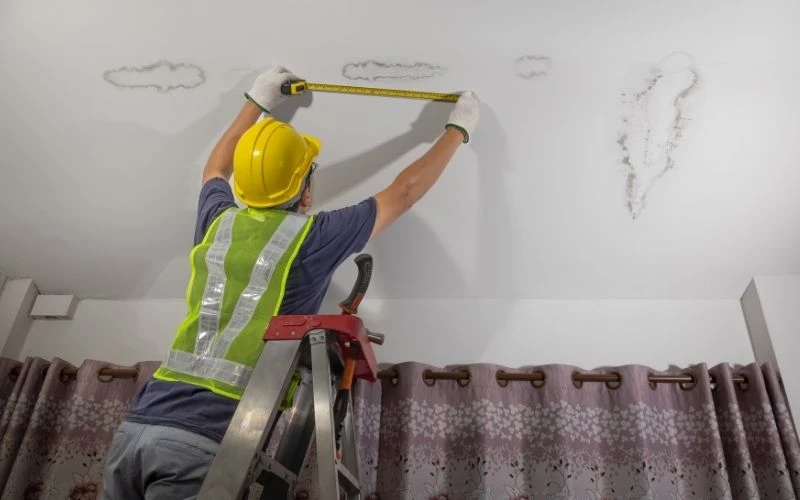
If you notice water stains on ceilings or walls when viewing a property, this is a clear indication that there has been a roof leak or water ingress issue.
Unfortunately, the true severity of the problem is often only apparent during heavy rain. What may appear to be a minor cosmetic issue could indicate a larger underlying problem with roofing, drainage, or waterproofing.
Expat Tip: Do not accept simple cosmetic fixes such as repainting over stains. While this may make the property look presentable, it does not resolve the underlying issue. You should ask for the source of the leak to be properly investigated and repaired before signing a lease, or ensure that there is a clear written agreement with the landlord on how the issue will be handled if it reoccurs. See also Housing in Indonesia and Lease Agreements.
Occasional dripping sounds without visible leaks
Occasionally, during a rainstorm, you may hear what sounds like dripping onto ceiling panels but see no visible water or staining.
In many cases, these are minor leaks where the moisture dissipates quickly due to heat and airflow. However, repeated exposure can still lead to mold, ceiling damage, or staining over time.
Expat Tip: If you hear recurring dripping sounds, it is worth having the area inspected even if no visible damage appears. Early intervention can prevent more costly repairs later. For related issues, see Household Maintenance.
I’ve had my roof repaired several times already, but still have a leak. Now what?
As with most contracting and/or maintenance in Indonesia, the key question is: What exactly is being repaired?

When roofing contractors are asked, “Will the roof leak?”, it is not uncommon to hear, “Let’s wait until it rains and then we’ll see.” While Indonesia does have national construction standards (SNI), enforcement and consistency in residential construction can vary, which contributes to differing repair outcomes.
Most roof leaks occur because:
- A roof tile has shifted
- A ridge or joint has not been properly waterproofed
- A flat concrete roof does not slope correctly toward drainage
If you are experiencing recurring roof leaks, consider the following:
Have the entire roof checked for visibly shifted and/or broken tiles.Have the roof ridges inspected for cracks and chips. These areas should be re-mortared and ideally sealed with a waterproof coating. Materials may have deteriorated during the dry season and only become apparent during heavy rains.
If the leaking originates from a roof joint, junction, or poor drainage slope, a longer-term solution may be required. This typically involves improved waterproofing systems or structural adjustments. If you are renting, your landlord may be hesitant to undertake these more costly repairs. See also Working with Household Staff and Home Repairs in Indonesia.
Is there any kind of roof maintenance that should be carried out?
Prior to and during the rainy season, the following preventative measures can help reduce the likelihood of leaks:
Have all exterior drains inspected and cleared of debris, ensuring they are properly covered.Have the roof checked for shifted, broken, or cracked tiles.Have flat roof surfaces checked for standing water. Standing water usually indicates improper sloping or a blocked drain.
For broader preparation, refer to Preparing for the Rainy Season.
What this means for expats
In Indonesia, even well-built homes can require more frequent maintenance than in many Western countries due to climate intensity and construction variability.
For expats, this means:
- Regular inspections are part of normal home upkeep
- Minor leaks should not be ignored
- Clear communication with landlords about responsibilities is essential
Understanding this reality early can help avoid frustration and unexpected repair costs during the rainy season. For more guidance, see Living in Indonesia and Settling into Your New Home.