

When Buying a Car in Indonesia, expatriates will find a wide range of brands available, with Japanese manufacturers such as Toyota, Honda, Daihatsu, and Mitsubishi dominating the market. These brands are popular because of their reliability, strong service networks, easy spare-part availability, and better resale value.
Most cars on Indonesian roads are MPVs, SUVs, or compact city cars. This reflects practical needs such as family transport, traffic conditions, road quality, and the common use of private drivers. Two-door sports cars are less common and generally less practical for daily use in Indonesia.
Cars are also considered high-value goods and are subject to significant taxes, including luxury goods tax or PPnBM, which can increase the final purchase price. For most expats, importing a car from overseas is not practical. Import duties, taxes, permits, and strict regulations can make the process expensive and complicated. Used car imports are generally prohibited, while new vehicle imports require special approvals.
Although larger-engine cars are available in Indonesia, they are less common and can be heavily taxed. If you are Buying a Car in Indonesia, always check the vehicle’s legal documents carefully, especially for imported cars, to avoid problems with ownership, registration, insurance, or resale later.
Buying a New Car in Indonesia

When Buying a Car in Indonesia, expatriates must prepare valid identification documents before the vehicle can be registered. For foreigners, this usually means a valid passport and an active KITAS or KITAP residency permit. Without a valid stay permit, a foreigner generally cannot register a vehicle under their own name.
In practice, many expatriates choose to buy a car under their company’s name or through an Indonesian spouse to make the administration easier. If the vehicle is purchased under a company, documents such as the company NPWP, business license, domicile letter, and company deed may be required.
Payment can be made in cash or through financing. Car financing in Indonesia usually requires a down payment, commonly around 20–30%, depending on the lender and vehicle type. Indonesian banks may be cautious about lending directly to expatriates, but some automotive finance companies linked to dealerships may offer leasing options.
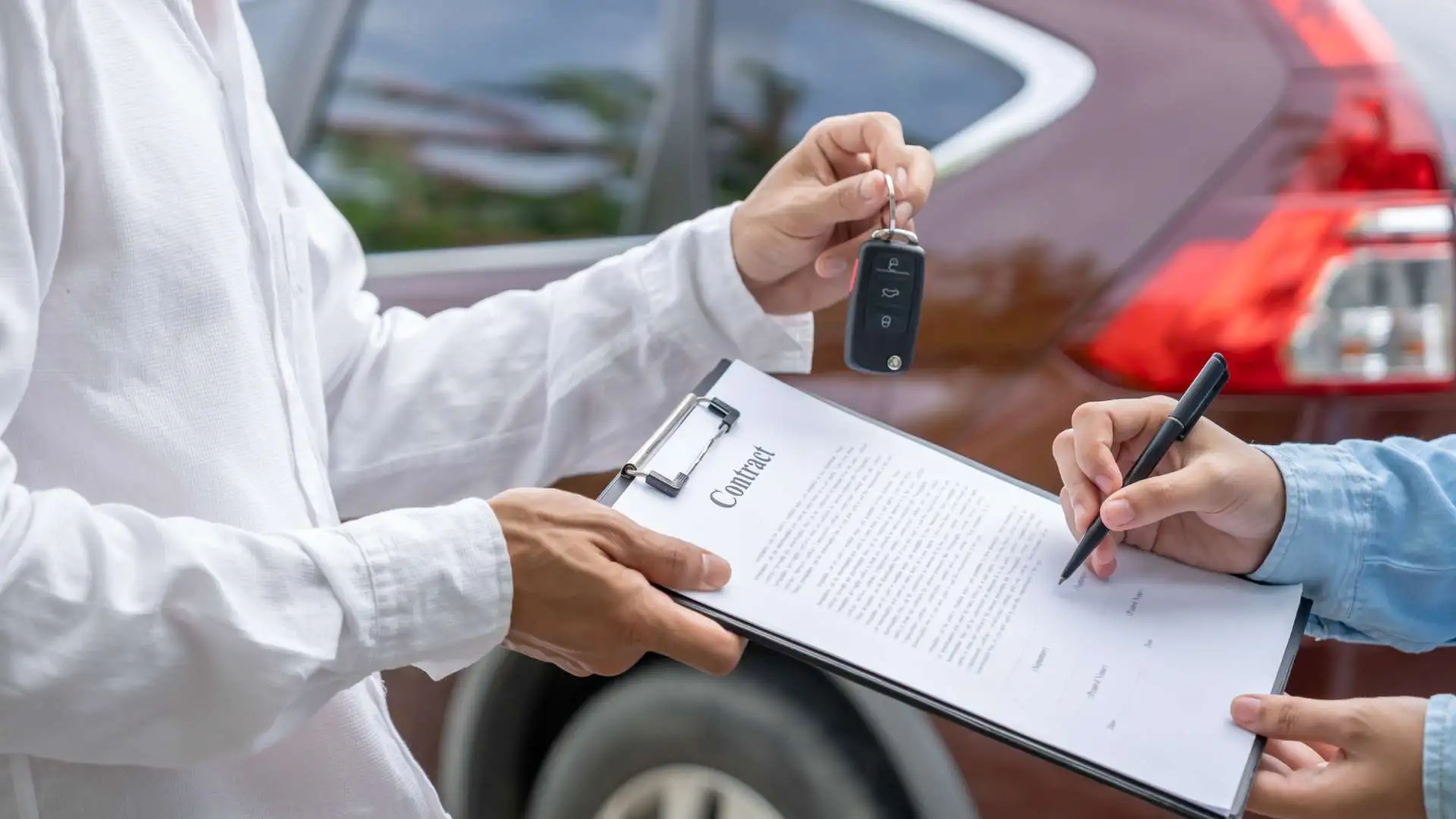
For expats Buying a Car in Indonesia, typical financing documents may include a passport, ITAS, employment or sponsor letter, proof of income, and down payment. Always confirm the exact requirements with the dealership or finance company before signing any agreement.
Upon completion of the transaction, the purchaser should receive:
- STNK (vehicle registration certificate) – must be carried in the vehicle at all times
- License plates (plat nomor)
- BPKB (proof of ownership book) – should be stored safely at home
- Faktur (original invoice)
- Kwitansi pembayaran (payment receipt)
Processing of the STNK and license plates typically takes one to two weeks. While the vehicle may be delivered immediately, it should not be driven on public roads until proper registration or temporary documentation has been issued.
Electric Cars in Indonesia
Electric vehicles (EVs) are becoming increasingly popular in Indonesia, supported by government incentives, lower operating costs, and growing environmental awareness. Adoption is rising quickly, particularly in Jakarta and other major cities.
The EV market is currently dominated by a mix of Chinese, regional, and global manufacturers, with brands such as BYD, Wuling, Chery, VinFast, Hyundai, and Neta leading the segment. Chinese brands, particularly BYD and Wuling, have gained strong market share due to competitive pricing and availability. Models such as the Wuling Air EV and Hyundai Kona Electric are now commonly seen on the roads.
For expatriates, EVs offer several advantages. Running costs are lower due to reduced fuel expenses, and maintenance is generally simpler because electric vehicles have fewer mechanical components. Charging infrastructure is expanding, especially in Jakarta, though it is still limited in more remote areas.
One of the most significant advantages of owning an EV in Jakarta is that electric vehicles are exempt from the city’s “odd–even” (ganjil–genap) traffic restriction system. This regulation limits road usage based on license plate numbers during peak hours on major roads. EVs are officially exempt, meaning they can be driven freely regardless of the date or plate number. For expatriates commuting in central business districts such as Sudirman, Thamrin, and Rasuna Said, this provides a major convenience advantage.
However, buyers should also consider that resale values are still developing, and service networks vary depending on the manufacturer. As infrastructure continues to improve, EVs are expected to become an increasingly practical option for expatriates in Indonesia.
Buying a Used Car
Buying a used car is common in Indonesia and can offer good value, but it requires careful attention to documentation. Importing used cars is illegal, though some vehicles may be misrepresented. Buyers should verify the vehicle’s history carefully.
A common local practice is to delay or avoid the official transfer of ownership (balik nama) to save on fees. While widely practiced, this can create complications. Expatriates are strongly advised to complete the ownership transfer to ensure legal clarity and avoid future issues.

When purchasing a used car, ensure you receive:
- Original STNK
- Original BPKB
- Original invoice (faktur)
- Signed receipt (kwitansi) with full vehicle details
It is also important to obtain a copy of the ID (KTP or equivalent) of the person whose name appears on the BPKB, as this is required for annual tax renewal.
Checking Vehicle Legitimacy When Buying a Car in Indonesia
When Buying a Car in Indonesia, especially a used car, checking the vehicle’s legal status is essential before making any payment. Buyers should confirm that the car is properly registered, the ownership documents are valid, and all vehicle taxes have been paid.
In Jakarta, this can be checked through the official SAMSAT system by entering the vehicle’s license plate number. The system may show key details such as vehicle type, registration validity, and tax status. On a national level, the SIGNAL (Samsat Digital Nasional) app also allows users to check registration information, verify tax payments, and manage certain vehicle documentation online.
For expatriates, this step helps reduce the risk of buying a car with unpaid taxes, mismatched documents, unclear ownership, or stolen vehicle issues. Before finalizing the transaction, always compare the online records with the physical documents, including the STNK, BPKB, license plate number, engine number, and chassis number.
As a best practice, never rely only on the seller’s statement. Verify the vehicle through official channels, check the documents carefully, and complete the transaction only when the legal records match. This is one of the most important steps when Buying a Car in Indonesia.
Buying a Used Motorcycle
When buying a used motorcycle, ensure that the STNK and BPKB are valid and that vehicle taxes are up to date. As with cars, ownership documentation must be complete, and access to the original owner’s ID is required for administrative processes.
Motorcycles are widely used and can be a practical option, but expatriates should carefully consider safety and traffic conditions before purchasing.
Sources for Used Cars
Used cars are widely available through online platforms such as OLX, Mobil123, and Carmudi, as well as dealership showrooms and car markets such as Kemayoran in Jakarta.
When buying directly from an owner, always verify documentation carefully and ensure that the ownership and registration details are legitimate.
Renewing Your STNK
The STNK must be renewed annually, with a full renewal every five years. Unlike in some countries, reminders are not always issued, so it is important to monitor the expiration date.
Renewals can be completed at SAMSAT offices, through the SIGNAL app, or via a Biro Jasa (agent service). Driving with an expired STNK can result in fines.
Car Insurance
Car insurance is not mandatory in Indonesia, unlike in many Western countries where at least third-party liability coverage is required by law. As a result, it is estimated that only around 20–30% of privately owned vehicles in Indonesia are insured, with higher coverage rates typically found in major cities such as Jakarta and among newer vehicles.
For expatriates, this has important practical implications. In the event of a minor accident, it is quite common for the parties involved to settle the matter privately rather than involving the police, particularly if the damage is limited. In some cases, involving the police can complicate the situation and prolong resolution, so informal settlement is often preferred.
Because of this environment, many multinational companies strongly recommend that their expatriate employees do not drive themselves, but instead hire a driver. In the event of an accident, the driver is typically responsible for handling the situation, communicating with the other party, and negotiating any settlement. This can help reduce stress and avoid misunderstandings, particularly for expatriates who may not be familiar with local language or procedures.
However, in the case of a serious accident, especially where there is significant damage, injury, or a dispute between parties, a police report (laporan polisi) will be required. This is particularly important if you intend to make an insurance claim, as insurers will typically request official documentation before processing the claim.
Both local and international insurance companies operate in Indonesia, and it is advisable to compare policies carefully. Some insurers may restrict coverage for older vehicles or imported models, and service quality can vary significantly between providers.
For expatriates, having comprehensive insurance is strongly recommended, as it provides protection not only for vehicle damage but also helps manage the complexities of handling accidents in Indonesia.