

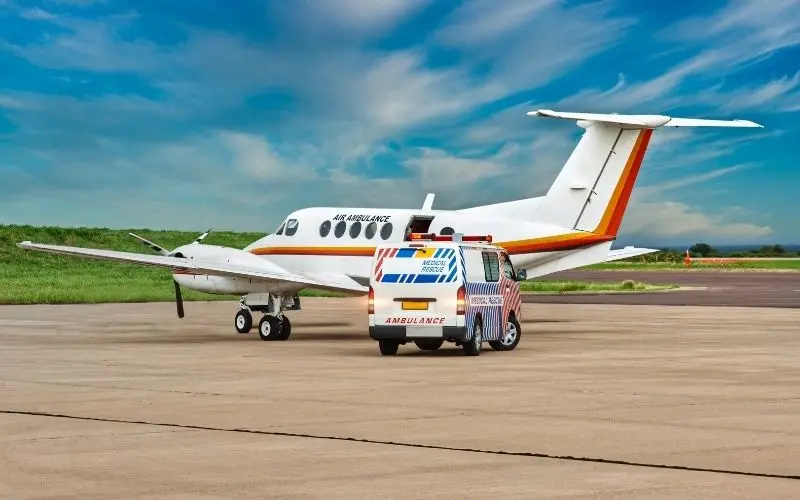
Medical evacuations (medevac) are by definition unplanned, unexpected and urgent. They result from an equally unexpected event — illness or injury which has happened to a patient far from quality medical care. The medical problem sets the timetable for transportation, and determines the mode, route and destination.
Most people’s expectations of medical evacuation are shaped by what they have seen on television — dramatic helicopter rescues, instant response times, and effortlessly equipped flying hospitals. The reality, as this guide explains, is considerably more complex.
But when a medical evacuation has become necessary, and people are worried, anxious, scared and in pain, the time is not appropriate to explain the sensible reasons for the differences between cherished expectations and an actual medevac. For this reason, the background planning that goes into supplying clients with a careful and professional medical evacuation service is worth looking at in detail.
The main elements in a rapid and secure medical evacuation are careful application of medicine and safe transportation. To support these, a large number of actions have to be taken after the go-ahead for the medevac has been given, including checks that:
- The medical director or manager of the patient’s company agrees to the evacuation
- The patient’s full name, nationality, and birth date are known
- The patient’s medical problem and medical history are known
- The passengers’ names (if any) are known
- The location of the patient is precisely known
- The patient’s passport is available, and that it as well as the exit permit are valid
- The destination country will allow the patient in
- The destination hospital is appropriately chosen, and has a bed and doctor available
- If the patient is a child, the destination hospital has a companion bed available
- The treating doctor is aware that the patient will be evacuated and will release the patient
- The patient’s hospital and medical expenses will be paid so the patient will be released
- The charter aircraft used is suitable for the patient, the route, the airport, and the weather
- The charter company has provided a fixed-price quotation
- A flight plan has been filed
- The medical crew are available
- The medical crew have been briefed on the patient’s condition
- Appropriate medical equipment is listed, checked, and packed
- The evacuation costs are covered, or another party has guaranteed the cost
- Money to cover the cost of airport and fiscal taxes is available
- Transportation is available for medical crew and patient to and from airports
- The plan of action takes into account delays and changes in time zones
- Family members have hotel bookings available after arrival at the evacuation destination
- Local agents are available for ground assistance
- The flight plan is approved
- The destination airport is open
Checking and preparing for many of these items can take considerably less time if companies and individuals make the effort to plan in advance for an emergency.
In Indonesia specifically, additional considerations apply. Confirming that the patient’s destination country will accept an Indonesian-issued health certificate, verifying whether the receiving hospital in Singapore, Penang or Bangkok has been pre-notified, and establishing whether the patient holds adequate international health or travel insurance with medevac cover are all steps that frequently cause delays in practice. Expats who have arranged this in advance — through their employer, their insurer, or a dedicated assistance company — consistently experience faster, smoother evacuations.
Points to Remember
Medical escort staff are specialists
Care of the patient in the air and on the ground while travelling is far harder than care of the same patient in a hospital, clinic, or home. The following are some of the complications faced by medevac crews:
- The operating platform is noisy, unstable, and cramped
- Privacy is non-existent
- The environment is often dirty, hot, and without basic utilities such as power and water, let alone a flat area to carry out sterile procedures
- Trained personnel are often lacking and the untrained are often panicking
- Basic medical techniques such as blood tests, X-rays and ultrasound are quite impossible
- In the case of air and sea transportation, the environment may induce physiological changes in even healthy people that are magnified by the physical changes caused by disease
- The patient should be escorted by at least one staff member able to communicate in the patient’s own language — a detail that is easy to overlook under pressure but that can be critical to both clinical assessment and the patient’s emotional wellbeing
Therefore, medical escorts cannot and should not be picked from just anywhere. Being a friend of the family, even if medically qualified, is not a valid reason to escort a patient.
Medical escort staff have to be called in at short notice
Doctors are needed who are experienced in preparing and executing medical evacuations. A medical escort should not be a doctor or nurse only used to working in hospitals who is unaware of the logistical and medical difficulties associated with transporting sick patients.
Trained professionals are in short supply and cannot be waiting on call for when a medical evacuation is required. The only way this is feasible is when a large urban hospital in a highly-developed country, supported by taxpayers and/or private donations, is prepared to release its medical staff on a rostered basis for such work. Even then, these medical flights are almost universally limited to under 30–40 minutes from home base. The Royal Flying Doctor Service of Australia is often cited as a model, and while its medical teams do cover an extraordinarily wide geographic area, they are solely employed in this service and supported by a combination of government and private funding — a model that has no equivalent in Indonesia or most of Southeast Asia. There is consequently a short and unavoidable delay, as medical staff cannot simply abandon their patients and their work.
The medical equipment needed is far from ordinary
Medical equipment specialised for use in the medevac environment is also needed. All equipment must be light, compact, robust, and battery-operated — specifications which mean costs at double or triple those of traditional hospital-based equipment.
When two or more patients (or indeed two or more medevacs) need to be supplied at the same time, such equipment must be expensively duplicated, and then more sets bought and kept ready as backups. In a tropical environment, breakdowns are more common and equipment has to be sent overseas for servicing, increasing downtime. And then before each evacuation all medical equipment needs to be checked, as you cannot send out for spares while en route.
Modern medevac equipment increasingly includes telemedicine capability, allowing the escorting medical team to transmit real-time patient data — ECG readings, oxygen saturation, blood pressure — to the receiving hospital before arrival. While this does not replace the need for fully equipped on-board medical kits, it has meaningfully improved the quality of clinical handover and reduced the number of diagnostic surprises awaiting the receiving team.
Medical equipment needs to be installed in the aircraft chartered for the purpose
In our area of operations, there are no publicly owned air ambulances available for individual civilian evacuations, as governments and health authorities do not consider these a funding priority. Indonesian government agencies including Basarnas (the national search and rescue body) maintain aircraft that can be deployed in large-scale disaster or mass-casualty situations, but these resources are not available for individual civilian medical evacuations and should not be factored into personal or corporate emergency planning.
The cost of providing a dedicated aircraft on permanent standby in Singapore is substantial, covering not only the fixed costs associated with hangerage, crewing, maintenance and apron fees, but also the opportunity cost when aircraft on standby are unavailable for other operations.
Should companies wish to reduce the delay in launching a medevac to an absolute minimum, the answer is to put an aircraft with flight and medical crew on permanent standby and absorb the cost. Otherwise, the evacuation will be carried out in another aircraft chartered for the mission. This necessitates reliance on the outside air operator’s crew availability and speed of response, and also builds in additional and unavoidable delays while medical equipment is transported and stowed safely on board.
Proper installation of equipment and consumables is paramount. When the aircraft hits a patch of turbulence, encounters tropical squalls or even icing conditions (entirely possible even on the equator when the outside air temperature is below four degrees Celsius), you definitely do not want to share an aircraft cabin with loose steel oxygen cylinders or a wayward electrocardiograph.
Aircraft, like medical crew, need to be chosen appropriately for the mission
A smaller aircraft is cheaper and will burn less fuel, but will fly more slowly and need to refuel more often. The majority of all fuel burnt is consumed getting up to an efficient flying altitude where the air is thinner and friction reduced. A smaller aircraft will need to climb more often and cannot reach as high a cruising altitude, and as such may actually be more expensive over a longer flight.
A jet will travel faster than a turboprop aircraft, but will require greater runway length for take-off and landing as well as a higher-quality runway surface. An unpressurised aircraft makes loading easier and allows for larger emergency exit doors. However, such an aircraft is noisier, slower, and a poor choice medically for illnesses or injuries where the effects of altitude can be dangerous or lethal.
More expensive aircraft also carry weather radar and can avoid much bad weather. This is essential, as none of the commercially available business jets that form the backbone of civil aviation fleets can match the maximum altitude attainable by the large Boeing and Airbus aircraft that allow scheduled airlines to provide a more comfortable ride above the weather.
Aircraft and helicopters cannot go where they should not go
All aircraft have minimum take-off, flight and landing requirements, and the pilot-in-command and IATA rules govern these. Wise clients of charter companies do not do any of the following:
- Tell the pilot to fly into bad weather when he is reluctant to do so
- Hurry up pre-flight checks
- Insist on take-off before the co-pilot has arrived
- Persuade or bully a tired pilot to fly again rather than wait for his replacement
- Insist on take-off when a warning light indicates a possible malfunction
- Insist on take-off before the tanks are topped up
- Ask for a night flight when the landing area is unlit and/or the approach is unfamiliar
- Ask a non-instrument rated pilot to fly IFR (Instrument Flight Rules) when VFR (Visual Flight Rules) flying is no longer possible, rather than to turn back
- Tell the pilot to try and get it down on a runway that is too short
- Tell the pilot “I’ll get some cars with headlights on and oil drums with petrol-soaked sand to outline the runway!”
Sadly, the authors of this guide have personally witnessed people attempting one or more of the above.
Patients, passengers and crew must still abide by the rules of civil and natural law on a medevac flight
The most important law is that of gravity. Time spent checking the aircraft pre-departure is not time wasted, as if the engines stop, gravity cannot be reasoned with. Additional unnecessary passengers and luggage (as opposed to medical equipment) increase fuel burn and flying time. Civil laws are equally important.
A medevac is not a mercy dash and authorities do not condone associated illegalities. The fact that an aircraft is on a medical evacuation flight does not allow the patient, pilot and crew to ignore the laws of the country. There is no regulation or agreement that allows visa- and passport-free entry into a country simply because there is a patient on board. There is a regulation that allows a pilot to declare a medical emergency and land in a country for which the plane and crew did not previously file a flight plan or carry visas — but only if this emergency occurs and is declared in-flight.
If before take-off the patient or passengers do not have valid passports and exit or entry permits, at the very least there will be delays. In some cases, the medevac may be cancelled by the authorities and/or the aircraft and crew impounded. For this reason, passports should be scrupulously checked and copies or originals should be made available as early as possible in an evacuation. Furthermore, observation of customs regulations often requires that all medical equipment leaving and entering a country be declared to the appropriate authorities.
This is particularly relevant for evacuations out of Indonesia. Indonesian immigration requirements — including the need for a valid exit stamp and, depending on visa type, a valid residence permit (KITAS or KITAP) — apply regardless of the medical circumstances. In some cases, the treating embassy or a specialist immigration consultant will need to be contacted. Companies with staff in remote Indonesian locations are strongly advised to establish these contacts before an emergency arises, not during one.
Arrival times of aircraft are flexible, departure times are absolutely not guaranteed
Our medical teams always aim to arrive at the aircraft before the aircraft is ready, but for the logical and cogent reasons outlined above we do not rush professional air crew doing their job, either before or during flight. Flight times vary widely for any number of reasons, including:
- Head winds or tail winds
- The need to go around weather
- The need to avoid restricted air space, especially for military reasons
- The need to refuel
- ATC (Air Traffic Control) restrictions on sharing airspace with large military or civilian aircraft, to reduce mid-air collision risk and avoid wake turbulence (which behind a 747 can trail for four miles)
Furthermore, an aircraft is not allowed to take off until the destination and/or alternate airports are confirmed available for landing. If the destination airport only serves one scheduled flight per day, it usually closes after that flight departs. To use the airport, the operator must track down the airport authority, obtain permission to re-open, and liaise with the charter operator to confirm availability. This may sound straightforward, but in areas where military controls over airports apply, where communications infrastructure is limited, and where staff serve multiple roles, it can be an extremely difficult and time-consuming process.
This remains a genuine operational reality across much of the Indonesian archipelago. Airports serving smaller cities and remote regions — including many in Kalimantan, Papua, Maluku and Nusa Tenggara — may have limited operating hours and skeleton staffing outside of scheduled service windows. Even airports that have benefited from infrastructure investment in recent years are not necessarily staffed around the clock.
Time spent after arrival with the patient, even if it delays expected take-off time, is never wasted. Medical crew may need to check the patient’s medical history, perform examinations, set up monitoring equipment, load the patient safely, and report back with updates in case the destination or mode of transfer from the airport to the receiving hospital needs to be changed. International law also requires every aircraft to fly with a passenger list. If passenger details are not available before the aircraft is dispatched, this requirement adds further delay at the retrieval site.
We try to fly as soon as we can, but we do need to wait for approval
In our company’s operations, clinical staff personally supervise all evacuations. We like to get the job done fast for the patient’s benefit, something we take very seriously. But when we are not the insurer — that is, when we are spending someone else’s money — we have to wait for their approval. Delays in securing approval are far more likely if you do not have a written agreement with your assistance company, if you delay in supplying confirmation, or if your company’s senior staff or your insurer’s representatives cannot be located in an emergency.
Are all your authorised staff listed with your assistance provider? Are their names, office and telephone numbers current? Does your provider have addresses for your senior staff on file in case someone needs to be sent with papers to sign or to retrieve passports or luggage? Do you know the contact details of your immigration consultant and your insurance policy or broker? Do you ever have all your senior staff out of the country simultaneously?
Companies operating in Indonesia are increasingly using digital pre-authorisation systems and 24-hour assistance hotlines through their insurers or assistance providers. If your organisation does not yet have a standing agreement with a medical assistance company that includes pre-authorised medevac cover, this is worth addressing as a matter of priority — the administrative delays that occur when approval has to be sought in real time during a medical emergency are entirely avoidable.
So what does this all mean?
There is a great deal of behind-the-scenes activity and preparation going on before the aircraft and crew ever arrive on the scene, and an equal amount of unseen and possibly unrealised effort takes place during and after the retrieval flight. Evacuation coordinators are experts, and if it can be done, it will be done. However, the right to do it carefully, professionally, and within operational constraints must be respected. Unnecessary risks will not be taken with the safety of patients, crew or bystanders.
In summary, to both reduce your risk of needing an evacuation and increase your chances of getting a rapid and safe one:
- Ensure that people with medical conditions likely to deteriorate — including cardiovascular conditions, diabetes requiring close management, or conditions requiring specialist follow-up — are not deployed to remote sites without a clear medical evacuation plan in place
- Take medical symptoms seriously enough early on
- Take preventative medical treatment such as malaria prophylaxis as recommended
- Attend annual medical check-ups to reduce the risk of unexpected illness
- Practise sensible driving, recreational and social behaviour to reduce the overall risk of unexpected injury
- Ensure all employees know how to mobilise for an evacuation response
- Keep passports and exit permits current and accessible at all times
- Keep unnecessary passengers and luggage on evacuation flights to a minimum
- Raise an early alert if employees in remote sites or on long journeys are overdue or uncommunicative
- Ensure that your travel or expat health insurance policy explicitly includes medical evacuation cover, and that the policy limit is sufficient — dedicated air ambulance jets from remote Indonesian locations typically cost between USD 60,000 and USD 150,000 or more, depending on distance, aircraft type and medical crew requirements
The ultimate safety blanket
If you want the option of an instant medical evacuation response, it is possible to have an aircraft, pilot and medical crew on 24-hour standby at your site. Be prepared for a bill commensurate with the availability and expertise provided at a moment’s notice.
We trust this information will assist you in making correct choices regarding your health and welfare in Indonesia. It is not intended to be a substitute for personalised advice from your medical adviser.
Frequently Asked Questions
Do I need medical evacuation insurance as an expat in Indonesia?
For most expats, particularly those based outside Jakarta or Bali, medical evacuation insurance is not optional — it is essential. Indonesia’s domestic hospital infrastructure has improved significantly in recent years, including the opening of the Bali International Hospital in Sanur in 2025, developed in partnership with the Mayo Clinic. However, the capacity to treat complex trauma, cardiac events, neurological emergencies and serious oncological conditions to international standards remains limited outside the major cities. Even within Jakarta, some conditions will require evacuation to Singapore or another regional medical hub. Without insurance that explicitly covers medevac costs, individuals and their employers can face bills of many tens of thousands of US dollars at a moment of maximum vulnerability.
How long does a medical evacuation from Indonesia typically take?
This depends enormously on location. An evacuation from central Jakarta to Singapore, once authorised and arranged, may take as little as four to six hours from initial call to wheels-down at the destination. An evacuation from a remote site in Papua, Kalimantan or the eastern islands can take twelve to thirty-six hours or longer, depending on local airport availability, weather, aircraft positioning and the time required to obtain all necessary documentation. Pre-planning dramatically reduces these timeframes.
What is the difference between a medical evacuation and a medical repatriation?
A medical evacuation (medevac) moves a patient from the location of their medical emergency to the nearest appropriate medical facility — which in Indonesia often means Singapore, Penang or Bangkok rather than the patient’s home country. A medical repatriation moves a stabilised patient back to their country of origin for ongoing treatment or recovery. Both require specialist coordination and, depending on the patient’s condition, may involve a dedicated air ambulance or a commercial stretcher arrangement. Insurance policies vary considerably in what they cover for each, and expats should check their policy terms carefully.
Which hospitals in Singapore receive most medical evacuations from Indonesia?
The majority of Indonesia medevac patients are received at private hospitals in Singapore, most commonly Mount Elizabeth (Orchard and Novena), Gleneagles, and Raffles Hospital. These facilities are experienced in receiving patients transferred from Indonesia and have established relationships with regional assistance companies. The specific receiving hospital will depend on the patient’s condition, the required specialist, bed availability, and in some cases the patient’s insurer’s preferred provider agreements.
Does BPJS Kesehatan cover medical evacuation?
BPJS Kesehatan, Indonesia’s national health insurance scheme, does not cover international medical evacuation. Foreign nationals who have lived and worked in Indonesia for at least six months and hold a valid KITAS or KITAP are eligible to enrol in BPJS, and many are required to do so through their employer. However, BPJS coverage is limited to services within Indonesia’s domestic healthcare system — it does not extend to evacuation flights or treatment at hospitals abroad. Expats should ensure they hold separate international health insurance with explicit medevac cover regardless of their BPJS status.
What documents do I need ready in case of a medical evacuation from Indonesia?
At minimum: a valid passport with sufficient remaining validity, a valid Indonesian visa or residence permit (KITAS or KITAP) with no overstay, the patient’s complete medical history if available, the contact details of your insurer or assistance company’s 24-hour emergency line, and your insurance policy number. For employed expats, your company’s HR or security team should hold copies of all of these. Processing time at the point of evacuation is significantly reduced when documentation has been prepared in advance.
Our appreciation to International SOS, who contributed the original version of this article to help prepare expatriates for the realities of medical evacuation from Indonesia. Content has been reviewed and updated by the expat.or.id editorial team.