Editor’s Note:
This article was written in the early 2000s and reflects Jakarta at that time, including the prices, locations, and social conditions described. While Indonesia has strengthened child protection laws and expanded social welfare programs since then, child labour and children working in the informal economy remain a reality in many parts of the country. Enforcement is inconsistent, and economic hardship continues to push some families to rely on income earned by their children. This article should be read as a personal reflection on one encounter rather than a description of all street children or Indonesian society.
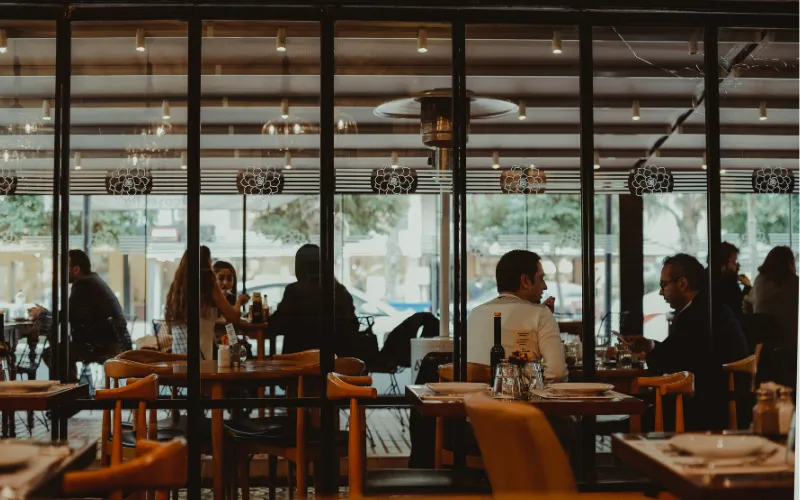
So there I was, killing my after-office hours on a Friday night. Standing across a pool table in Sportsman Bar down in Blok M, feeling absolutely bored to death after watching my male buddies rejoice around the sacred green table for more than two hours. I’m not good with any games involving balls. I don’t really know why. Maybe I feel intimidated by their bald, shiny appearance, promising nothing but unpredictable bouncing movement and increasing the possibility of my becoming the loser.
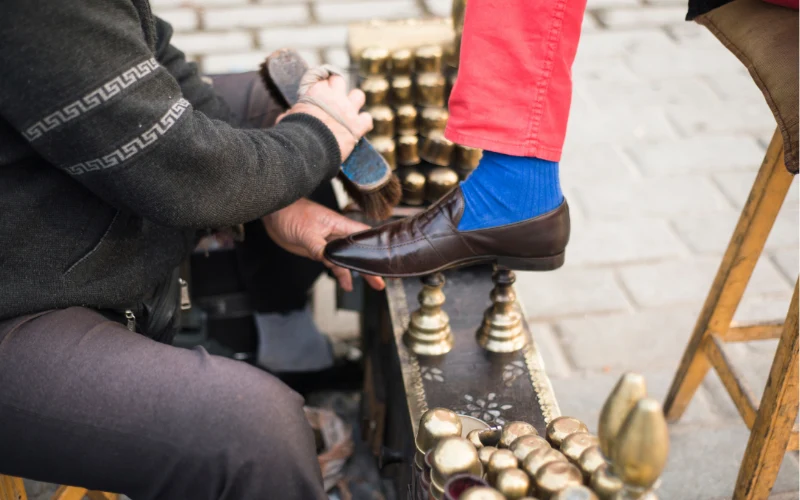
I glanced around and noticed the small face of a teenager carrying a wooden box full of shoeshine tools peeking through the bar’s entrance. I remembered him immediately. His name was Ocil, the sports bar’s shoeshine boy.
A good friend of mine, Ray, had quietly made him one of his personal charity projects. Every time Ray visited the bar, he paid Ocil generously to polish his shoes.
“I just want to help him out,” Ray would say.
Our friend Jenny, however, wasn’t convinced.
“Right,” she would reply. “Give him more money so he can use it to gamble or buy drugs. Who knows what he’ll spend it on?”
Curious, I accepted Ocil’s offer to polish my boots.
“Let’s talk while you work,” I suggested, offering him some beef nachos.
“No, Miss,” he smiled politely. “Western food doesn’t agree with my stomach.”
The fourteen-year-old explained that he had been working outside the bar for almost a year.
Before that, he had left school and his hometown when he was only eight years old. Armed with nothing more than a broom, he began working on economy-class trains.
“I used to ask passengers if they wanted me to sweep the floor around their seats,” he explained. “People often slept on the floor, so it got dirty. Most gave me around one hundred rupiah. It wasn’t much, but it was enough to survive.”
He slept in the train’s toilet compartment, while sympathetic railway staff shared leftover food and drinking water.
“I basically lived on the train between Surabaya and Jakarta.”
His story sent a chill through me.
As a parent, I couldn’t imagine allowing my own children to endure such a life. Yet for many families facing extreme poverty, children often contribute to the household income simply because there are few alternatives.
His parents still lived in Karawang. His mother stayed at home while his father worked irregularly as a construction labourer.
Listening to him, I couldn’t help wondering why a child had been left to navigate life alone at such a young age.
Indonesia today has stronger child protection legislation than it did when this story was first written, and both government agencies and NGOs have made significant efforts to reduce child labour. Nevertheless, economic inequality remains one of Indonesia’s ongoing challenges, particularly within the informal sector where enforcement can be difficult.
Ocil told me he could earn up to one million rupiah a month.
At the time, that was a surprisingly good income for a street child and, in some cases, even exceeded the basic salary of some junior government employees.
“What do you do with your money?” I asked.
“I buy clothes and food. I also send some home to my mother.”
The owner of a nearby food stall looked after his savings.
“But mostly I buy clothes,” he shrugged. “I sleep in a cardboard shelter without a lock. My clothes get stolen all the time. Right now, I only have two sets left.”

He spoke matter-of-factly.
No self-pity.
No complaints.
Simply the life he knew.
Working in the Blok M nightlife district exposed him to all kinds of adult behaviour, yet he seemed remarkably unfazed.
He explained that another street youth had introduced him to the area and acted as his protector.
“Reno looks after us,” he said proudly. “He’s the leader of the local gang.”
From two in the afternoon until sometimes three in the morning, Ocil watched Jakarta’s nightlife unfold.
He knew which taxis could be trusted, which customers visited regularly, and enough stories about the neighbourhood to fill an entire gossip column.
It struck me that, despite his age, he possessed a level of street knowledge many adults never acquire.
“Foreigners don’t always pay very well,” he continued.
“Sometimes they only give me five hundred rupiah after I’ve spent half an hour cleaning their shoes.”
Then he smiled awkwardly.
“My worst mistake was using black polish on someone’s brown shoes. He threw them at me and called me stupid.”
“So what do you want to do when you grow up?” I asked, quietly inspecting my now beautifully polished boots.
“I want to work inside this sports bar.”
Nothing glamorous.
Just steady work.
“Because I didn’t get much education, I don’t expect a fancy job. I just want honest work. Not like some of the boys I know who spend their days stealing or sniffing glue.”
He carefully placed my boots back in front of me and smiled.
It wasn’t the smile of a hardened street kid.
It was simply the smile of a young boy trying to build an honest future from difficult beginnings.
At that moment, I couldn’t help thinking that perhaps Ray had understood something Jenny had missed.
As my attention returned to my friends enthusiastically circling the pool table, I realised that while they would probably leave that evening remembering the game, I would leave remembering a conversation.
Sometimes the most memorable encounters happen in the places where we least expect them.
First published in The Jakarta Post.