


Editor’s Note
This article was originally written in 2003 by Anne-Meike Fechter and reflects the personal observations, experiences, and opinions of the author at that time. It has been preserved largely in its original form to maintain the integrity of the author’s perspective and to provide historical insight into how expatriates experienced cultural interactions in Indonesia in the early 2000s.
While Indonesian society has evolved in many ways since then, many of the cultural dynamics discussed—particularly around identity, language, and perception—remain relevant today. The term bule is still widely used in Indonesia, and reactions to it continue to vary depending on context, tone, and individual perspective.
Readers should note that some viewpoints—particularly those drawn from early forum discussions—reflect personal opinions and experiences from that period and may include generalizations that do not represent Indonesian society as a whole.
For those navigating similar experiences today, a more nuanced understanding of Indonesian culture—beyond anecdotal opinions—can be extremely valuable.
Don’t Call Me Bule!
Or how expatriates experience a word
Most foreigners living in Indonesia have experienced it at some point: being called bule. The term is an Indonesian language word commonly used to describe white persons. Its literal meaning, according to most dictionaries, is ‘albino’, although in modern Indonesian usage it no longer carries this literal meaning and is generally understood simply as referring to a white foreigner. Calling white foreigners bule, however, can cause offence, and lead to heated debates about the meaning of the word. It is therefore worth taking a closer look at the term that can upset expatriates, while some Indonesians regard it as an innocent habit with no ill intent.
The phenomenon
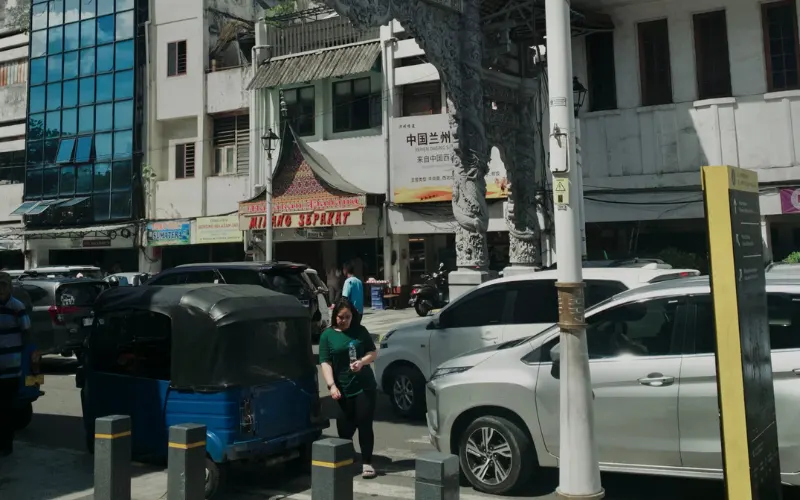
White foreigners are being called bule in different situations – in remarks on the street, or in conversations among Indonesians. A typical scenario is a Westerner passing a group of schoolchildren, and one child pointing to the person, shouting: ‘look, there is a bule’. It would also be common to say ‘My neighbour works for a bule’ or ‘There are many bules living around Kemang’. Indonesians might use the word bule when directly addressing foreigners, for example when a vendor in a market calls, ‘eh bule, beli ini dong!’ [‘hey bule, come and buy this!’]. Sometimes, exclaiming ‘hello bule’, or ‘hello mister’ can simply be an attempt to attract attention from, or to start a chat with, passing foreigners.
Many expatriates, however, are annoyed by this habit. For example, Eva, a German woman, talks about how she was shopping in a supermarket, when she realised two young women were looking at her, and one whispered to the other, ‘see the bule over there?’ Eva found this offensive; she thought the women behaved as if Eva was not able to understand their conversation, and felt being treated like a non-person. Sometimes, the term ‘bule’ is used in the presence of foreigners, for example as shop assistants talk about a customer, such as ‘the bule wants the black frame for this picture’- which foreigners find degrading or hurtful.
What does bule mean?
While many expatriates consider bule offensive, the term can have different meanings, depending on the context. Some Indonesians argue that bule is a neutral word, which can have positive meanings attached to it, as well as negative ones. Others maintain that bule is a functional word – a kind of shorthand to describe a white foreigner.
The following quotes are drawn from early forum discussions and reflect personal opinions at the time.
A writer affirms that, ‘bule is purpose for a white or Caucasian foreigner… Don’t worry, it doesn’t mean any offence.’ Another contributor presents it as follows: ‘There is nothing impolite inferred when an Indonesian refers to you as Bule… You are white; they call you bule.’
Some Indonesians, however, point out that while bule might not be derogatory, as an informal term it is impolite. David, a Canadian working at an Indonesian university, made clear: ‘My university colleagues would never refer to me as bule in an official context… it’s too colloquial’.
Both Indonesians and foreigners who regard the term bule as neutral acknowledge that it can also be used as an insult depending on tone and context.

I’m not a stereotype!
If the meaning of the word bule is variable, and not necessarily an insult, why do many foreigners find it offensive? One reason could be that the term contains stereotypical ideas about foreigners, which many regard as unjustified.
Tom, a young Canadian, summed them up: ‘if they call me bule, that means I’m somebody who is rich, rude, and ignorant… and I don’t like to be stereotyped like this’. These views reflect individual perceptions rather than commonly held beliefs, but they highlight how the term can trigger strong emotional reactions.
Being stereotyped like this is particularly upsetting for expatriates who feel that they have adapted to Indonesia far more than the term bule suggests.
‘Whiteness is not a race’
Many expatriates, though, who do regard themselves as particularly integrated, are also annoyed by the term bule. Rosie, a German expatriate, complained that, ‘the word bule sounds really ugly … like something you are spitting out’. Another German woman, Gerda, felt that the original meaning of the term – albino – was insulting. One reason for this irritation might be that they are not used to being categorised as a ‘race’ at all.
For many expatriates, it is therefore a new experience not to be invisible, but being a ‘racial Other’. For the first time, they are different with respect to an ‘Asian racial norm’. Expatriates’ reactions to the term bule may therefore reflect a broader discomfort with being visibly identified as different.
Cultural tensions and perceptions
The following section reflects strong personal opinions expressed in early discussions and should be understood in that context.
How controversial this issue can be becomes apparent in debates among expatriates. Some contributors expressed highly critical views—both about the use of the word bule and about Indonesian society more broadly. These statements reflect individual frustrations and cultural misunderstandings rather than objective assessments.
Expatriates’ reactions
Being the object of racial stereotyping—or even perceived discrimination—is thus a new experience for many expatriates. Some respondents concluded that Indonesia is a highly race-conscious society, while others suggested that the experience reflects a shift in perspective rather than a unique cultural issue.
As one participant insightfully noted, expatriates may be encountering for the first time what it feels like to be visibly different in a society where they are not the majority.
This perspective suggests that the experience, while uncomfortable, can also offer an opportunity to better understand how identity and perception function across cultures.
Final reflection
If there is anything to take away from these discussions, it is a reminder that the word bule is not always meant as an offence. Context, tone, and intent play a significant role in how it is used and understood.
Some expatriates, over time, choose to reinterpret or even adopt the term themselves, reducing its negative connotations and integrating it into their own experience of living in Indonesia.
Our appreciation to Anne-Meike Fechter who wrote and contributed this article at the request of the organizing committee. July 2003
Read Meike’s book entitled “Transnational Lives: Expatriates in Indonesia”.