

Editor’s Note:
When Aida Greenbury wrote this article, mixed-heritage (“Indo”) children were still relatively uncommon in Indonesia and often attracted significant public attention. Today, Indonesia is home to many more multicultural families, particularly in larger cities and international communities.
Children with both Indonesian and foreign heritage are still frequently admired for their appearance and may receive compliments from strangers or attract attention in public places. They also remain well represented in Indonesian advertising, television, films and, increasingly, on social media platforms. While many people view this attention as harmless admiration, some parents may find the constant comments or unsolicited interest uncomfortable.
The broader message of Ida’s article remains relevant today: parents should carefully consider whether entering children into the entertainment or influencer industry is in the child’s best interests. Success, publicity and financial opportunities should always be balanced against a child’s privacy, wellbeing and ability to enjoy a normal childhood.
The article below reflects the social attitudes and entertainment industry practices at the time it was originally written.
Bringing a toddler to the bank on a Monday morning was a big mistake. I realised that when I saw the never-ending queue, full of people from different backgrounds: a street vendor in dusty flip-flops, a domestic helper carrying an overloaded shopping bag, and what looked like a mentally exhausted office worker who somehow managed to stand far too close to the attractive woman in front of him.
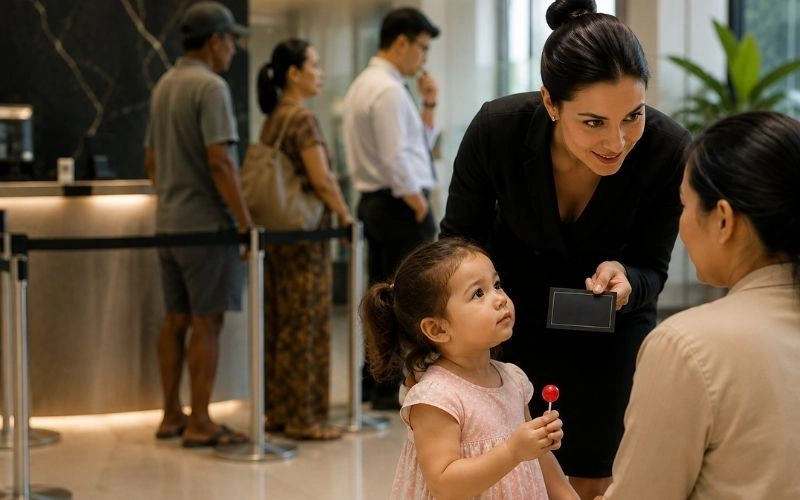
I positioned myself at the end of the line while trying to explain to my two-year-old daughter that sticking a strawberry-flavoured candy onto the back of someone’s trousers was not acceptable. Suddenly, I felt a light tap on my left shoulder.
A woman dressed in a smart black business suit stood beside me and held out her hand.
“Hi, my name is Anna, from Young Model Stock Agency. I’ve been watching your daughter. She is very pretty. She’s mixed, isn’t she? You are a very lucky mother. A lot of parents would do anything to have their kids on TV. But your daughter has such a natural look. You know that mixed-heritage actors and actresses are highly favoured on television, don’t you? I can make your daughter famous, just like those children you see in commercials or sinetron.”
Her attention never left my daughter’s face.
“I’ll give you my business card. Think about it for a day or two. Call me later and we’ll arrange a screen test and a photo shoot.”
The woman walked away, leaving me frozen in place with her business card in my hand.
The way she stared at my daughter made me shiver. It was the look of a vulture circling its prey.
Was I supposed to feel proud that a complete stranger believed my daughter had talent simply because of her light skin and high-bridged nose? Had I just witnessed the opening of a gate leading to fame and success? Or was it the entrance to a world that could steal away an innocent childhood?
I remembered the day my husband—a white Australian—and I—a thoroughly Javanese woman—welcomed our first daughter into the world.
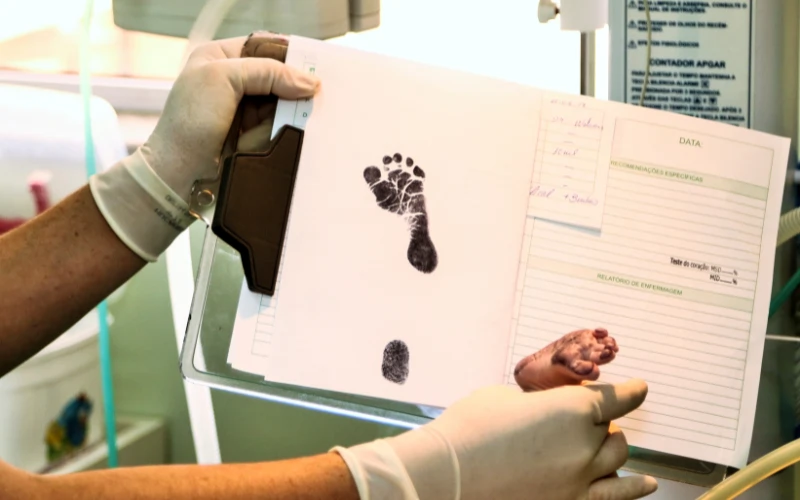
We chose a respected international hospital in West Jakarta for the birth. After an hour-long Caesarean operation, every moment of pain disappeared the instant I saw our newborn. She had big brown eyes, wavy hair and remarkably pale skin—so pale, in fact, that I argued with the doctor because I was convinced she must have jaundice.
There seemed to be absolutely no privacy for parents who had just welcomed a mixed-race baby.

The nurses came and went from my room with little reason, often without knocking, simply to admire the baby.
“What a beautiful baby,” they would say. “She looks just like her father.”
Apparently, foreign features were considered automatically “beautiful”, while Indonesian features were somehow ordinary. I found that attitude incredibly narrow-minded.
Perhaps the most surprising comment came from a colleague at work.
“With a face like that,” she told me, “your daughter is a very valuable asset.”
To be or not to be—that was suddenly the question.
To better understand the industry, I spoke with two experienced expatriates who had worked for many years in Indonesia’s television commercial and film production business.
“Nothing we do in our production company could possibly traumatise children,” said Harry, who asked that his real name not be used. “We go to great lengths to make the experience positive. The children are prepared carefully before filming and most shoots last less than half an hour. We genuinely try to make it enjoyable.”
John, another long-term industry professional who also requested anonymity, offered a more cautious perspective.
“We can’t speak for every production company in Jakarta. Ethical standards vary considerably. Some less professional companies leave everything to the parents or nannies. I’ve seen parents scold children, bribe them with sweets or pressure them into performing. Some companies even keep substitute children waiting nearby in case another child refuses to cooperate. Just seeing another child waiting for the role can encourage parents to push their own children harder. Every parent believes their child is special, and having them appear on television can become a tremendous ego boost.”
Their comments reinforced my concerns.
After weighing the advantages against the disadvantages, I asked myself whether I could ever become the promoter of my own child simply to satisfy my own ambitions.
Would I ask her to perform in front of cameras before she was old enough to understand what was happening?
Would I put my own dreams ahead of her childhood?
To build a child’s dreams—or to destroy them?
That, perhaps, is the real question.
This article was originally written by Aida Greenbury and first published in The Jakarta Post. It has been updated with an editor’s note to provide contemporary context while preserving the author’s original story and perspective.