

Getting around Indonesia’s cities involves a fascinating mix of the ancient and the ultramodern. Jakarta has undergone a quiet public transport revolution since 2017, with the arrival of the airport rail link, a metro system, and light rail networks transforming commuting options for expats in the capital. Meanwhile, outside Jakarta — in cities like Yogyakarta, Malang, Solo, Surabaya, and Bali — many of the traditional forms of transport described below remain part of everyday life. This article covers both the traditional and modern transport options available to expats across Indonesia, starting with Jakarta and noting where options differ in other cities and regions.
Becak
Becak were banned within the Jakarta city limits in the mid-90s due to their propensity to cause traffic jams. Former President Soeharto (and others) also wanted to eradicate becak from the city streets because they felt the work to be degrading to the drivers. For years, becak were missed by people who live in housing complexes off the main roads and smaller roads which are not serviced by bus routes. Their sheer numbers in the city prior to the crackdown attests to how widely they were used. It used to be a common sight in major cities throughout Indonesia to see becak drivers taking children to school each morning, and women home from the pasar (traditional market).
However, you may still be able to find an occasional becak driver ignoring the ban in distant suburbs of metropolitan areas and smaller towns. Outside city limits becak are still found at the junctions of main roads and smaller country lanes that don’t have smaller bus routes. Models of becak are different in each city they are found in across Indonesia.
Outside Jakarta, becak remain a genuine and widely used form of local transport in several cities. In Yogyakarta, becak are an integral part of the street scene around Malioboro and the Kraton area, and drivers are a familiar presence outside the main train station at Tugu. In Malang, becak continue to operate throughout the older parts of the city and are popular for short hops around Pasar Besar. In Solo (Surakarta), becak are similarly woven into daily life around the traditional markets and the Keraton Kasunanan. In smaller towns and rural areas across Java, Sumatra, Sulawesi, and other islands, becak remain the default neighbourhood transport option for short distances. Expats living outside the major metropolitan areas will almost certainly encounter them regularly and should feel confident using them — they are a perfectly practical and characterful way to get around.
Becak fit two passengers comfortably and possibly even more, depending on the size of the passenger. There is some protection from the sun with the canopy over your head and a plastic sheet that comes down over the front helps protect passengers during rainstorms. Bargain before you get in and don’t expect the driver to have change for large bills.
In Yogyakarta in particular, becak drivers around the tourist areas have become quite organised, with some offering guided city tours by becak — a genuinely enjoyable way to explore the older parts of the city at a gentle pace. Agree on the fare and the route before you set off.
Delman
Perhaps the only truly traditional transportation left in Jakarta, delman (horse-drawn carriages) are getting harder to spot in the capital. They are most commonly used to transport goods from major outlying markets. Delman can occasionally be found around Pasar Palmerah, Kemanggisan, and Cipulir, and around the larger markets run by PD Pasar Jaya (the city market authority).
On Sundays you can rent a delman on the roads surrounding Monas (the national monument). The locals pile in the kids and have the delman driver take them for a fun ride around the Monas park.
Delman are often rented by a Betawi family to transport kids around the neighbourhood to celebrate a sunatan ceremony (circumcision). When rented for occasions such as this, the delman are often decorated with traditional Betawi ornamentation which lends a very festive air.
Bargain ahead of time to settle on a price, as the fare varies depending on the distance. The delman pictured above is from Cibadak, near Sukabumi.
Beyond Jakarta, delman and their regional equivalents are more commonly seen. In Yogyakarta the horse-drawn carriage is known as an andong, and these are a regular sight around the Kraton and on the road between Borobudur and Magelang. In Lombok the equivalent is the cidomo, a small pony cart that remains a practical and widely used form of transport in towns and villages across the island, particularly away from the main tourist areas of Senggigi and the Gili islands. In parts of Sulawesi and other outer islands, variations of the horse cart continue to serve communities where motorised transport is less accessible.
River Taxi
Back in time, long before taxis, bajaj and becak, Jakarta’s residents travelled the many canals and rivers in a variety of boats. Today there are still places in Jakarta where you can find perahu penyeberangan (boats used to cross). These boatmen take people across a river, often from a major road to the kampung on the other side, so that they don’t have to travel way out of their way.
Getek
Getek are small foot ferries and rafts that operate on several rivers in Jakarta. This form of transportation has been used in Jakarta to cross the rivers going back to colonial times. Now they’re mostly found in the slum areas of the city. You will find getek on the Ciliwung River on Jl. Kartini and Jl. Gunung Sahari, on Banjir Kanal (Jati Pulo), as well as at other points on the 13 rivers that pass through Jakarta. The raft is made from bamboo and the boatman moves the raft across the small rivers using a long bamboo pole or by pulling a cable.
River and canal transport takes on much greater significance outside Jakarta. In Banjarmasin, South Kalimantan, the famous floating markets of Lok Baintan and Pasar Terapung operate from the early hours of the morning, with vendors selling produce from small wooden boats on the Barito and Martapura rivers. Boat taxis remain a practical daily transport option for residents in riverside communities throughout Kalimantan, and in parts of Sumatra, Papua, and Sulawesi where road infrastructure is limited. For expats based in or visiting these regions, river transport is often not a novelty but a necessity.
Bajaj
Bright orange and noisy — easily describes the traditional bajaj. These three-wheeled vehicles originated in India and were imported into Indonesia from 1975, later being assembled domestically. Similar vehicles are known as rickshaws in parts of Africa, tuk-tuks in Thailand, and mototaxis in Peru.
At their peak there were an estimated 20,000 bajaj operating in Jakarta, evidence of their popularity. Numbers have fallen significantly since then as the city government has continued to restrict their operating zones and discourage new vehicles from entering the market.
Bajaj seat two passengers comfortably and up to five passengers, depending on the size of the passenger and the amount of goods they want to carry. Their areas of operation are limited to one mayoralty in the city. On the side of the driver’s doors you’ll see a big circle in which the area is designated Jakarta Barat, Jakarta Pusat, and so on, with a different colour for each mayoralty. The drivers are not allowed to go out of their area and aren’t allowed onto many main roads, so routes may be a bit circuitous.
Fare determination is not from a meter, but by bargaining. It’s always best to ask an Indonesian what they would pay for a trip to a particular destination from your point of departure, and then you have a good reference point from which to bargain and pay accordingly.
A ride in a bajaj is hot, utilising “AC alam” — nature’s air conditioning. The ride will also be noisy, smelly (car and bus fumes), bumpy, harrowing, and a grand adventure. My favourite pulse-raising manoeuvre is when the bajaj driver decides to flip a u-turn in the middle of the road, with no notification to others on the road, because the vehicle doesn’t have any signals.
For passengers, there is some protection from the rain, unless it’s blowing hard. You’d think you’d have to be careful about robbery since the vehicle is so open — but it’s not as common as pickpocketing in public buses.
The government has been trying to restrict the bajaj for years by limiting zones in which they can operate and stopping new vehicles from entering the market. They have been pushing the replacement of the classic orange diesel bajaj with the blue gas-powered Bajaj BBG and, more recently, the electric bajaj.
Bajaj equivalents under different local names can be found in other Indonesian cities. In Yogyakarta and Solo, three-wheeled bajaj are less common, and the cities’ transport culture is dominated instead by becak and the online ojek services. In Makassar, Sulawesi, the pete-pete (a small minibus) fulfils a similar neighbourhood transport role. Expats moving to cities outside Jakarta will find that local equivalents of the bajaj, whatever their name, follow the same basic rules: agree the fare before you get in, carry small change, and enjoy the ride.
Bajaj BBG
Bajaj BBG have been in use in Indonesia since 2006. The imported Bajaj BBG are a light blue colour, less noisy, less smoky, and more comfortable when compared to the traditional diesel-powered bajaj. Bajaj BBG use natural gas, so they are more environmentally friendly. The fare isn’t much different from the traditional orange bajaj, but of course the cost all depends on your bargaining skills.
Bajaj Listrik
The noticeably different Bajaj Listrik is an electric version of the more traditional bajaj. Also sporting three wheels, the vehicles are white and green, with the wording “Kendaraan Listrik” (electric vehicle) on the side panel. Touted as more economical to run for the drivers and more friendly to the environment, Indonesia may see increasing numbers of this mode of transportation in years to come.
Bemo
Another noisy little neighbourhood vehicle is the bemo, which is used for local transportation in limited areas in Jakarta. Originally brought to Indonesia by the Japanese government as part of a disaster relief package in the early 1960s, the vehicles were never manufactured in Indonesia in as great a number as bajaj or becak. Bemo are found in and near Benhil, Tanjung Priok, Kramat Jati and areas outside Jakarta.
Bemo are considerably more visible and useful outside Jakarta. In Yogyakarta they continue to operate on fixed local routes, and in Bali the bemo network — though greatly reduced since the spread of online ojek services — still functions on some routes in and around Denpasar, Kuta, and Ubud. In smaller Balinese towns and in rural areas across the outer islands, bemo remain a practical budget option for short journeys and are widely used by locals. Fares are low but should be confirmed before boarding. In Lombok, bemo connect many of the main towns and are often the most affordable way to travel between Mataram, Praya, and the southern beaches.
Bis (Buses)
There are a large number of bus companies (bis) servicing routes in Jakarta. Many of the larger buses seat 25 to 40 people. The buses have set prices, which should be posted on the bus. Air conditioned buses are more expensive.
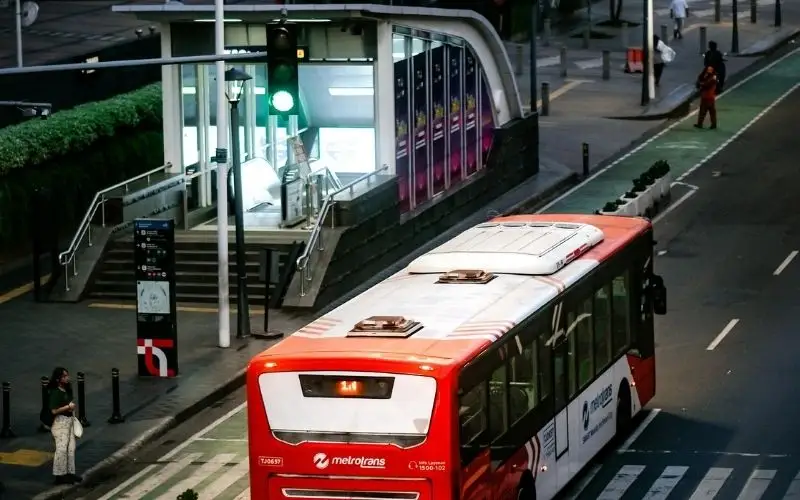
Transjakarta buses offer a more modern version of the bus option for transportation in Jakarta. Transjakarta operates air conditioned buses and has its own busway on the main thoroughfares, so the buses don’t get caught in traffic jams when the roads are really busy. Transjakarta offers a very efficient and reasonably priced option for commutes into the central business district. You can only ride with an e-ticket, purchased through reloadable Flazz, e-toll, or similar cards, which can be purchased at any stop along the busway. The Transjakarta app is the recommended tool for planning journeys across the network (www.transjakarta.co.id).
Transjakarta has expanded dramatically since it was first introduced and now operates one of the largest bus rapid transit networks in the world, with well over 200 routes covering not just the main busway corridors but extending deep into the outer suburbs and connecting with the MRT and KRL Commuter Line at key interchange stations.
APTB bus lines use the Transjakarta busway in the CBD and regular roads beyond that. While more expensive than other buses, they are still cheaper than a taxi, are air conditioned, and you can use Flazz to purchase tickets.
The government-owned Damri bus company serves the airport (damri.co.id). The bus visits all the terminals and can drop passengers off along the way when off the toll roads. Destinations include pick-up and drop-off locations in Jakarta, as well as Bogor, Bekasi, Karawang, Serpong and beyond. The buses are safe, air conditioned and comfortable. However, for most expats travelling between Soekarno-Hatta Airport and central Jakarta, the Railink Airport Train (see below) is now the faster and generally more convenient option.
All buses have set routes and set fares, but not all have set schedules. Students in uniform pay a lower rate regardless of distance. If you’re not sure of the fare, ask other passengers. Pay the conductor, who is usually near the back door. He won’t have change for big bills.
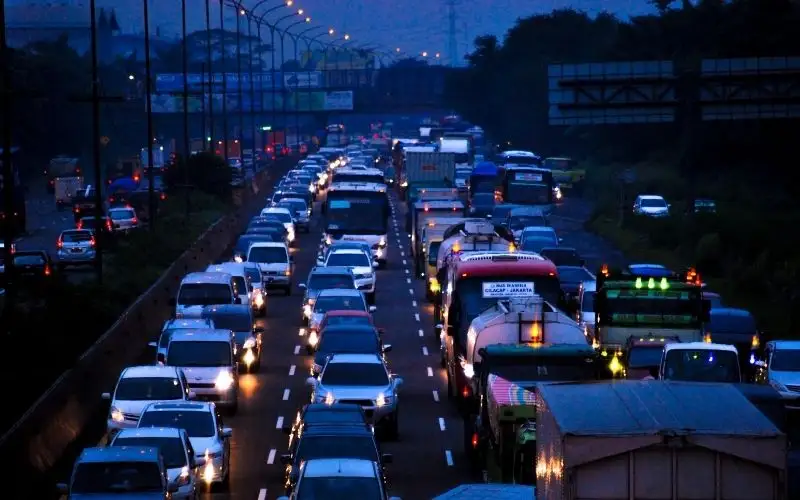
Buses are the most common transport of the masses and many are generally in poor condition. Bus passengers are often the target for pickpockets, street singers, small mobile vendors, and beggars, both on the buses and in the major bus terminals. Many bus drivers are notoriously dangerous as they race against each other to pick up passengers before other buses plying the same route. Metro Mini has the worst reputation for poor driving.
Expat women should take particular care when riding a public bus, as uncomfortable situations do occur. The Transjakarta buses have a female-only section in the front of each bus.

Off the major thoroughfares, buses do not necessarily stop at bus stops. They stop wherever they can pick up a passenger, be it in the middle of the road or at a busy intersection. Buses do not necessarily come to a complete stop for passengers to get on and off, so be careful when you step off the bus.
The beginning and end points of each bus route are found on the front and back of each bus, along with a route number. If you don’t know which bus to take, ask the people at the bus stop — it helps to speak some Bahasa Indonesia, of course.
Inter-city buses to other cities in Java and Sumatra (bis antar kota) can be found at the biggest bus stations: Pulau Gadung, Kampung Rambutan, Lebak Bulus, Blok M, and Kota.
Outside Jakarta, bus networks vary considerably. In Yogyakarta, the Trans Jogja BRT system operates in a similar fashion to Transjakarta and is a practical and affordable way to get around the city. In Surabaya, Suroboyo Bus offers a comparable service. In Bali, the Trans Metro Dewata bus network launched in 2021 and provides air conditioned services connecting Denpasar, Kuta, Sanur, Ubud, and other key areas — a genuinely useful option for expats who want to avoid driving or the cost of daily taxis, though services can be infrequent outside peak hours. In smaller cities and rural areas, the inter-city bus (bis antar kota antar provinsi, or AKAP) remains the most affordable way to travel longer distances where trains are not available.
Major Jakarta bus companies and their areas of service include: Agung Bakti, CV. Laris, CV. Rajawali, CV. Timur, Daya Sentosa Utama, Jayamini, Koasi, Mayasari Bakti, Miniarta, PO. Dahlia Indah, PO. Restu, PO. Widji, PT Pahala Kencana, PT Steady Safe Tbk, and TransJakarta Busway (www.transjakarta.co.id). For KRL Commuter Line information see commuterline.id and for national rail services see the PT Kereta Api Indonesia website.
Kereta Api (Trains)
The KRL Commuter Line runs frequent services throughout the day connecting Bogor, Depok, Bekasi, Tangerang, and Serpong with central Jakarta. Services have improved noticeably in recent years — trains are more frequent and the rolling stock has been progressively renewed, though peak-hour crowding remains a fact of daily life. Fares remain very affordable. Air conditioned carriages are standard across the network and female-only carriages are available near the front and end of trains.
The KRL Access app is recommended for planning journeys and checking real-time schedules. Tap-in tap-out using a Kartu Multi Trip or a compatible e-money card is the standard way to pay. See commuterline.id for full route and fare information.
Trains to other major cities on Java leave Jakarta from Gambir, Tanah Abang, and Pasar Senen stations. Different classes of service are available, with the executive class being quite comfortable. Booking in advance is strongly recommended for popular routes and around public holidays, and tickets can be purchased through the KAI Access app or at station ticket counters. Trains remain an excellent and good-value option for inter-city travel on Java.
MRT Jakarta (Mass Rapid Transit)
The most significant addition to Jakarta’s public transport network in recent decades, the MRT Jakarta opened its North-South corridor in March 2019 and has since become the preferred daily transport option for many expats living and working in the Sudirman, Senayan, and Blok M areas. Phase 1 runs between Lebak Bulus in South Jakarta and Bundaran HI in the city centre — a journey of around 30 minutes that bypasses Jakarta’s notorious traffic entirely. Phase 2, extending the line north towards Kota, is under construction and partially open; check the MRT Jakarta website or app for the latest on route extensions as the network continues to grow.
Stations are clean, air conditioned, and well signed in both Bahasa Indonesia and English, making the MRT genuinely easy to use even for new arrivals. Payment is by single-journey ticket purchased at station machines, or by tapping in with a Jakcard, Flazz, or other compatible e-money card. The MRT Jakarta app is useful for journey planning and fare information. For expats based in South or Central Jakarta, the MRT has transformed the daily commute and is strongly recommended as the first transport option to get familiar with on arrival.
LRT Jakarta (Light Rail Transit)
Jakarta now has two LRT systems operating alongside the MRT. The Jakarta city LRT, which opened in 2019, connects Kelapa Gading in North Jakarta with Velodrome in East Jakarta and is primarily useful for residents of those areas. More significant for expats across Greater Jakarta is the LRT Jabodebek, which launched in August 2023 and connects central Jakarta (Dukuh Atas) with Bekasi Timur and Cibubur, passing through a number of key interchange stations. For expats living in the Bekasi or Cibubur corridors, the LRT Jabodebek offers a practical alternative to driving on some of the most congested roads in the metropolitan area. Payment follows the same e-money card system used across Jakarta’s public transport network.
Airport Rail Link (Railink)
The Soekarno-Hatta Airport Rail Link, operated by Railink, opened in 2017 and has become the recommended way for most expats to travel between the airport and central Jakarta. The journey from Soekarno-Hatta to Sudirman (BNI City) station takes approximately 50 minutes and runs at regular intervals throughout the day and into the evening. The train is air conditioned, comfortable, and avoids the toll road traffic that can make a taxi journey from the airport painfully unpredictable during peak hours. Tickets can be purchased at the airport station or through the Railink app, and the service connects at Sudirman with the MRT and KRL Commuter Line networks. For most expats arriving in Jakarta, the airport train is the practical first choice unless you have significant luggage or are travelling to an area not well served by the onward connections.
Mikrolet / Angkot
Mikrolet and angkot (these vehicles go by various names depending on the city) are smaller vans and minibuses that serve set routes on smaller main roads. They seat 9 to 12 people depending on the type. Fares depend on distance. Students pay less if in uniform. They are not air conditioned and don’t run on any schedule, but often run late into the night. Fares should be posted, but if not, check with Indonesian colleagues or friends to find out what the normal fare is before you travel.
The beginning and end points of the routes are visible on the front and back of each vehicle, along with a route number. For example: Tanah Abang — Meruya M11.
Angkot under various local names are found throughout Indonesia and remain the backbone of local transport in many cities and towns. In Bandung they are a colourful and chaotic feature of street life. In Bogor the angkot network is extensive and covers most of the city. In Malang, angkot routes connect the city centre with the outer residential areas and are widely used by locals and budget travellers alike. In Manado, Sulawesi, the local equivalent known as mikro serves a similar function. The general rules apply everywhere: confirm the fare before boarding, carry small change, and be prepared for a route that may not be entirely direct.
Ojek
Ojek motorcycle taxis began appearing in Jakarta after becak were banned in the early 1990s. Ojek service began as grassroots entrepreneurs saw an opportunity to provide transport for people who used to use becak from main roads into housing complexes.
By law all motorcycle passengers should wear helmets, so ojek drivers should have a spare for you to wear. Ojek tend to congregate at intersections on main roads and near smaller roads that are not serviced by bus routes. Ladies have a careful balancing act if wearing a dress and must sit sideways on the back of the vehicle. Bargain before you get on — ask a local what the price should be first. Payment is in cash and drivers won’t have change for larger bills.
GoJek and Grab have developed large, professional ojek networks that allow you to order a motorcycle taxi directly from your phone. Both apps offer transparent, upfront pricing that removes the uncertainty of cash bargaining entirely. Beyond motorcycle rides, both platforms offer car-hailing (GoCar and GrabCar), food delivery (GoFood and GrabFood), parcel and document delivery, and a growing range of other on-demand services. For most expats in Jakarta, GrabCar and GoCar have become the default door-to-door transport option for journeys where the MRT or Transjakarta is not convenient. Both apps work in English, accept credit cards and e-wallets, and can be set up within minutes of arrival in Indonesia.
GoJek and Grab operate across virtually all major Indonesian cities and many smaller towns, making them the single most useful transport tool for expats anywhere in the country — not just in Jakarta. In Bali, Grab and GoJek are the practical daily choice for most expats and long-term visitors, though be aware that in certain tourist areas, particularly around Seminyak, Kuta, and Ubud, local taxi associations have at times made it difficult for online ojek drivers to pick up passengers. The situation varies and is worth checking locally on arrival. In Yogyakarta, Surabaya, Medan, Makassar, and other major cities, both platforms operate smoothly and reliably.
Ojek Sepeda
Rarely seen in areas of Jakarta outside Kota and Tanjung Priok in North Jakarta, ojek sepeda (bicycle taxis) operate much like ojek but for shorter distances.
Bicycle transport more broadly has seen something of a revival across Indonesian cities, partly driven by the cycling boom during the pandemic years. In Yogyakarta, bicycle rental is widely available and cycling is a genuinely practical way to explore the flatter parts of the city and the surrounding countryside towards Prambanan. In Bali, cycling tours have become popular in the cooler upland areas around Ubud and Kintamani. In Jakarta itself, the city has invested in dedicated cycling lanes along several major corridors, though these are used more for recreation than as a serious daily commute option.
Taksi
Despite the many current modes of public transport, many expats living in Jakarta will have their own company-provided or supported car and driver, or choose to use a ride-hailing app or conventional taxi for door-to-door travel.
The ride-hailing apps — Grab and GoJek — have largely replaced conventional taxis for most expat journeys in Jakarta and other major cities, offering the significant advantages of upfront pricing, cashless payment, and GPS tracking. Conventional metered taxis remain available; Blue Bird (Bluebird Group) maintains its long-standing reputation as the most reliable and honest conventional taxi operator in Indonesia and continues to operate a large fleet across Jakarta and in other major cities including Bali, Surabaya, Yogyakarta, and Medan. The Blue Bird app allows you to book a metered taxi in advance. For airport journeys and when luggage makes a motorcycle taxi impractical, a conventional taxi or GrabCar/GoCar remains the sensible choice.
Please read our separate article on Taking Taxis in Indonesia.
A Quick Guide: Transport by City
For expats relocating outside Jakarta, the transport landscape is quite different. Here is a brief overview of what to expect in the cities and regions where most expats are based.
| City / Region | Most Useful Daily Transport | Notes |
|---|---|---|
| Jakarta | MRT, Transjakarta, GrabCar/GoCar, KRL Commuter Line | Airport train recommended for Soetta arrivals |
| Bali (Seminyak/Canggu/Ubud) | Grab/GoJek, scooter rental, private driver | No reliable public bus network in tourist areas; scooter rental very common among expats |
| Yogyakarta | GoJek/Grab, becak, Trans Jogja bus | Becak practical and enjoyable for short distances; compact city, easy to navigate |
| Surabaya | GrabCar/GoCar, Suroboyo Bus, angkot | Improving public transport infrastructure; taxis still widely used |
| Bandung | GrabCar/GoCar, angkot | Angkot network extensive but routes complex; Grab is the easier option for new arrivals |
| Malang | GrabCar/GoCar, angkot, becak | Compact and relatively cool city; some areas well served by becak |
| Medan | GrabCar/GoCar, angkot, conventional taxi | Traffic heavy; Grab strongly recommended |
| Makassar | GrabCar/GoCar, pete-pete minibus | Pete-pete is the local angkot equivalent |
| Lombok | Cidomo, bemo, Grab (limited coverage) | Grab availability outside Mataram is limited; scooter rental common |
| Kalimantan cities | GrabCar, river boat (in some areas) | River transport still practical in Banjarmasin and riverside communities |
Frequently Asked Questions About Getting Around in Indonesia
Is the Jakarta MRT easy to use for expats?
Yes. The MRT Jakarta is clean, air conditioned, and well signed in English — genuinely straightforward to use from day one. Buy a single-journey ticket at the station machine or use a compatible e-money card to tap in and out. The MRT Jakarta app is useful for planning routes. The main North-South line is particularly valuable for expats working in the Sudirman and Senayan business districts.
What is the best way to get from Soekarno-Hatta Airport to central Jakarta?
The Railink Airport Train is generally the fastest and most reliable option, connecting the airport with Sudirman (BNI City) station in approximately 50 minutes. From Sudirman you can connect to the MRT or take a GrabCar/GoCar to your final destination. Taxis and the DAMRI bus are alternatives, but journey times are heavily dependent on traffic and can be very long during peak hours.
Are Grab and GoJek safe to use in Indonesia?
Both platforms are widely used and generally considered safe. All drivers are registered, journeys are tracked via GPS, and payments can be made cashlessly through the app. Share your ride details with someone if you are travelling alone at night. Both apps work in English and are available on iOS and Android.
Can I use a becak in Bali or Yogyakarta?
Becak are not part of the transport scene in Bali, where scooters, GrabCar, and private drivers dominate. In Yogyakarta, becak are very much still in use, particularly around the Malioboro area, the Kraton, and near Tugu station. They are a practical and enjoyable option for short distances in the city.
Is it safe for women to use public transport in Jakarta?
Transjakarta buses have dedicated female-only sections at the front of each bus. The MRT and KRL Commuter Line are generally considered reasonably safe. For women who are new to Jakarta, GrabCar or GoCar provides a more comfortable and predictable option for daily travel until you are familiar with the public transport network.
What is the cheapest way to travel between cities on Java?
The inter-city bus (bis antar kota) is the most affordable option for longer distances, but journey times can be long. For most routes on Java, the train offers a good balance of price, comfort, and speed — particularly the economy and business class services on the KAI network. Book through the KAI Access app, especially around public holidays when tickets sell out well in advance.
Do I need a driving licence to use a scooter in Bali or elsewhere in Indonesia?
Technically yes — you need either an Indonesian driving licence (SIM C for motorcycles) or an International Driving Permit endorsed for motorcycles. Enforcement varies in practice, but the legal and insurance implications of riding without the correct licence in the event of an accident are serious. Check your travel or expat insurance policy carefully before renting a scooter.
Panoramic photographs for this Traditional Transportation article are the work of Martin Bennett of Gambar Panjang — we appreciate his generous and unique contribution to the site.