

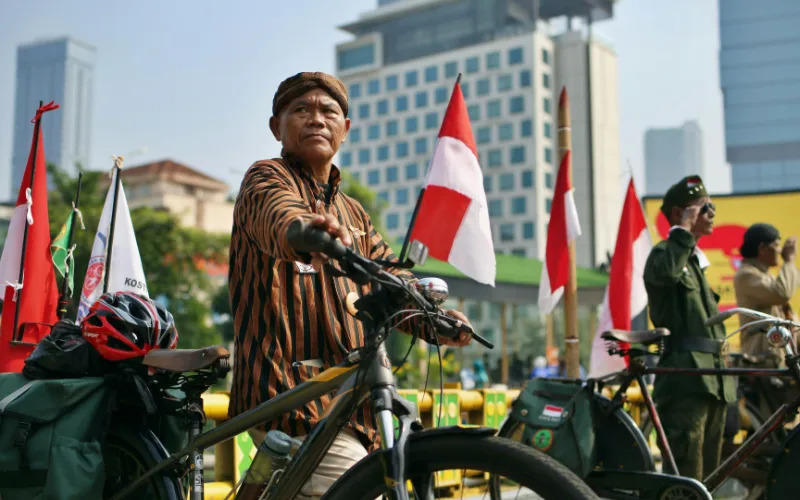
THE PEOPLE
Unity in Diversity
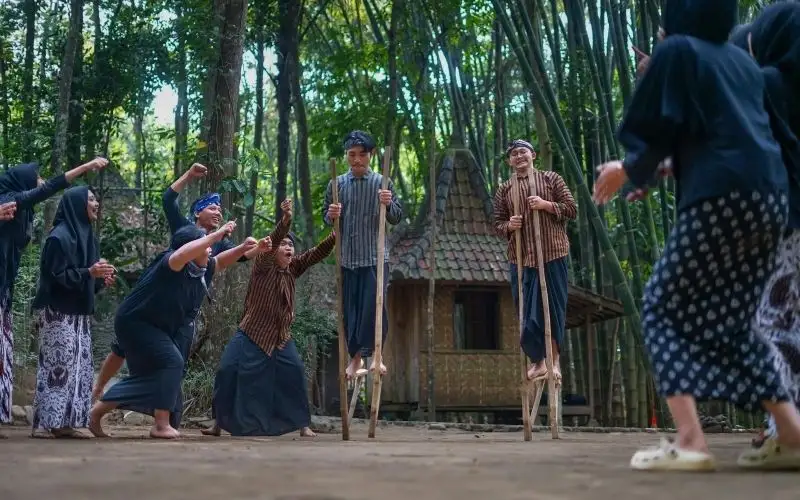
The Indonesian national motto, Bhinneka Tunggal Ika or “Unity in Diversity”, points to one of the greatest attractions of your host country. Indonesia is home to hundreds of ethnic groups, a result of both the country’s unique geography and long history.
Many Indonesians may identify strongly with their ethnic and cultural heritage while also sharing a national identity. The glue that binds the nation together is the widespread use of Bahasa Indonesia, the national language, and Pancasila, the national philosophy, which stresses unity, social justice and mutual respect among all Indonesians.
Ethnicity
The majority of Indonesians are of Austronesian origin, while Melanesian communities are concentrated largely in Papua and parts of eastern Indonesia. There are also significant ethnic Chinese, Indian and Arab Indonesian communities, particularly in urban centers throughout the archipelago.
The Javanese are the largest ethnic group, followed by Sundanese, Malay, Batak, Madurese, Betawi, Minangkabau, Buginese and many other ethnic communities. This rich cultural diversity contributes to Indonesia’s remarkable variety of languages, traditions, cuisines and customs.
Population
Indonesia’s population was estimated at approximately 284.4 million people in 2025, making it the fourth most populous nation in the world after India, China and the United States.
More than half of Indonesia’s population lives on the island of Java, which remains the center of the country’s political, economic and administrative life.
Indonesia’s population growth rate has slowed significantly over recent decades, largely due to improvements in education, healthcare and family planning programs. Nevertheless, the population continues to grow steadily.
Life expectancy is approximately 72 to 73 years, although it varies by region and socioeconomic conditions.
According to Statistics Indonesia (BPS), the national poverty rate has continued to decline in recent years, although significant differences remain between urban and rural areas and among provinces.
Density
Indonesia’s population challenges are closely linked to population density. While Java represents only a small percentage of Indonesia’s total land area, it is home to more than half of the country’s population.
Jakarta itself has more than 10 million residents, while the greater metropolitan region of Jabodetabek (Jakarta, Bogor, Depok, Tangerang and Bekasi) is one of the largest urban areas in the world.
By contrast, Papua and many eastern provinces cover vast areas of land but have much lower population densities. As a result, Indonesia faces very different development challenges across different regions of the country.
Religion
Indonesia officially recognizes six religions:
- Islam
- Protestantism
- Catholicism
- Hinduism
- Buddhism
- Confucianism
These religions are represented through national holidays and play an important role in Indonesian society.
Approximately 87 percent of Indonesians are Muslim, making Indonesia home to the world’s largest Muslim population. Christian communities account for roughly 10 percent of the population, while Hindu, Buddhist and Confucian communities represent smaller percentages.
Although Indonesia is predominantly Muslim, the government is not based on a single religion. The Indonesian state is founded on Pancasila, which promotes religious freedom and respect for different faiths.
Read about religious holidays in Indonesia.
See a list of churches, mosques and temples that offer Foreign Language Religious Services.
Family Planning
Indonesia’s family planning program has played an important role in slowing population growth over recent decades.
The country continues to benefit from a large working-age population, while at the same time facing the challenges of urbanization, aging populations in some regions and uneven development between Java and the outer islands.
THE LAND
Geography
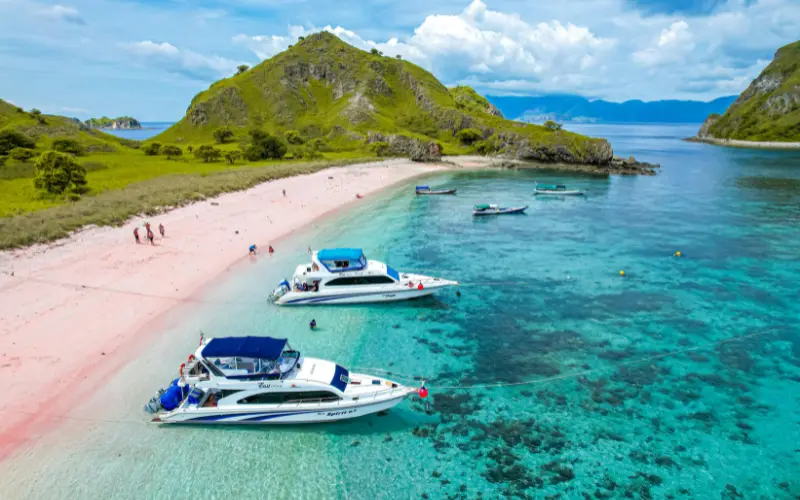
Indonesians often refer to their homeland as Tanah Air Kita, meaning “Our Land and Water.” The phrase reflects the reality of Indonesia as one of the world’s great archipelagic nations.
Indonesia consists of more than 17,000 islands, although the exact number varies depending on the classification and verification of islands by government authorities.
The total land area is approximately 1.9 million square kilometers, surrounded by vast territorial waters connecting the islands.
Approximately 6,000 islands are inhabited, with Java accounting for more than half of the nation’s population.
Indonesia is the largest archipelago in the world, extending approximately 2,000 kilometers from north to south and more than 5,000 kilometers from east to west. The archipelago stretches across the equator between mainland Southeast Asia and Australia.
The largest islands include Sumatra, Java, Kalimantan (Indonesian Borneo), Sulawesi and Papua.
A significant portion of Indonesia remains forested, and much of the country is mountainous and volcanic. Indonesia sits on the Pacific Ring of Fire and has more active volcanoes than almost any other country.
The highest mountain is Puncak Jaya in Papua at approximately 4,884 meters above sea level.
Mount Merapi near Yogyakarta is one of Indonesia’s most active volcanoes and is closely monitored by geological authorities.
Centuries of volcanic activity have created fertile soils, particularly on Java and Bali, helping support intensive agriculture and high population concentrations.
Administrative Divisions
Indonesia is divided into 38 provinces, including special administrative regions and autonomous provinces. These provinces are further divided into regencies and cities, districts, villages and neighborhood administrative units.
Special administrative regions include:
- Aceh
- Special Region of Yogyakarta
- Special Capital Region of Jakarta
Jakarta remains Indonesia’s primary business, diplomatic and expatriate center.
Indonesia is also developing a new national capital, Nusantara, in East Kalimantan. While government functions are gradually being transferred, Jakarta continues to serve as the country’s principal commercial hub and remains where most expatriates live and work.
The former province of East Timor became independent in 1999 following a United Nations-sponsored referendum and is now the sovereign nation of Timor-Leste.
Largest Cities
Indonesia’s major urban centers include:
- Jakarta
- Surabaya
- Bandung
- Medan
- Semarang
- Makassar
- Palembang
- Batam
- Denpasar
- Yogyakarta
- Balikpapan
Population rankings vary depending on whether city proper or metropolitan populations are used.
Climate
Indonesia has a predominantly equatorial climate characterized by warm temperatures, high humidity and abundant rainfall.
Temperatures generally range between 16°C and 35°C depending on altitude and location.
Most regions experience two broad seasons:
Rainy Season: generally November to May, with the heaviest rainfall often occurring between November and March.
Dry Season: generally June to September, although weather patterns vary considerably across the archipelago.
Rainfall differs greatly between regions. Some areas experience a pronounced wet and dry season, while others receive rainfall throughout much of the year.
Time Zones
Because Indonesia lies near the equator, day length remains relatively constant throughout the year, with sunrise and sunset occurring close to 6:00 am and 6:00 pm.
Indonesia has three time zones:

Western Indonesia Time (WIB) – GMT+7Covers Sumatra, Java, West Kalimantan and Central Kalimantan.
Central Indonesia Time (WITA) – GMT+8Covers Bali, Sulawesi, Nusa Tenggara, South Kalimantan, East Kalimantan and North Kalimantan.
Eastern Indonesia Time (WIT) – GMT+9Covers Maluku and Papua.
Daylight Saving Time is not observed in Indonesia.
THE LANGUAGE
The official language is Bahasa Indonesia.
Both the written and spoken language are based on Malay, which historically served as a regional trade language throughout the archipelago and neighboring countries.
Bahasa Indonesia has become one of the strongest unifying factors in a nation where hundreds of regional languages and dialects continue to be spoken.
Most expatriates find that Bahasa Indonesia is relatively easy to begin learning. Even a modest vocabulary can greatly improve daily interactions, shopping, travel and social relationships.
Formal Bahasa Indonesia is commonly used in government, education, newspapers and business settings, while everyday conversation often includes regional influences and informal expressions.
Modern translation apps and online learning tools have made it easier than ever for newcomers to start learning the language. Nevertheless, Indonesians generally appreciate any effort made by foreigners to communicate in Bahasa Indonesia.
English is increasingly common in international business environments and among younger Indonesians in major cities. However, outside major urban centers and tourist destinations, English proficiency may be more limited.
Employees of international hotels, multinational companies and some professional drivers may speak English, while taxi drivers, domestic staff and local service providers may have limited English ability.
Dutch may occasionally be understood by some older Indonesians with family or educational connections to the colonial era, but it should not be expected in everyday communication.
THE GOVERNMENT
The Republic of Indonesia
Indonesia is a democratic republic with political power divided among the executive, legislative and judicial branches of government.
Indonesia proclaimed its independence on August 17, 1945.
Pancasila
Pancasila, meaning “Five Principles,” forms the philosophical foundation of the Indonesian state. These principles are:
- Belief in One Supreme God
- Just and Civilized Humanity
- The Unity of Indonesia
- Democracy Guided by Wisdom Through Deliberation and Representation
- Social Justice for All Indonesians
The Executive Branch
The President serves as both Head of State and Head of Government and is also Commander-in-Chief of the Indonesian Armed Forces.
The current President of Indonesia is Prabowo Subianto. The Vice President is Gibran Rakabuming Raka. They were inaugurated on October 20, 2024, for the 2024-2029 term.
The Legislative Branch
Indonesia’s national legislature consists of:
- The House of Representatives (Dewan Perwakilan Rakyat or DPR)
- The Regional Representative Council (Dewan Perwakilan Daerah or DPD)
Together these institutions form the People’s Consultative Assembly (Majelis Permusyawaratan Rakyat or MPR).
Since the democratic reforms following 1998, Indonesia has maintained a multi-party political system with regular national, regional and local elections.
The Judicial Branch
Indonesia’s highest judicial authority is the Supreme Court (Mahkamah Agung).
The Constitutional Court (Mahkamah Konstitusi) plays an important role in constitutional review, election disputes and matters relating to constitutional law.
The Legal System
Indonesia’s legal system is influenced by Roman-Dutch law and has evolved significantly through Indonesian legislation, judicial decisions and administrative regulations.
Expatriates should be aware that regulations affecting immigration, employment, taxation, business licensing and property ownership can change over time. Professional legal advice should always be sought for significant legal or business matters.
Political Organizations
During the New Order era under President Soeharto, political participation was tightly controlled.
Since political reform began in 1998, Indonesia has developed into one of Asia’s largest democracies, with competitive elections, a multi-party system and increasingly decentralized regional government.
ECONOMIC FACTORS
Currency
The currency of Indonesia is the Rupiah (IDR).
The exchange rate fluctuates based on international market conditions, domestic economic performance and global financial trends.
See the Indonesian Rupiah Currency Converter on our banking page for current information.
Growth Rate
Indonesia remains the largest economy in Southeast Asia and one of the world’s largest emerging markets.
Economic growth has generally remained around 5 percent annually in recent years, supported by domestic consumption, investment, natural resources, manufacturing and services.
Inflation remains relatively moderate by regional standards, although prices can fluctuate due to food costs, fuel prices and global economic conditions.
Indonesia is generally ranked among the world’s largest economies, with rankings varying depending on whether nominal GDP or purchasing power parity is used.
Per Capita Income
Indonesia’s GDP per capita is approximately US$5,000, although income levels vary significantly between regions and population groups.
The country continues to benefit from a growing middle class, increasing urbanization and expanding consumer markets.
Mineral Resources
Indonesia possesses significant natural resources, including:
- Oil and natural gas
- Coal
- Nickel
- Tin
- Copper
- Bauxite
- Gold
- Silver
Indonesia is one of the world’s leading producers of nickel, an increasingly important resource for electric vehicle battery production.
Main Agricultural Products
Rice, palm oil, coffee, tea, spices, cassava, peanuts, cocoa, copra, sugar, natural rubber, shrimp, fish, poultry, beef and eggs.
Main Manufactured Products
Processed rubber, plywood, textiles, garments, footwear, processed foods, electrical and electronic goods, chemicals, automotive products and liquefied natural gas.
Frequently Asked Questions
Is Indonesia a good place for expatriates to live?
Indonesia can be a rewarding destination for expatriates who are willing to adapt to local customs and ways of doing business. Major cities offer international schools, quality private healthcare, modern housing and active expatriate communities.
Do I need to learn Bahasa Indonesia?
While it is possible to function in some expatriate and business environments using English, learning Bahasa Indonesia will significantly improve your daily life and help you build stronger relationships with Indonesians.
How many provinces does Indonesia have?
Indonesia currently has 38 provinces.
What is the main religion in Indonesia?
Islam is the largest religion, practiced by approximately 87 percent of the population. Indonesia also officially recognizes Protestantism, Catholicism, Hinduism, Buddhism and Confucianism.
Is Jakarta still the capital of Indonesia?
Yes. Jakarta remains the functioning national capital, business center and primary expatriate hub, although Indonesia is developing a new capital city, Nusantara, in East Kalimantan.