

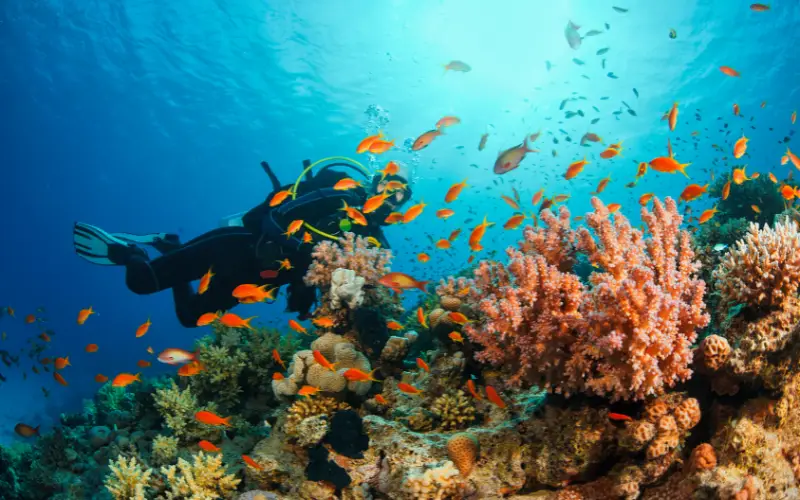
Indonesia is widely regarded as one of the greatest scuba diving destinations on earth — and the numbers back that up. The archipelago spans more than 17,500 islands across nearly 3,000 miles, with around 80,000 kilometres of coastline, 3.1 million square kilometres of territorial waters, and an estimated 20 percent of the world’s coral reefs. With over 600 coral species and more than 3,000 species of fish, Indonesia’s waters host more marine biodiversity than anywhere else on the planet.
Why Indonesia Is a World-Class Dive Destination
Indonesia sits at the heart of the Coral Triangle — the global epicentre of marine biodiversity, where the Pacific and Indian Oceans meet. This extraordinary location, straddling both the Asian and Melanesian-Australian biological realms across what scientists call the Wallace Line, places Indonesia in the same rarefied company as Brazil when it comes to overall biological richness.
The practical result for divers is staggering variety: dramatic wall dives, drift dives through current-swept channels, sheltered reef gardens perfect for beginners, world-class muck diving on black sand, and some of the most famous wreck dives anywhere in the world — all within a single country.
Best Time to Dive in Indonesia
Indonesia offers year-round diving, but conditions vary significantly by region. As a general rule, April to October are the driest months with the best visibility across most of the archipelago. The wet season runs roughly from November through March, though even then many regions remain diveable.
A few important exceptions:
- Raja Ampat — the dry season runs October to April, which is peak manta ray season
- Bunaken — good year-round, best from March to October
- Banda Sea — best from March to May and September to November; can be rough and unpredictable at other times
- Komodo National Park — diveable year-round; the dry season is roughly May to October
- Alor — best from September to November when currents are strongest
Always check with the dive operators at your specific destination, as microclimates can vary considerably between islands.
Top Scuba Diving Destinations in Indonesia
Raja Ampat, West Papua
If you dive anywhere in Indonesia, dive here. Raja Ampat is consistently ranked among the best dive destinations in the world, and with good reason — it lies at the very core of the Coral Triangle and holds the highest recorded number of fish and coral species on the planet. Famous sites include Cape Kri, Blue Magic, and Manta Sandy, where encounters with everything from pygmy seahorses to giant manta rays are common. Most sites suit intermediate to advanced divers, though sheltered bays provide entry-level options. Note that Raja Ampat is remote and not cheap — accommodation, food and boat transport are all relatively expensive — but liveaboard options and land-based dive centres on larger islands like Waigeo, Gam and Kri make it more accessible than it once was.
Komodo National Park, East Nusa Tenggara
A UNESCO World Heritage Site, Komodo is famous above water for its dragons and below water for some of the most thrilling drift diving in Southeast Asia. The Lintah Strait generates strong and sometimes unpredictable currents, which funnel in enormous quantities of nutrients and attract diverse, large marine life — over 1,000 fish species and 260 species of reef-building coral. The main gateway is Labuan Bajo on Flores, with roughly six daily flights from Bali. Liveaboards departing from Bali are also very popular. Best suited to intermediate and advanced divers.
Bali
The most accessible diving destination in Indonesia and often the easiest entry point for international visitors. Highlights include the famous USAT Liberty wreck at Tulamben — a World War Two cargo ship just 30 metres from shore that is teeming with marine life and suitable for all levels — and the drift dives of Nusa Penida, where the rare Mola mola (ocean sunfish) can be spotted between July and October and manta rays are a regular sighting at Manta Point. Menjangan Island in West Bali National Park offers excellent wall dives in calm conditions. The best diving season is generally April to November.
Bunaken, North Sulawesi
One of Indonesia’s first and most celebrated marine parks, Bunaken comprises five islands — Bunaken, Siladen, Mantehage, Nain and Manado Tua — and is best known for spectacular wall dives that plunge hundreds of metres. Visibility is consistently excellent. The park is sheltered by the North Sulawesi mainland, making it a reliable year-round destination, with March to October offering peak conditions. Siladen Island in particular has been repeatedly recognised by dive publications as one of the finest dive resorts in the region. Nearby Lembeh Strait is renowned worldwide as one of the best muck diving locations on earth, with extraordinary macro life including hairy frogfish, mimic octopus and rare nudibranchs.
Wakatobi, Southeast Sulawesi
Remote and deliberately exclusive, Wakatobi is famous for some of the most pristine and well-preserved coral reefs in Indonesia. The absence of strong currents makes it ideal for all experience levels, particularly underwater photographers who want long, unhurried dives over stunning soft coral gardens. Signature sites include Roma, Table Coral City and Cornucopia. Best visited from March to December.
Derawan Islands (Sangalaki), East Kalimantan (Borneo)
Sangalaki is one of the best places in the world to dive with manta rays — daily encounters are almost guaranteed, especially around the full moon. The wider Derawan archipelago also offers encounters with sea turtles, whale sharks, blue-ringed octopus, and the unique experience of freshwater jellyfish lakes. Visibility can drop during the November to March rainy season.
Nusa Penida, Bali
Though technically part of the Bali diving scene, Nusa Penida deserves its own mention. Crystal Bay is the place to see the Mola mola (July to October), while Manta Point delivers reliable manta ray sightings year-round. Currents can be strong, making some sites better suited to experienced divers.
Alor and Roti Islands, East Nusa Tenggara
Alor is a hidden gem best reached by liveaboard — remote, largely unspoilt, and offering exceptional diversity. Schools of hammerhead sharks, pilot whales and dolphins are frequently sighted, alongside outstanding muck diving on the volcanic black sand. Currents can be strong; a reef hook is recommended. Best from September to November.
Ambon and the Banda Sea, Maluku
Ambon Bay has emerged as one of the world’s premier muck diving destinations, with blue-ringed octopus, wonderpus, flamboyant cuttlefish, rhinopias and mating mandarin fish all commonly encountered. The Banda Sea itself — accessible only by liveaboard — offers pristine conditions, dramatic walls and hammerhead shark sightings. Best from March to May and September to November.

Other Notable Locations
- Togian Islands, Tomini Bay, Central Sulawesi — calm lagoons, diverse reef types
- Maumere Bay, Flores — recovering reefs and rich macro life
- Bangka Island, North Sulawesi — healthy reefs, good for all levels
- Gili Islands, Lombok — excellent beginner diving, sea turtles, relaxed atmosphere
- Sangihe-Talaud Islands — remote archipelago between North Sulawesi and the Philippines
What You Can Expect to See
The marine life in Indonesian waters is extraordinarily diverse. Depending on where you dive, you may encounter:
- Manta rays and whale sharks
- Reef sharks, hammerheads, and thresher sharks
- Mola mola (ocean sunfish)
- Dolphins and dugongs (sea manatees)
- Sea turtles of multiple species
- Pygmy seahorses
- Blue-ringed octopus and mimic octopus
- Rare nudibranchs and flatworms
- Cuttlefish, squid and giant octopus
- Napoleon wrasse, groupers, jack fish and giant tuna
- Moray eels, stone fish, scorpion fish
- Blue ribbon eels
- Over 600 varieties of soft and hard coral
- Reef fish in every imaginable colour and pattern
Many species have remarkable camouflage — repeated passes over the same section of reef, or diving it from different directions, will consistently reveal creatures invisible on your first pass.
Marine Conservation
Indonesia’s reefs face serious threats. Blast fishing (using dynamite to stun or kill fish) remains illegal but enforcement is inconsistent in many remote areas. A single blast can destroy coral that took decades to grow, since coral grows at roughly one centimetre per year. Coastal development, logging-related erosion, and agricultural runoff also harm reef systems, particularly off Kalimantan.
Unaware divers contribute too. When visiting any reef, follow these guidelines:
- Do not stand on or touch coral — even brushing against it causes damage
- Avoid wearing sunscreen; use UV-protective rash guards and wetsuits instead
- Do not collect shells, coral or any marine life
- Do not feed fish, especially with food not naturally found in the ocean
- Ensure your boat anchors to a mooring buoy rather than dropping anchor on the reef
- Remove all waste from the water and beach
- Never purchase coral, shells or products made from endangered species (this includes several giant clam varieties, nautilus, Triton’s trumpet and horned helmet shells)
Diving Experience Levels
Indonesia caters to every level:
- Beginners — sheltered reef gardens at Wakatobi, the Gili Islands, Menjangan (Bali), and within Bunaken’s protected bays
- Intermediate — the USAT Liberty wreck at Tulamben, Komodo’s calmer sites, Derawan Islands
- Advanced — Raja Ampat’s current-swept channels, Komodo’s open water sites, Alor, the Banda Sea
Dive Shops, Training and Equipment
Dive centres are well-established across the major destinations — Jakarta, Bali, Manado, Lombok, Labuan Bajo and Sorong (for Raja Ampat) all have multiple operators offering PADI and SSI certification courses, guided dives and equipment rental. In Jakarta, introductory dives for beginners are typically conducted in hotel pools before progressing to the nearby Thousand Islands (Pulau Seribu).
If renting equipment, inspect it carefully — maintenance standards vary widely between operators. Whenever possible, bring your own mask, computer and regulator. Always carry proof of your certification when travelling.
For remote locations, be aware that professional services and compressor access may be very limited. Plan accordingly by organising tanks and equipment in advance. Liveaboards are the most practical option for reaching truly remote sites in areas like the Banda Sea, Alor and northern Raja Ampat.
Safety and Medical Facilities
Decompression chambers are not available near most remote dive sites. Dives below 30 metres in remote areas should only be attempted by experienced divers who can plan conservatively. DAN (Divers Alert Network) membership is strongly recommended — they maintain an emergency network and can facilitate medical evacuation.
International SOS operates in Indonesia and can arrange emergency transport to Singapore, Darwin or Cairns if serious treatment is required.
Getting Around
Flights are the practical option for reaching most dive destinations. Bali (Ngurah Rai) and Jakarta (Soekarno-Hatta) serve as the main international gateways. Domestic connections to Manado, Labuan Bajo, Sorong (Raja Ampat) and Ambon are available daily from both cities, though schedules can be disrupted, particularly for smaller regional routes. Always reconfirm bookings after arrival at each stop, and build buffer time into your itinerary — flight delays and cancellations are common on remote routes.
Liveaboard vessels offer a self-contained alternative, particularly for multi-day expeditions to sites like Komodo, the Banda Sea or northern Raja Ampat. They range from budget Indonesian wooden vessels (phinisi) to fully equipped luxury dive yachts.
Final Notes
Indonesia’s underwater world is genuinely among the finest on earth — but much of what makes it extraordinary is also fragile. The choices divers make, from the operators they book with to how they behave underwater, have a real cumulative effect on these ecosystems. Choosing operators with genuine conservation credentials, diving thoughtfully, and supporting local marine protection efforts ensures that future generations will be able to experience the same kaleidoscope of life that makes Indonesian diving so remarkable.
Bring your certification card, check the seasons, and go.