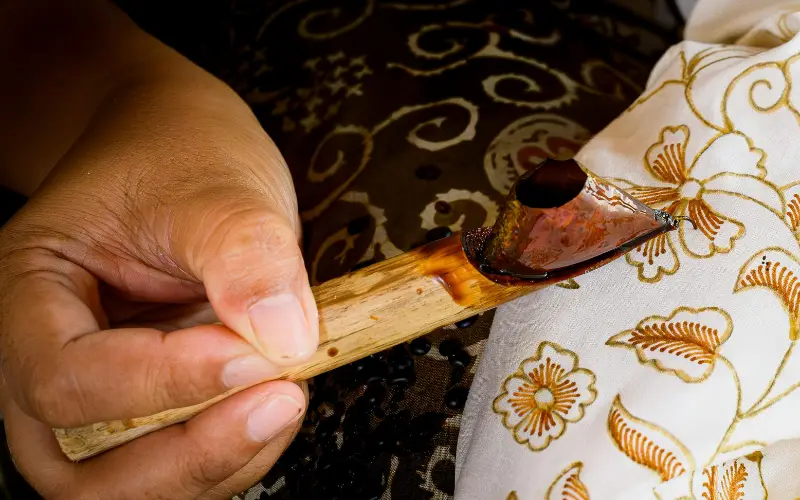


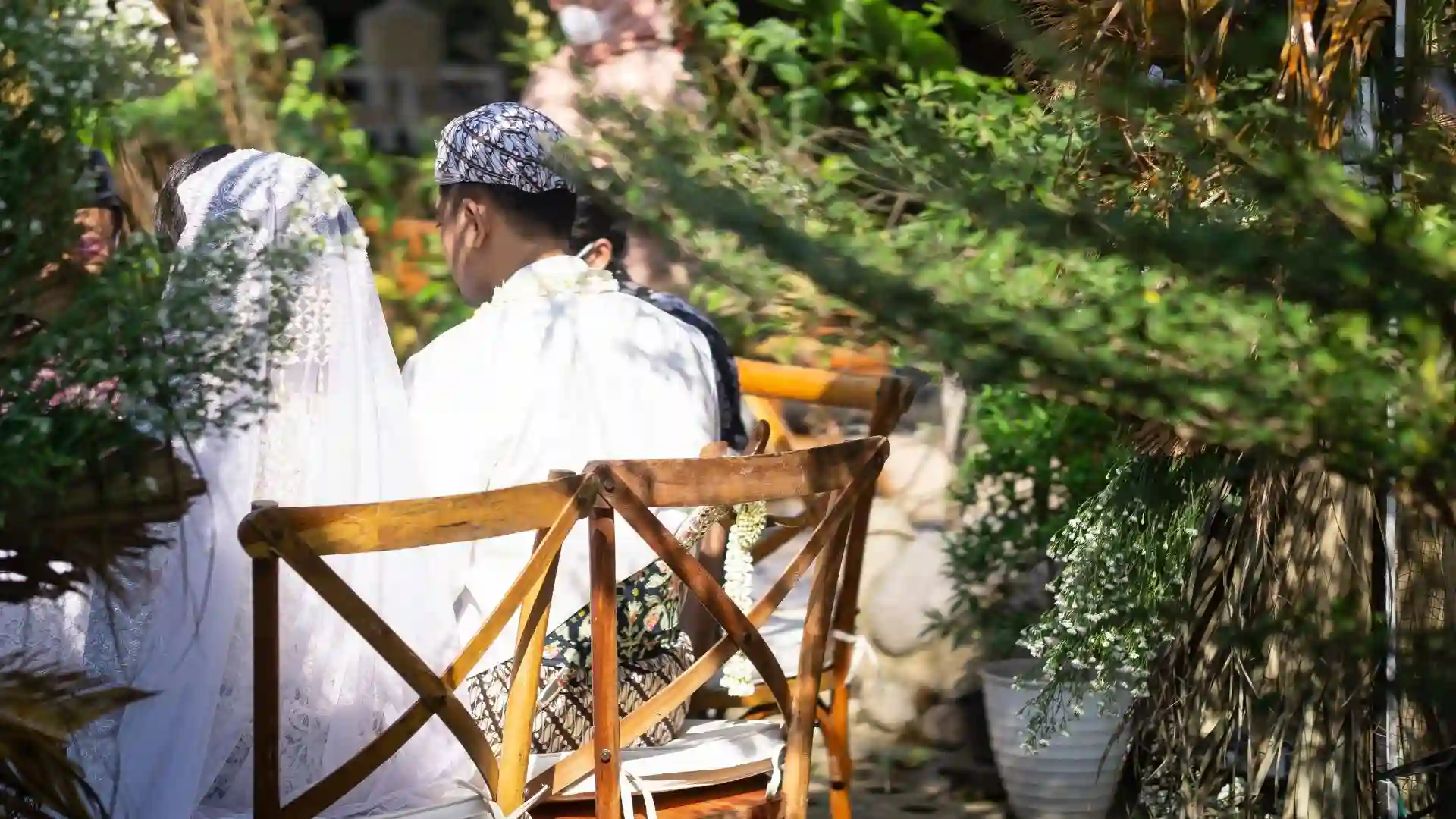
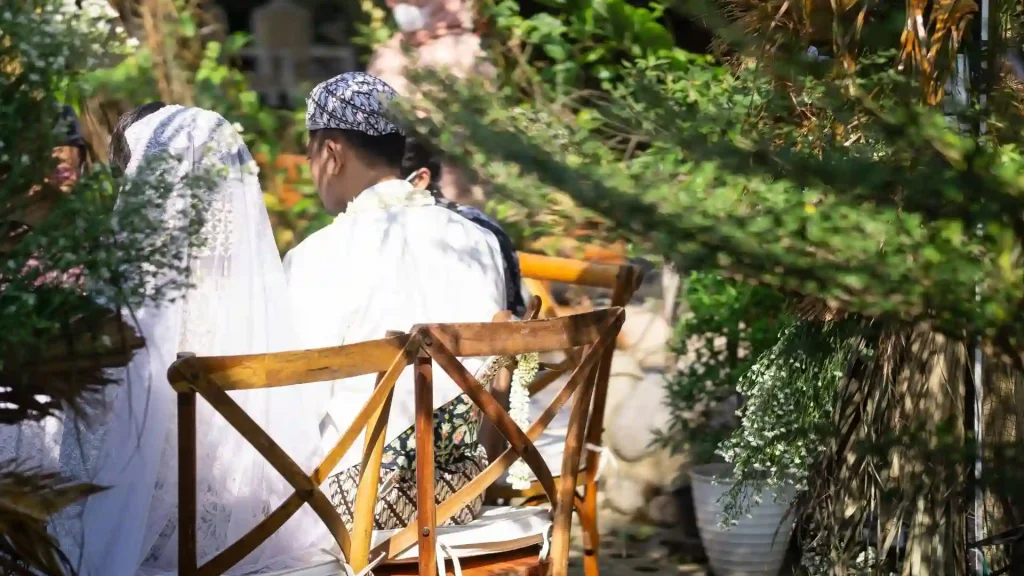
Count yourself fortunate if you are invited to an Indonesian wedding. These celebrations offer expatriates a unique opportunity to gain insight into Indonesian culture, family values, and social traditions. Given the diversity of Indonesia’s many ethnic groups, it is only natural that wedding customs vary widely. Each group has its own traditional attire, such as batik, songket, or kebaya, and distinct ceremonial practices. In addition, religious background plays an important role, meaning that even within the same ethnic group, wedding traditions may differ.
As an expatriate living in Indonesia, you may occasionally receive a wedding invitation and feel unsure about what is expected of you. You may wonder how to dress, what kind of gift to bring, or what your role as a guest should be. While practices vary, there are many common elements across Indonesian weddings that can help you feel more comfortable and confident when attending.
Attendance is Important
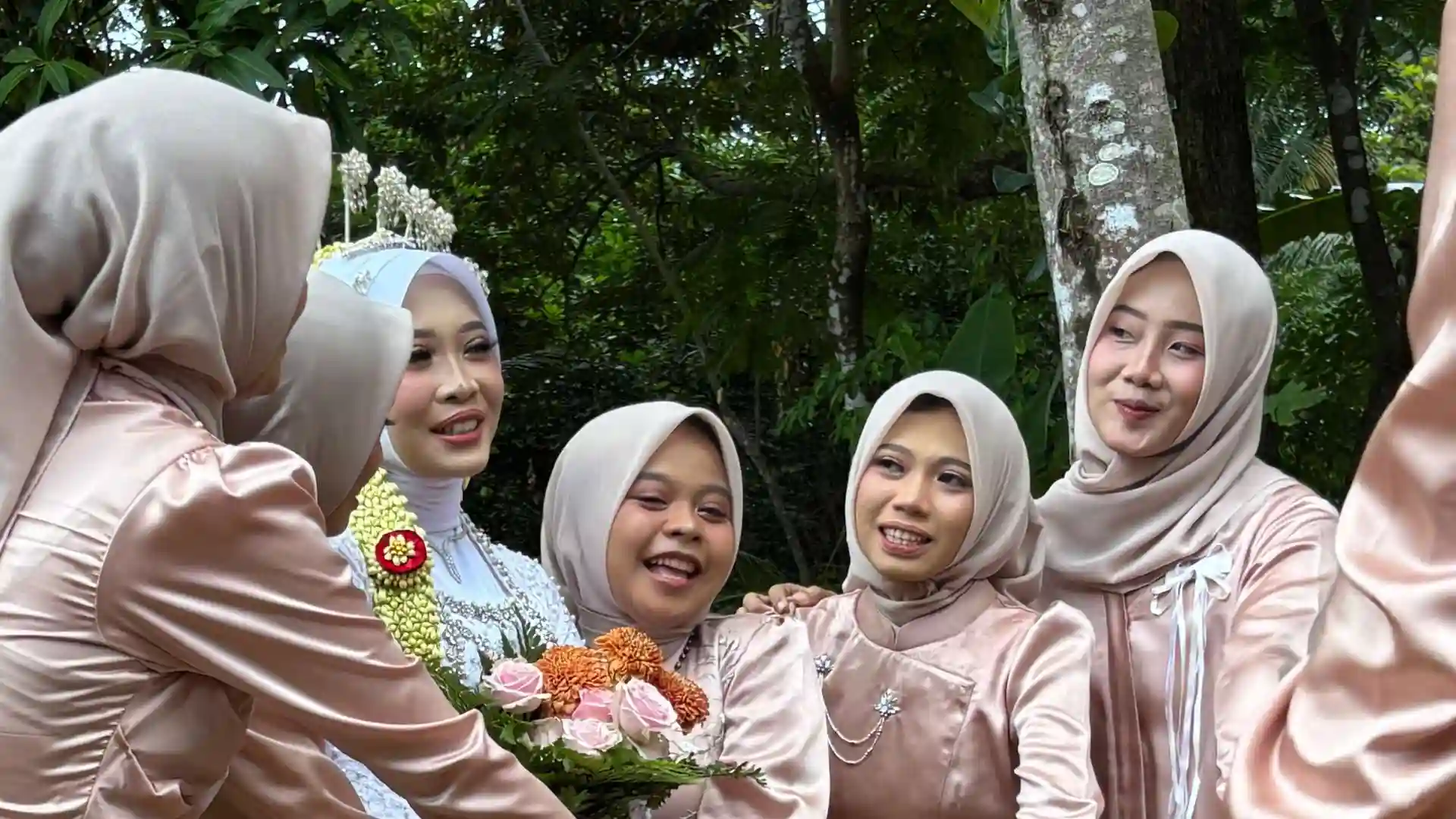
A wedding is a very important event in Indonesian culture and is considered the beginning of a new phase in life. For this reason, couples often invite a wide circle of people, including relatives, friends, colleagues, and even business associates. It is not unusual to be invited by someone you do not know very well, and this should be seen as a genuine gesture of inclusion. Indonesians are truly honored by your attendance, as it reflects respect for the individual, their family, and your relationship with them.
Failing to attend a wedding from a close colleague without explanation may be perceived as disrespectful and could affect future relationships. That said, it is understood that you cannot attend every invitation, and sending your regrets through a message, often via WhatsApp, is perfectly acceptable in today’s context. In recent years, some couples have begun limiting guest numbers or organizing multiple reception sessions, but attendance is still highly valued.
The Invitation
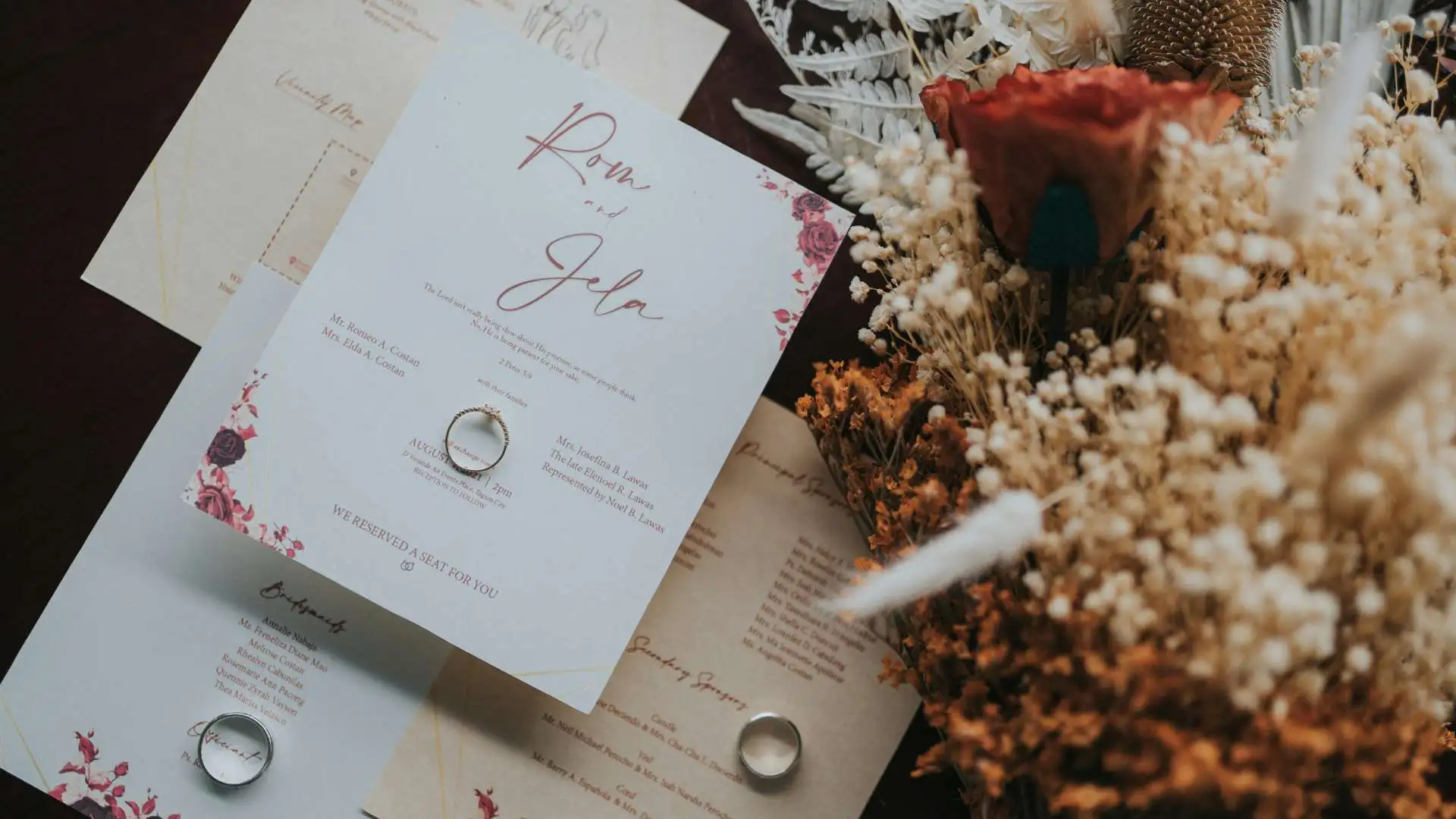
Wedding invitations today range from elaborate printed cards to fully digital formats. Many couples now use WhatsApp invitations or wedding websites that include maps, schedules, and RSVP links. Despite this shift, the traditional wording remains, expressing that your presence is an honor and that your blessings are appreciated.
Invitations usually include both the Akad Nikah or Pemberkatan, which is the marriage ceremony, and the Resepsi Pernikahan, which is the reception. Most guests attend only the reception, while the ceremony is typically reserved for close family and friends. If you are interested in attending the ceremony, it is best to ask the host beforehand.
Appropriate Dress
Dress at Indonesian weddings ceremony is generally formal, although it has become slightly more flexible in recent years. Men commonly wear a long-sleeved batik shirt with slacks, while suits are less common unless the event is particularly formal. Women typically wear dresses similar to what they would wear at weddings in their home country, and some may choose to wear a kebaya.
For Muslim weddings, modest dress is recommended, meaning covered shoulders and appropriate length, but expatriate women are not expected to cover their heads. In some cases, the invitation may specify a dress code or color theme, which is becoming increasingly popular.
The Gift
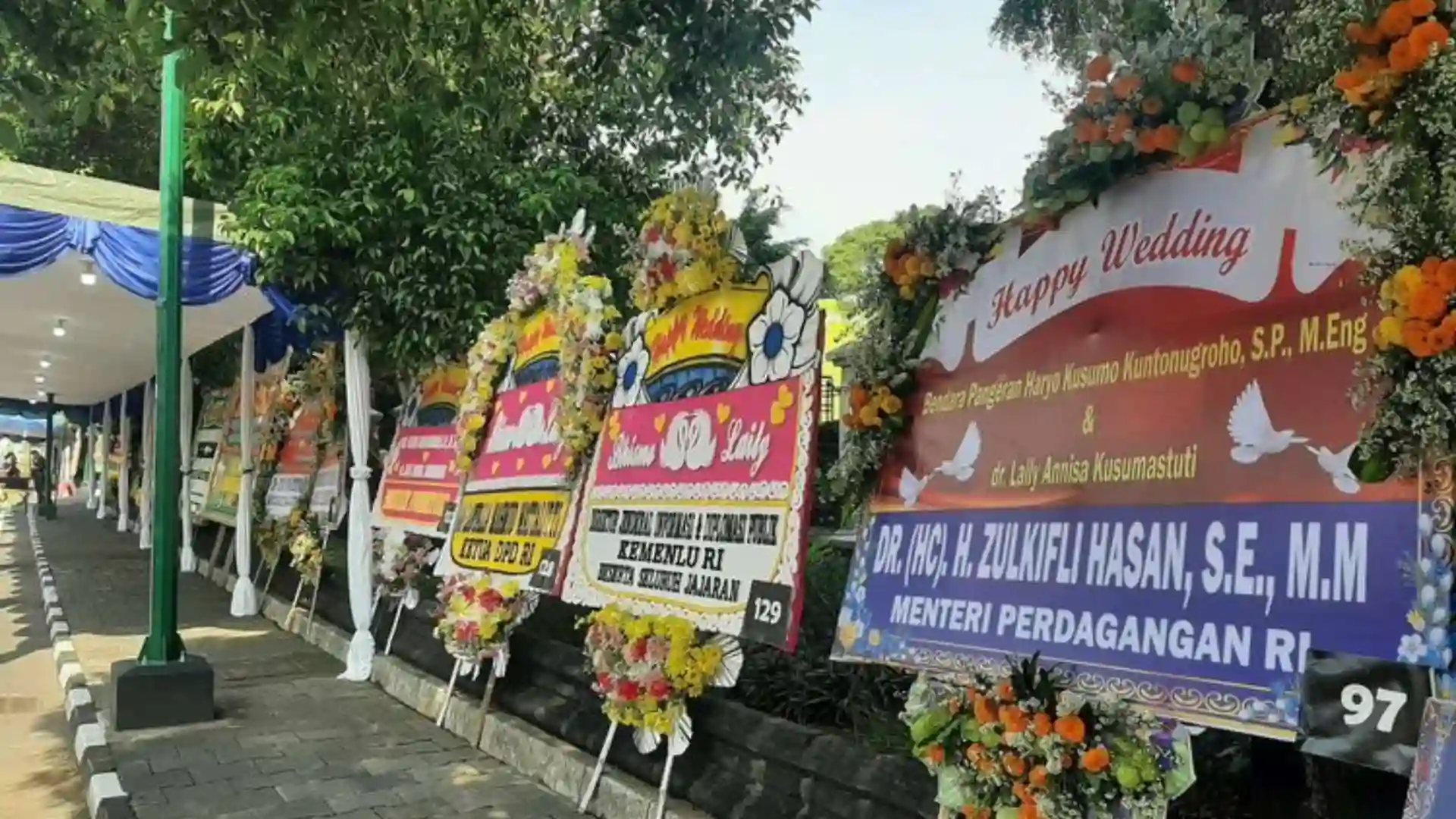
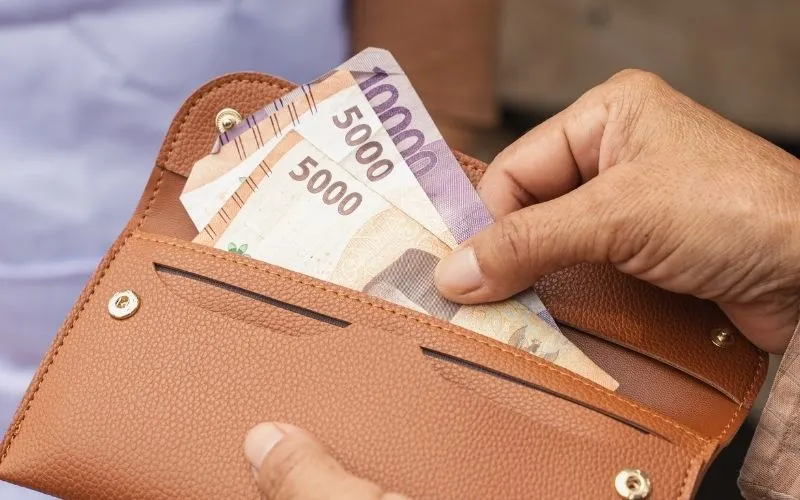
Gift-giving practices have changed significantly over the years. In the past, guests often brought household items or elaborate floral displays, which sometimes resulted in excessive duplication. Today, most couples prefer monetary gifts. At the reception, you will usually find a decorative box where guests can place an envelope containing money.
Increasingly, couples also provide QRIS codes or bank transfer details, allowing guests to send gifts digitally. If you are unsure about how much to give, it is advisable to consult Indonesian colleagues. While gifts are appreciated, they are not strictly required, and your presence is often considered the most meaningful contribution.
Thank-Yous at Indonesian Wedding Ceremonies
Formal thank-you notes are not commonly expected after Indonesian weddings. Instead, couples usually express appreciation by giving guests a small wedding souvenir. This is a familiar part of the guest experience and is often handed out when guests register at the entrance, or sometimes as they leave the venue.
The souvenir can vary depending on the couple’s budget and style. Common examples include snacks, candles, small household items, or personalized keepsakes. In recent years, many couples have also chosen more practical or eco-friendly gifts, such as reusable bags, utensils, plants, or locally made products.
For guests, this souvenir is simply a gesture of thanks. You do not need to send a formal thank-you note in return, although a warm message to the couple after the wedding is always appreciated.
Indonesian Wedding Ceremonies and Reception Etiquette
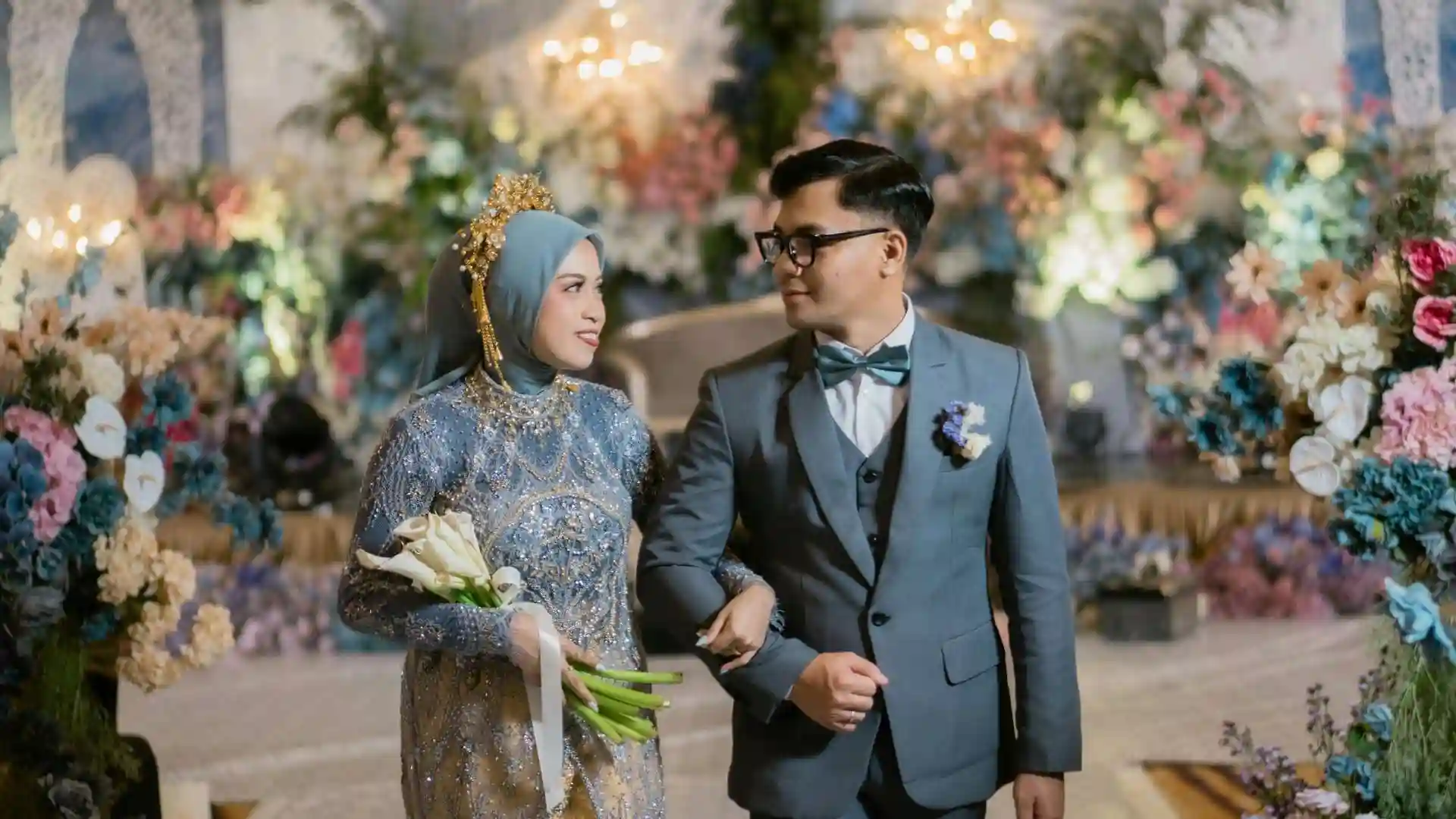
Wedding receptions in Indonesia can look very different depending on the couple’s budget, family background, and social expectations. Some are intimate gatherings held at home, while others are large celebrations in hotel ballrooms, convention centers, or formal event venues. Despite the differences in scale, many Indonesian wedding receptions follow a familiar flow.

When guests arrive, they usually sign the guest book, give their wedding gift or scan a QR code, and receive a small souvenir before entering the reception area. The entrance may be lined with extended family members or pagar ayu, a group of young women dressed in coordinated traditional or formal attire. Their role is to welcome guests gracefully and add a more ceremonial touch to the event.
Guests then proceed to the stage to congratulate the bride and groom, along with their parents. This receiving line can be long, especially at larger weddings, but it remains an important part of the celebration. Food is also central to Indonesian weddings, often served through buffets or multiple food stations offering Indonesian and international dishes.
Many guests follow the informal concept of “SMP” or Sudah Makan Pulang, meaning that after greeting the couple and eating, it is acceptable to leave. Alcohol is usually limited or not served, especially at Muslim weddings, and dancing is uncommon. Overall, the atmosphere is festive, social, and respectful.
Indonesian Wedding Ceremonies Across Ethnic Traditions
Indonesian Wedding Ceremonies are shaped by the country’s rich ethnic diversity. While many wedding receptions follow a similar modern format, the traditional ceremonies often differ through attire, decorations, symbolic rituals, and family customs unique to each culture.
Ethnic Chinese Weddings
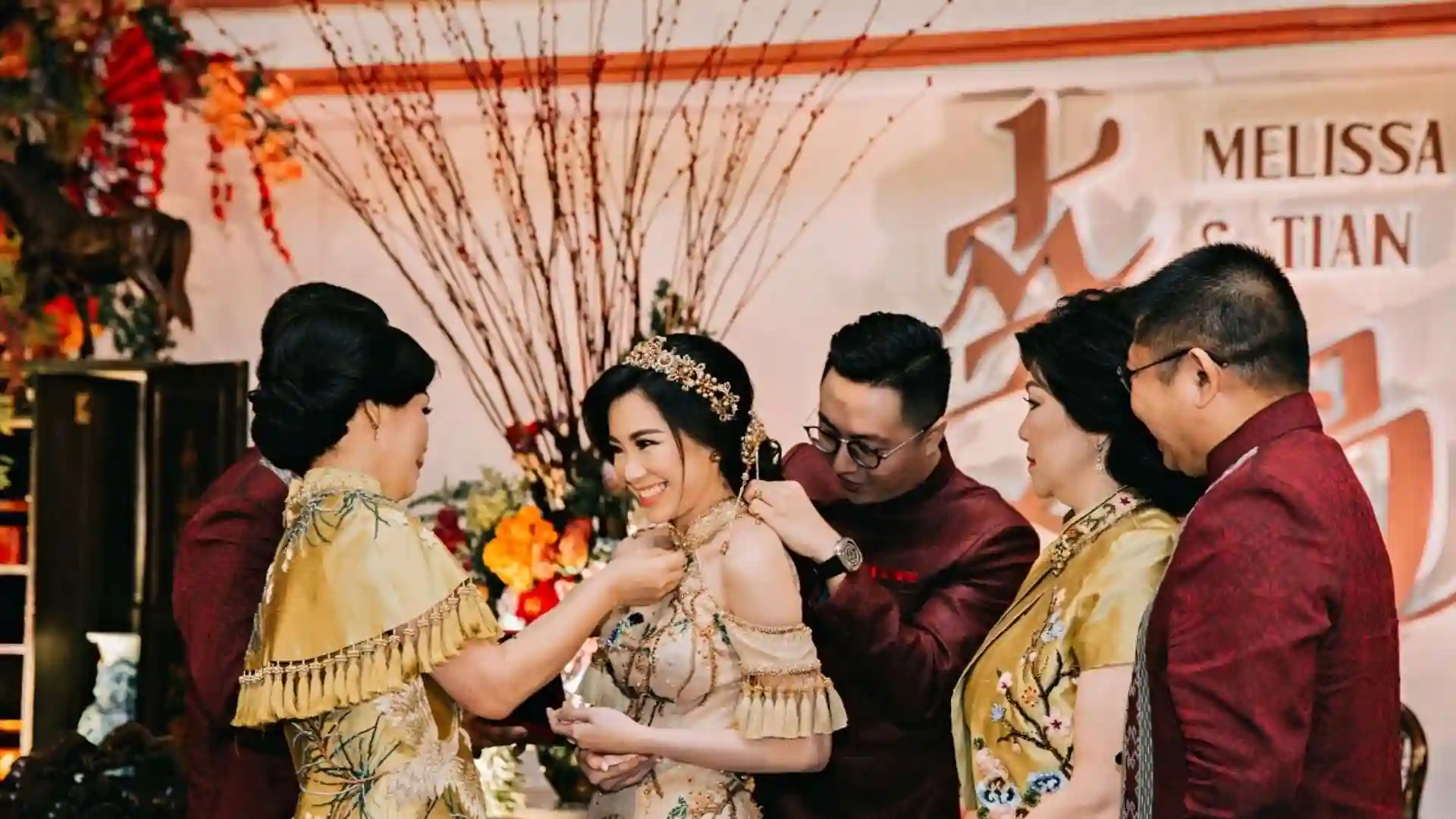
Ethnic Chinese weddings in Indonesia combine long-standing Chinese traditions with local Indonesian influences and modern practices. One of the most important pre-wedding rituals is known as the Sangjit ceremony, commonly referred to in Bahasa Indonesia as upacara sangjit. This ceremony typically takes place several days before the wedding and represents the formal proposal and acceptance between the two families.
During the Sangjit, the groom’s family visits the bride’s family bringing a series of gifts arranged in red boxes or baskets, as red symbolizes prosperity, happiness, and good fortune. These gifts are carefully selected to represent blessings for the couple’s future life together. Common items include clothing and accessories for the bride, gold jewelry, and sometimes cosmetics or personal care items. Food items are also an essential part of the exchange, including fruits such as oranges, traditional cakes, and sweet treats that represent a sweet and harmonious marriage. In many cases, symbolic items such as tea sets, wine, candles, and monetary gifts are also included.
An important aspect of the Sangjit ceremony is the number of gift boxes presented. The number must always be even, as even numbers are considered auspicious in Chinese culture and symbolize balance and harmony. In some cases, particularly lucky numbers such as eight or twelve are chosen, as they are associated with prosperity and good fortune. After the gifts are presented, the bride’s family will typically accept them and then return a portion back to the groom’s family, symbolizing mutual respect and balance.
While the Sangjit ceremony usually takes place in the days leading up to the wedding, the tea ceremony is often held on the wedding day itself and is one of the most meaningful parts of the celebration. During this ceremony, the bride and groom formally serve tea to their parents and senior family members. In return, these elders present red envelopes, or angpao, containing money or jewelry, offering blessings for prosperity and a harmonious marriage. This ceremony is typically attended only by close family members and is considered a significant and intimate family ritual.
Wedding receptions are typically well organized and often led by a professional master of ceremonies. A cake-cutting ritual is a common feature at many receptions, often using a decorative multi-tiered cake. If the reception is a standing event, timing is flexible and it is not essential to arrive exactly on time. However, if the reception is a seated banquet, punctuality becomes important, as meals are served at a specific time and seating is carefully arranged. This detail is usually indicated on the invitation.
Sundanese Wedding Ceremonies
Sundanese weddings, common in West Java, are rich in symbolism and reflect deeply rooted values of harmony, respect, and family unity. The ceremonies represent not just the union of two individuals, but the transition of responsibility and blessing between families. Unlike Western traditions, there is no single moment where the father formally “gives away” the bride. Instead, both families are actively involved throughout the process, and the focus is on mutual respect and shared responsibility.
One of the most meaningful moments is the sungkem ceremony, where the bride and groom kneel before their parents, asking for forgiveness and blessings. This act symbolizes gratitude and acknowledges the lifelong role of parents even as the couple begins their own household. It is often an emotional highlight of the ceremony.
The sawer ceremony involves showering the couple with rice, coins, and sweets. Rice represents prosperity, coins symbolize generosity and the importance of sharing wealth, and sweets reflect hopes for a joyful and harmonious marriage. These elements are often accompanied by traditional songs that provide advice and blessings for the couple’s future.
The nincak endog, or egg-stepping ceremony, symbolizes the roles within the marriage. The groom steps on an egg, representing readiness to take responsibility, while the bride washes his foot, symbolizing care and devotion. The egg itself represents fertility and new life. Other symbolic acts, such as breaking objects or burning items, represent leaving behind negative habits and starting a new life together.
Karo Batak Wedding Ceremonies
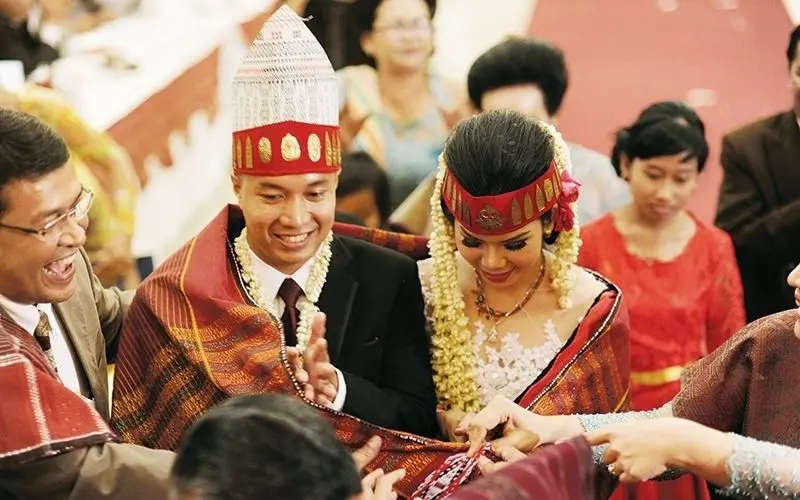
Karo Batak weddings are highly structured and emphasize strong family and clan relationships. Marriage is viewed as the union of two extended families rather than just a couple. Unlike Western weddings, there is no formal “giving away” of the bride by her father. Instead, the bride’s family as a whole plays an important role, and the process reflects mutual respect and obligations between both families.
A key element of the ceremony is the relationship between the bride’s family and the groom’s family, which defines roles and responsibilities throughout the event. The groom’s family must demonstrate respect and appreciation through ceremonies, offerings, and hospitality, reinforcing the importance of balance and reciprocity.
Traditional textiles are often presented during the ceremony, symbolizing blessings, protection, and acceptance into the family. These items are not simply decorative but carry deep cultural meaning and are used to reinforce the couple’s roles within the family structure.
Feasting and community participation are central to the celebration, with large gatherings that emphasize togetherness and shared responsibility. The ceremony itself can be quite structured and extended, reflecting the importance of honoring traditions and maintaining strong relationships between families.