

Editor’s Note:
Department stores remain popular in Indonesia, although shopping habits have changed significantly with the growth of online retail, digital payment platforms, and modern shopping malls. This article has been updated to reflect current shopping practices while preserving useful information for newcomers to Indonesia.
Shopping in Indonesia’s metropolitan centers takes many forms, from the most traditional pasar (markets) to glitzy world-class malls with international designer shops. Many expatriates are drawn to the excellent department stores that can be found throughout the country’s major cities.
Many of these are branches of international department store chains, featuring many of the services and products one would expect from a department store back home. These include Metro (Singapore), SOGO (Japan), Seibu (Japan), Central Department Store (Thailand), Marks & Spencer (England), and Galeries Lafayette (France). Indonesia also has several successful local chains, including Matahari and Ramayana.
There is no need to race around town from store to store or market to market looking for various items when a great selection of personal and household needs can all be found under one roof in a department store.
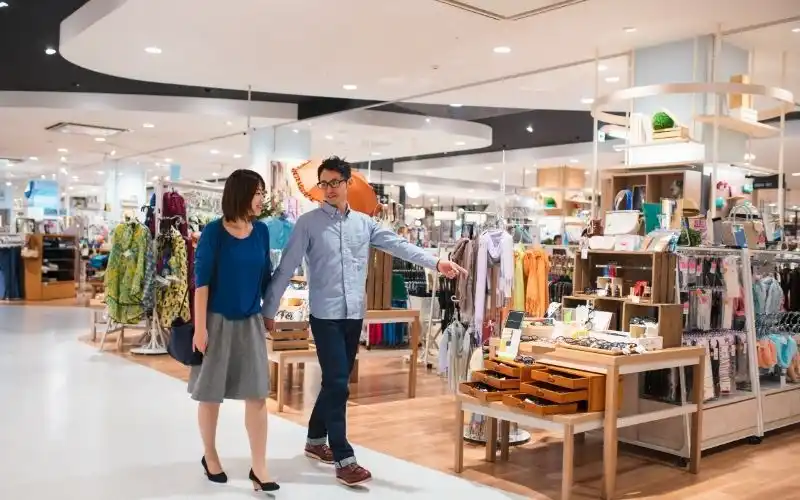
What can you find in a department store in Indonesia? Pretty much the same variety of goods that you would find in a department store at home. You can expect to find women’s clothing, men’s clothing, children’s clothing, infant clothing and accessories, cosmetics, handbags, fashion accessories, footwear, household linens, kitchen items, home furnishings, beauty products, stationery, books, pharmacies, and often a supermarket.
Some of the larger department stores also include electronics, home appliances, mobile phone accessories, Indonesian handicrafts, restaurants, cafés, and specialty retail counters.
Members Programs
Most of the better department stores in Indonesia have membership or loyalty programs that reward frequent customers for their continued business. Ask at the customer service desk for information on any program the store offers and the benefits of becoming a member.
Many loyalty programs are now managed through mobile apps rather than physical membership cards. Customers earn points with each purchase and receive information on upcoming promotions, exclusive member discounts, and special shopping events.
The points accumulated can often be redeemed for merchandise, shopping vouchers, travel benefits, or special promotional offers.
Cardholders are sometimes offered exclusive shopping events where members receive additional discounts before a public sale begins. While these promotions can offer substantial savings, it is not uncommon to find long queues at the cashier during major sale periods.
Personal Shopper Services
Some of the higher-end department stores offer a Personal Shopping Service for their customers. This service provides a personalized shopping experience where customers can relax in a private lounge while staff members present selected items based on their preferences.
Personal shopping is generally by appointment. When making a booking, customers indicate the types of items they wish to see, along with sizes, styles, and budget ranges. Staff then prepare a selection of products in advance.
The emphasis is on customer service and making the shopping experience as private and enjoyable as possible. The service can be especially useful when shopping for gifts or when time is limited. Personal shoppers may also suggest products that you might otherwise overlook and help you make a suitable selection.
Differences from Department Stores at Home
You will undoubtedly find some differences in the way department stores operate in Indonesia compared to your home country.
One difference is the continued use of the “nota” system in some department stores and specialty retailers. In stores that use this system, you may see signs saying “pakai nota”. This means that a salesperson writes a purchase slip which you take to a centralized cashier for payment.
This system developed because individual counters are often operated by separate companies that rent space within the department store. Although many modern retailers now use centralized point-of-sale systems, the nota system can still occasionally be encountered.
If you are not sure what the procedure is, simply ask:
“Ini pakai nota atau bayar langsung?”(Do I need a receipt first, or do I pay directly?)
Another important point of etiquette is that bargaining is rarely done in department stores or shops inside modern malls. Prices are fixed (harga pas) and clearly marked.

One noticeable difference for many expatriates is the abundance of sales staff. Unlike many Western countries where assistance may only be available at the cashier, Indonesian department stores typically have staff positioned throughout the sales floor and they are usually eager to assist customers.
In some stores, individual counters are operated by different companies that rent space from the department store. As a result, sales staff may only be responsible for a specific brand or product line. Inventory accountability remains important, which explains why some sizes and stock are kept in drawers, cupboards, or storage rooms rather than on display.
English proficiency varies considerably. Staff in upscale malls and stores located in expatriate areas often have some English ability, while employees in more local department stores may be more comfortable speaking Bahasa Indonesia. A smile and a few basic Indonesian phrases usually go a long way.
Digital Payments
One of the biggest changes in Indonesian retailing over the past decade has been the rapid adoption of digital payments.
Most department stores now accept:
- Credit and debit cards
- QRIS payments
- GoPay
- OVO
- DANA
- ShopeePay
- Contactless payment systems
Many stores also partner with local banks to offer special discounts, installment plans, cashback promotions, and loyalty rewards.
Online Shopping vs Department Stores
Indonesia has experienced tremendous growth in e-commerce, and many shoppers now purchase clothing, cosmetics, household goods, and electronics online.
However, department stores remain popular because customers can see, touch, and try products before purchasing. Many Indonesians still view shopping as a social activity and enjoy spending time in malls with family and friends.
Packaging
Visitors may still notice that some stores use more packaging than they are accustomed to at home. However, many retailers have reduced packaging in response to environmental concerns and government initiatives aimed at reducing single-use plastics.
Customers are increasingly encouraged to bring reusable shopping bags, particularly in larger cities such as Jakarta, Bandung, Surabaya, and Denpasar.
Variety of Department Stores
Within Indonesia’s major cities you will find a wide variety of department stores catering to different market segments.
SOGO, Seibu, Metro, Central, and Galeries Lafayette generally target middle- and upper-income shoppers, while Matahari serves a broad middle-income market and Ramayana caters to more budget-conscious consumers.
Department stores such as Pasaraya are also known for their extensive collections of Indonesian handicrafts, textiles, batik, and traditional products, making them popular with expatriates and tourists alike.
Large Sizes
As one might expect, the majority of customers in Indonesian department stores are Asian, and clothing and shoe sizes tend to reflect local demand.
If you are a plus-size shopper or wear shoes larger than a European size 43, you may have difficulty finding suitable options in some stores. International brands in premium malls generally offer a wider range of sizes, but selection may still be more limited than in North America, Europe, or Australia.
If this is the case, consider visiting factory outlet stores, specialty import retailers, or utilizing the services of a tailor or seamstress.
Safety While Shopping
Wherever you shop, it is wise to keep an eye on your purse, wallet, and mobile phone. Pickpockets can operate in busy shopping areas, including high-end malls.
Be cautious when using public Wi-Fi networks and regularly monitor your credit card and digital wallet transactions. When making expensive purchases, retain your receipts and warranty documentation.
Credit card fraud still occurs from time to time, so review your statements regularly and report any suspicious transactions promptly.
Read more about Shopping in Jakarta.