

Editor’s Note:
This article was written by Gene Sugandy. A version of this article was first published by Island Life Magazine. It has been updated to reflect current information on Oolong tea production and its development in Indonesia.
The Emergence of Oolong Tea in Indonesia
Over the past few decades, Indonesia—long known as a major producer of black tea—has quietly begun to explore the production of specialty teas, including Oolong. Early attempts to cultivate Oolong tea in the highland regions of West Java were met with skepticism. Differences in soil composition, altitude, and climate compared to traditional Oolong-producing regions such as Fujian Province led many to question whether the distinctive qualities of Oolong tea could be replicated.
However, as cultivation techniques improved and local expertise developed, it became increasingly clear that certain regions of Indonesia were indeed capable of producing Oolong tea with its own unique character. Today, Indonesian Oolong tea is produced in limited quantities and is gradually gaining recognition both locally and internationally as part of the country’s move toward higher-quality, specialty tea production.
What Is Oolong Tea?
Oolong tea occupies a middle ground between green and black tea, defined by its partial fermentation process. While green tea is unfermented and black tea is fully fermented, Oolong tea is only partially oxidized, typically between 20% and 50%. This careful balance gives it a complex flavor profile that can range from light and floral to rich and roasted.
The origins of Oolong tea trace back to Fujian Province, where tea producers refined fermentation techniques during the Ming Dynasty (1368–1644). These innovations were driven in part by the need to preserve tea during long-distance trade, allowing it to reach markets as far away as Europe without losing its essential qualities.
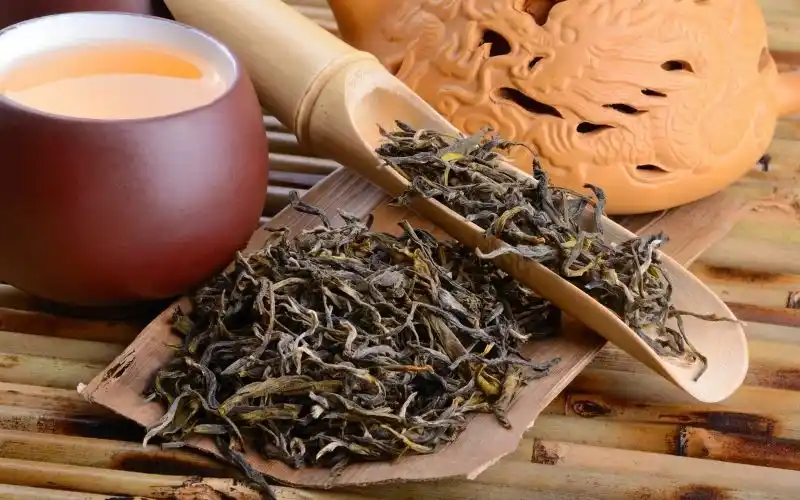
Oolong tea is also distinctive in appearance. The leaves are often rolled into small, tight shapes that slowly unfurl during brewing. The resulting liquor is typically golden in color, with a fragrant aroma and a smooth, lingering finish.
How Oolong Tea Is Produced in Indonesia
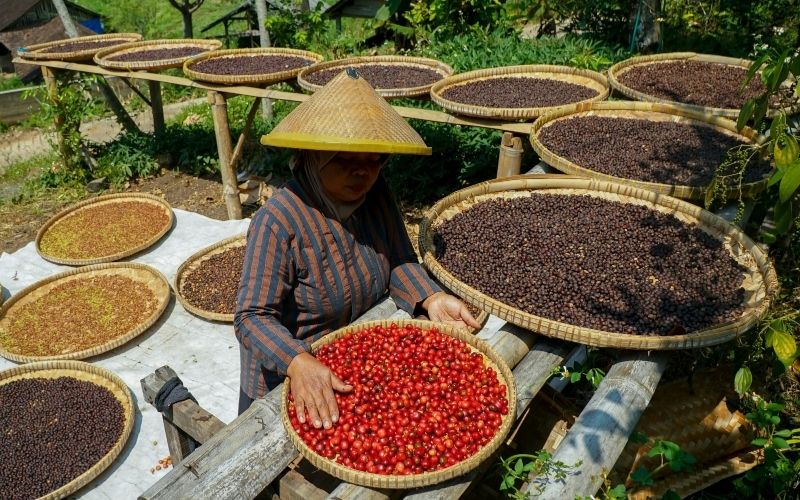
The journey of Oolong tea from leaf to cup is both precise and deeply rooted in tradition. In Indonesia’s highland tea-growing areas, the process begins early in the morning, when experienced pickers move carefully through rows of neatly pruned tea bushes. Only the youngest and most tender parts of the plant—the top two leaves and a bud—are selected, as these are essential for producing high-quality tea.
Once harvested, the leaves must be handled quickly. Within a short time, they are brought from the fields to a nearby processing area, where they are spread out and allowed to rest. This initial stage, often carried out under soft natural light, begins to reduce moisture in the leaves and prepares them for the next phase.
As the leaves are moved indoors, they undergo a carefully controlled drying and oxidation process. Here, time and temperature are closely monitored. The leaves are gently agitated and allowed to rest in cycles, encouraging the release of natural enzymes that develop the tea’s flavor and aroma. It is during this stage that Oolong tea begins to take on its distinctive character—somewhere between the freshness of green tea and the depth of black tea.
After several hours, sometimes extending overnight, the leaves become pliable enough for shaping. They are warmed and then skillfully rolled, traditionally by hand but now often assisted by machines, into tight, compact forms. This rolling not only gives Oolong tea its recognizable appearance but also helps lock in flavor, ensuring that the leaves unfurl gradually when brewed.

The process is repeated multiple times, with periods of rest in between, until the desired shape and consistency are achieved. Finally, the leaves are dried once more to stabilize them for storage. Before reaching the market, they are carefully sorted, with only the best leaves selected.
The result is a tea that reflects both the natural environment in which it was grown and the skill of those who produced it.
Health and Wellness Perspectives
Tea has been valued for centuries not only for its taste but also for its perceived health benefits. Historical records suggest that tea was consumed in China as early as the third century BC, initially for medicinal purposes before becoming a widely enjoyed daily beverage.
Oolong tea contains naturally occurring compounds such as polyphenols, which are associated with antioxidant activity. These compounds are believed to support overall health by helping the body manage oxidative stress. Regular tea drinkers often associate Oolong tea with benefits such as improved digestion, support for heart health, and a balanced level of alertness.
Compared to coffee, Oolong tea contains significantly less caffeine, offering a gentler source of energy without the same intensity. While modern research continues to explore these effects, Oolong tea remains a popular choice for those seeking both enjoyment and wellness in a daily routine.
Ongoing Developments in Indonesia’s Tea Industry
Indonesia’s tea industry is gradually evolving beyond large-scale production into more specialized and value-driven segments. There is increasing interest in producing distinctive teas that reflect local growing conditions, including Oolong, white, and artisanal green teas.
At the same time, domestic appreciation for tea is growing. Tea is no longer seen only as a traditional drink but also as part of a modern lifestyle, with cafés, specialty shops, and plantation experiences introducing consumers to a wider range of flavors and brewing techniques.
Sustainability is also becoming an important focus. Many producers are exploring environmentally responsible farming methods, recognizing that long-term quality depends on maintaining healthy soil and ecosystems.
Conclusion
The development of Oolong tea in Indonesia illustrates how tradition and innovation can come together in unexpected ways. What began as an experimental effort has grown into a small but meaningful part of the country’s tea landscape.
For those interested in tea—whether as consumers, travelers, or researchers—Indonesia offers a unique perspective on how a classic tea style can adapt to a new environment while retaining its essential character.