


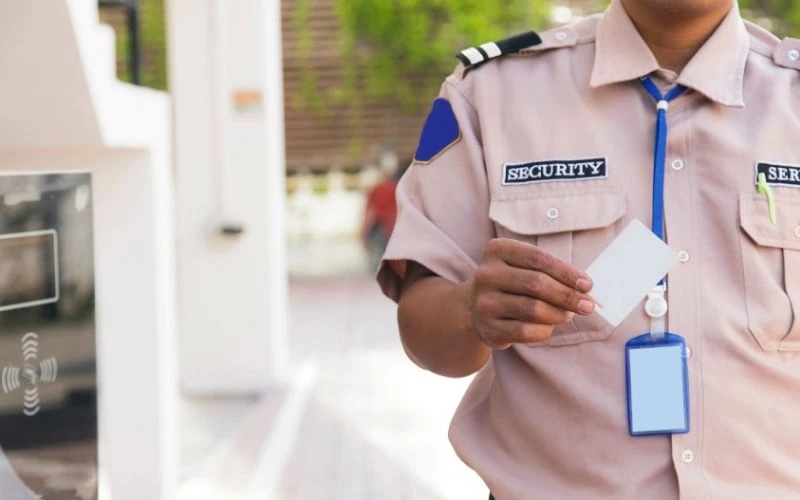
There are several designations for people who can be hired to provide security and guard your home or office: jaga, Hansip and Satpam.
Jaga
Probably the most common type of guard, is the jaga, which literally means watchman. These men can be hired either as day jaga or night jaga, with 12-hour shifts. Some families may choose only to have a jaga in the evening, while others may choose to have a watchman during the day as well.
The basic duty of a jaga is to watch your house. This includes ensuring the safety of the house, the residents and household contents. They also open the gate for your car when you leave and arrive and greet people coming to your gate. Various people may come to your gate, trying to sell you something or requesting a donation, legitimate or otherwise. Your jaga should screen these solicitors and, following your policy, either turn them away or make you aware of their presence.
To maintain security, your jaga should NEVER allow entrance beyond the locked gate to anyone without your specific permission. It is much easier to turn away solicitors if they have not gained entrance into your yard. A polite terima kasih (thank you), a smile, and a nod of the head should be sufficient to turn people away. In the event that they should become pushy, your jaga should handle the situation.
The day jaga can be given yard or swimming pool maintenance duties in addition to watching the house. Mowing the lawn, tending to the plants, watering the yard, sweeping the street areas in front of your house and other routine maintenance tasks might be duties that you can ask him to do. Not all jaga will want to do this as they may feel it is not part of their job. Others may welcome the activities to keep them busy, useful, and awake.
While you may think that the night jaga stays awake and protects the house all night, many families find that their night jaga may rest during quieter hours of the night, particularly if they have other daytime responsibilities. This may not concern you, as long as he remains alert in case of unusual activity.
In more modern households, some families provide simple amenities such as a chair, fan, or access to a mobile phone so the jaga can remain comfortable and reachable during their shift. Communication today is often handled through mobile messaging apps, allowing quick updates if anything unusual occurs.
In perspective, this is not a well paying job and as in most cases, you get what you pay for. In the event of a dangerous situation, it is most likely that the jaga may be hesitant to put himself at risk for your safety, however the main purpose of having a jaga is to try to deter dangerous situations before they happen.
You will also need to be sure that your jaga, day or night, has access to speak with the other servants, a bathroom, as well as something to drink.
While jaga do not usually wear uniforms, you may want to give used or inexpensive clothing to your jaga to wear while he’s working, if you feel his attire isn’t suitable.
Hansip
The term Hansip comes from the term Pertahanan Sipil, which means community security (civil as opposed to military).
These men are hired by the housing complex in which you live. Their very minimal salaries are paid through the monthly fees you pay to your RT (neighborhood head) for sewer, cleanliness, and security. They have very minimal training and their primary functions are to patrol the neighborhood regularly to check for problems and to screen people coming in through the main gates to the complex, especially in the late evening. In the case of a robbery or serious incident, the Hansip can contact the police for you.
Again this is not a highly paid role, and the level of training and experience can vary depending on the neighborhood.

In many housing complexes today, Hansip may work alongside more structured security systems, including controlled gate access, visitor logs, and CCTV monitoring.
If you are having a large party and anticipate some traffic congestion due to your guests’ cars, you can ‘hire’ your neighborhood Hansip for the evening to assist in traffic control as well as watch your guests’ cars. Your RT probably has a set fee, or can recommend a fee for their evening’s service. It would be a good gesture as well to ensure that these men receive drinks or food from the party. If you’re having western food, have your cook make something for them or just purchase something from a local warung (food stall).
Satpam
The term Satpam refers to the men who usually wear the more official looking white uniforms. The term Satpam is an abbreviation of Satuan Petugas Keamanan, roughly translated as Association of Security Officers. Satpam differ from jaga and Hansip in that they have had some significant training in guard duties. These training programs are run by foundations connected to one of the Indonesian military forces. Satpam are licensed by the local government or are working with a licensed security company. Normally a team of 3 men are assigned to one location, having 8 hour shifts each. While the white uniform is most common, Satpam also may wear navy blue, khaki green or brown shirts, depending on the licensing organization.
In theory, a Satpam is best equipped to guard your family in a dangerous situation. In reality, you would probably never need those services. His role is primarily to ensure your safety, open the gate, and screen visitors. You should not expect your Satpam to assist with the yard or pool work.
If you want to hire a Satpam, ask a friend or neighbor’s Satpam what agency he was hired through. You could also ask the formalities or administration staff in your sponsoring company to help you locate a Satpam for your residence.
Today, many Satpam are employed through professional security companies that may offer additional services such as CCTV monitoring, access control systems, and 24-hour security teams for residential compounds.
Hiring a Satpam is primarily done by wealthy Indonesians and expatriates. Be advised, however, that most neighborhoods and circumstances do not require Satpam to ensure the safety of residents. Most middle class Indonesians do not even hire jaga. If, however, you have special reasons or concerns such as the house being broken into previously or the working spouse being frequently out of country on business trips, or company security policies for expat staff/managers, then a Satpam could help ensure peace of mind.
Modern Residential Security Considerations
In addition to traditional guard roles, many homes and residential complexes in Indonesia now incorporate additional layers of security. CCTV cameras, intercom systems, and gated cluster access are increasingly common, particularly in urban areas such as Jakarta, Surabaya, and Bali.
While these systems enhance security, they are typically used in combination with human guards rather than as a replacement. The presence of a guard at the gate remains one of the most effective deterrents.
If you have other information on guards to share with website readers, please contact us and we’ll be happy to include your information.
Frequently Asked Questions
Is it necessary to have a guard in Indonesia?
In many middle-class neighborhoods, it is common to rely on community security systems rather than hiring a private guard. However, expatriates often choose to hire a jaga or Satpam for additional peace of mind.
What is the difference between a jaga and a Satpam?
A jaga is typically an informal watchman with limited training, while a Satpam is a formally trained and licensed security officer, often working through a security company.
How much does it cost to hire a guard in Indonesia?
Costs vary depending on location, experience, and whether the guard is hired privately or through a company. It is advisable to check current local rates, as wages and expectations can change.
Are gated communities in Indonesia secure?
Many gated communities offer layered security including guards, visitor logs, and CCTV systems, which provide a higher level of security compared to standalone homes.