

This article draws on the first-hand experience of Martin Schell, an American expatriate who navigated this process in Central Java in 2007 and generously shared his account with the expat.or.id community. His experience remains a valuable reference for understanding how the system works outside Jakarta. Where procedures, fees, and laws have changed, this guide reflects current requirements as of 2026. All families should verify specific requirements with their local immigration office or a qualified Indonesian immigration lawyer before proceeding.
Overview
Children born to one Indonesian parent and one foreign parent have the right to Indonesian citizenship under Law No. 12 of 2006 on Citizenship of the Republic of Indonesia. This law, passed in July 2006, was a landmark reform: before it took effect, children of mixed marriages could only inherit the father’s citizenship, leaving children of Indonesian mothers and foreign fathers without a clear claim to Indonesian nationality.
Today, those children are legally recognised as eligible for Indonesian citizenship, and the process for securing it — while still involving multiple government offices and a meaningful amount of paperwork — is better defined and increasingly supported by online tools than it was when the law first came into effect.
This guide covers the two main routes available to families today, the documents typically required, current official fees, the difference in experience between Jakarta and regional areas, and the critical deadlines families must not miss.
Important note on the law’s current status: Indonesia’s parliament is actively drafting a revision to Law No. 12/2006 that would, among other changes, extend the window for children to declare their citizenship choice from age 18–21 to age 18–26. As of mid-2026, this revision had not yet been passed. Families should monitor developments and consult an immigration lawyer for the most current position.
Who Qualifies
Under Law No. 12 of 2006, the following categories of children are eligible for Indonesian citizenship or limited dual citizenship:
- Children born from a legal marriage between an Indonesian father and a foreign mother
- Children born from a legal marriage between a foreign father and an Indonesian mother
- Children born out of wedlock to a foreign mother, but acknowledged by an Indonesian father before the child turns 18 or marries
- Children born outside Indonesia to two Indonesian parents, if the country of birth automatically grants citizenship by birth (ius soli), giving the child dual nationality
- Children who are Indonesian citizens legally adopted by foreign nationals before the age of five, based on a court order
Understanding the Two Routes: ABG Registration vs. Naturalization
Families today have two distinct pathways, and understanding which applies to your situation is the most important first step.
Route 1: Limited Dual Citizenship Registration (ABG — Anak Berkewarganegaraan Ganda / Child with Limited Dual Citizenship)
This is the preferred route for most families and should be pursued as early as possible — ideally at or shortly after the child’s birth.
Under this route, the child is registered as an Anak Berkewarganegaraan Ganda Terbatas (ABG), or child with limited dual citizenship. The child is formally recognised as holding both nationalities simultaneously until age 18 (or marriage, if earlier). Upon turning 18, the child has a three-year window — up to age 21 — to file a “Statement of Choice” declaring which citizenship they wish to keep. Failing to do so within that window results in automatic loss of Indonesian citizenship.
Once registered, the child receives a Sertifikat/Bukti Pendaftaran Anak Berkewarganegaraan Ganda (Certificate of Dual Citizenship Registration). This document is the key to accessing all associated rights, including the ability to apply for an Indonesian passport.
Children registered as ABG who travel using a foreign passport are also entitled to apply for an affidavit — an immigration facility that exempts them from the normal requirement to hold a visa, residence permit, or re-entry permit when entering and residing in Indonesia. The current official fee for an affidavit is Rp 400,000.
Since 2023, ABG registration can be initiated online through the AHU e-services portal at https://pewarganegaraan.ahu.go.id. Registration through the Indonesian embassy or consulate is required for children living abroad.
Route 2: Full Naturalization
Naturalization is the route described in Martin Schell’s original 2007 account, and it is still valid today. It is most relevant in cases where ABG registration was not completed in time, where the child’s circumstances fall outside the standard ABG categories, or where a family wishes to secure full Indonesian citizenship (not limited dual citizenship) for a child below the age of 18.
The naturalization process involves submitting an application through the Ministry of Law and Human Rights (formerly the Ministry of Law and Human Rights, now the Ministry of Immigration and Corrections), with final approval signed by the President or a delegated minister. The current official fee for this route is Rp 5,000,000 per applicant — a significant increase from the Rp 500,000 cited in the 2007 account.
For children born before August 1, 2006 (the effective date of Law No. 12/2006) who were never registered, a special two-year window existed under Government Regulation No. 21 of 2022. That window closed on May 31, 2024. Children in this situation who missed the deadline should seek specialist legal advice.
A Note on Regional Variation: Jakarta vs. Outside the Capital
One of the most important practical insights from Martin Schell’s experience is one that remains just as relevant today: the experience of navigating Indonesian bureaucracy in regional cities and rural areas can be very different from what happens in Jakarta.
In the capital, dedicated immigration offices are well-resourced and more accustomed to handling mixed-parentage cases. Staff are generally familiar with the relevant laws. Processing is often faster, queues are managed more systematically, and English-language assistance is more readily available.
Outside Jakarta — in provincial capitals, kabupaten towns, and rural kelurahan offices — the picture can vary considerably:
- Staff familiarity varies. As Schell’s account illustrates, in 2007 the offices in Solo and Semarang had never processed a naturalization of this type before. While the system is more established today, offices in smaller cities and rural districts may still encounter these cases infrequently. Staff at the kelurahan or kecamatan level may be unfamiliar with how to include a newly naturalised child in the family registration card (kartu keluarga), for example.
- Documentation standards may differ. What one office accepts as adequate may prompt additional requests at another. Schell’s experience — being called back to provide a notarized copy of his US marriage license because the Catatan Sipil document was only a pemberitahuan (announcement), not a full marriage certificate — is the kind of complication that is more common in regional offices where staff may be working from checklists without detailed guidance on how to handle edge cases.
- Agent fees and informal expectations differ by region. In Jakarta, agent fees for immigration services tend to be higher in absolute terms, reflecting the higher cost of living. In Central Java and other regional areas, agent fees are typically lower — and as Schell noted, are often less than double the official fee for most services. Families in rural areas should budget more time and more patience than families in Jakarta, even if absolute costs may be lower.
- The online portal helps, but doesn’t eliminate in-person visits. The AHU online portal has streamlined the initial application stage significantly. However, biometric appointments, document verification, and collection of finished documents still require attendance at a Kantor Imigrasi (Immigration Office). In areas where the nearest Kantor Imigrasi is a significant journey away, this remains a logistical consideration.
Practical tip for families outside Jakarta: Bring certified copies of every original document to every appointment. Bring more copies than you think you need. If you encounter hesitation or unfamiliarity at a local office — as Schell did at the Kantor Camat — asking the Catatan Sipil section head to confirm the documentation in writing is a proven way to move things forward.
Current Official Fees (2026)
All fees below are official government fees under Government Regulation No. 45 of 2024 and related regulations. They do not include agent fees, transportation, notarization, photocopying, or other incidental costs.
| Service | Official Fee |
|---|---|
| Citizenship registration for child of mixed marriage (ABG route) | Rp 5,000,000 |
| Naturalization application fee | Rp 5,000,000 |
| Affidavit (immigration facility for ABG using foreign passport) | Rp 400,000 |
| Indonesian passport (non-electronic, 48 pages, up to 5 years) | Rp 350,000 |
| Indonesian passport (non-electronic, 48 pages, 10 years) | Rp 650,000 |
| Same-day expedited passport service (in addition to passport fee) | Rp 1,000,000 |
Note on passport validity for ABG children: Children registered under limited dual citizenship may hold an Indonesian passport, but its validity may not extend beyond the age at which they must declare their citizenship choice (age 21 under current law). A child under 17 receives a passport valid for up to 5 years; a child over 17 may receive a 10-year passport, subject to the citizenship declaration deadline.
Note on passport type: Indonesia is in the process of phasing out non-biometric (non-electronic) passports. From December 2024, the phase-out began in major cities. As of mid-2025, the phase-out was being extended province by province across Indonesia. By the time you apply, an electronic passport (e-paspor) may be the only option available at your local office. Check current availability at your nearest Kantor Imigrasi.
Required Documents
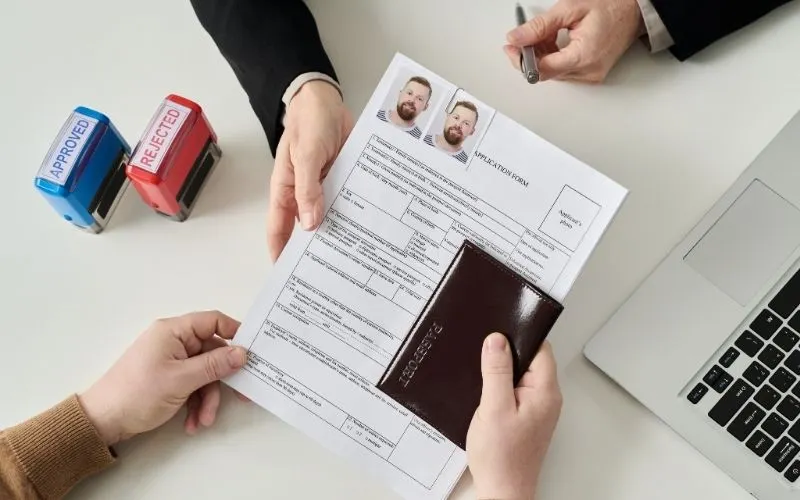
The following documents are typically required. Requirements can vary between offices and individual circumstances, so treat this as a working checklist to verify with your local Kantor Imigrasi or the AHU portal before your appointment.
For ABG Registration
- Child’s birth certificate (original)
- Indonesian parent’s electronic identity card (KTP elektronik)
- Family registration card (kartu keluarga / KK)
- Parents’ marriage certificate
- If married abroad: the original foreign marriage certificate notarized at the relevant Indonesian embassy or consulate (not just the pemberitahuan from the Catatan Sipil — see note below)
- Foreign parent’s passport (photocopy)
- Proof of the child’s registration or citizenship document from the foreign parent’s country (where applicable)
- Photographs of the child (confirm current size and quantity requirements with the relevant office)
For Indonesian Passport (ABG Child)
The Directorate General of Immigration specifies the following for ABG passport applications:
- Electronic identity card of Indonesian mother or father
- Family registration card (kartu keluarga)
- Parents’ marriage certificate or marriage book
- Child’s birth certificate
- Immigration residence permit of the foreign parent (if applicable)
- Proof of ABG registration (Certificate of Dual Citizenship Registration)
- Statement letter from both parents confirming responsibility for the use of the child’s travel documents
A Critical Note on Marriage Certificates
This point from Martin Schell’s account deserves special attention because it continues to cause delays for families today.

Many mixed-nationality couples who married outside Indonesia obtain a pemberitahuan (announcement of marriage) from their local Catatan Sipil (Civil Registry Office) when they register their marriage in Indonesia. For many everyday purposes — including visa sponsorship — this document is accepted as equivalent to an Indonesian marriage certificate.
However, for citizenship applications, it is not sufficient. The original foreign marriage certificate must be presented to and notarized by the relevant embassy or consulate in Indonesia. Families should arrange this notarization before submitting their citizenship application, not after.
Couples married in the United States should note that in some states, the primary document is a marriage license or permit issued before the ceremony, not a certificate issued after. Consult your nearest US Embassy or Consulate to confirm exactly which document is required and what form the notarization should take.
Interfaith Marriages: An Important Legal Context
Martin Schell’s account briefly mentions that Indonesia’s 1974 Marriage Law prohibits marriage between partners of different religions, and describes marrying abroad as a workaround. This context has become more complex since 2007 and deserves a fuller explanation.
Indonesia’s Marriage Law (Law No. 1 of 1974) requires that a marriage be valid according to the religious laws of both parties. In practice, this has meant that interfaith couples have historically faced significant obstacles to legal marriage within Indonesia. The law has been challenged multiple times, including a petition brought to the Constitutional Court as recently as 2023, which was rejected.
In 2023, Indonesia’s Supreme Court also issued a circular directing court judges not to approve applications for interfaith marriages, making domestic legal recognition of such marriages significantly harder to obtain.
Marrying abroad and then registering the marriage at the Catatan Sipil remains the approach used by many interfaith couples, but families in this situation should seek legal advice specific to their circumstances, particularly regarding how their marriage documentation will be treated in citizenship and other legal contexts.
Step-by-Step Process: ABG Registration in Indonesia Today
The following sequence reflects the current process as understood in 2026. Confirm all steps with the AHU portal or your local immigration office before beginning.
Step 1: Online pre-registration Visit https://pewarganegaraan.ahu.go.id to begin the registration process and understand the document requirements specific to your case. Since 2023, the initial application stage is available online.
Step 2: Prepare your documents Gather all required documents. Have your foreign marriage certificate notarized at your country’s embassy or consulate in Indonesia if you have not already done so. Make certified photocopies of all originals.
Step 3: Submit your application Submit the online application through the AHU portal. For families resident in Indonesia, follow-up will typically be required at your provincial Kantor Wilayah (Regional Office of the Ministry of Law and Human Rights) or at your local Kantor Imigrasi, depending on the nature of your application.
Step 4: Pay the official fee The official fee for ABG registration is Rp 5,000,000 per child. Payment is made to the government’s official non-tax state revenue account (PNBP). Always obtain an official receipt.
Step 5: Receive the Certificate of Dual Citizenship Registration Once approved, the child receives the Sertifikat/Bukti Pendaftaran Anak Berkewarganegaraan Ganda. Keep this document securely — it is required for all subsequent steps, including passport applications.
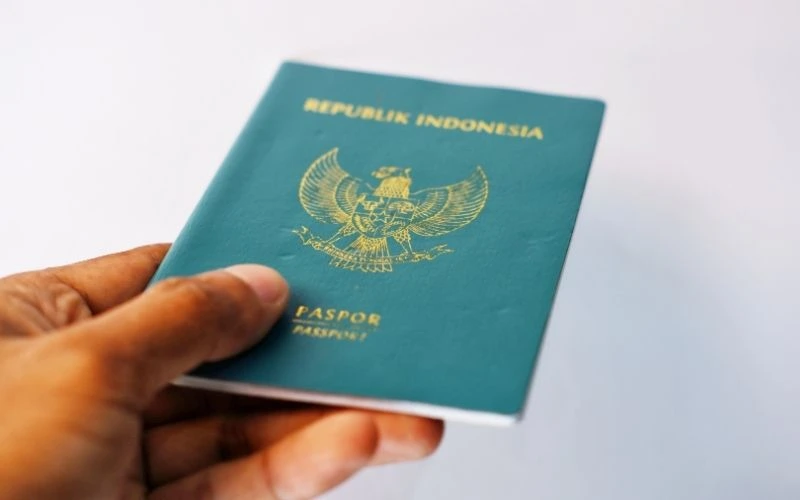
Step 6: Apply for an Indonesian passport (optional but recommended) With the certificate in hand, apply for an Indonesian passport through the M-Paspor app or the imigrasi.go.id website. In-person attendance at a Kantor Imigrasi is required for biometrics. Current fees: Rp 350,000 for a standard 5-year passport; Rp 650,000 for 10 years (for eligible applicants).
Step 7: Update the family registration card (kartu keluarga) Take your Certificate of Dual Citizenship Registration and other documents to your Kantor Lurah and Kantor Camat to have the child added to the family’s KK. As Schell’s experience illustrates, staff at these offices may occasionally be uncertain about the process. If you encounter this, the Catatan Sipil section head can confirm the documentation and assist in moving the process forward.
Step 8: Apply for an affidavit (if needed) If the child will be using a foreign passport to enter Indonesia, apply for an affidavit through your nearest Indonesian embassy, consulate, or immigration office. The affidavit exempts the child from visa and residence permit requirements. The current fee is Rp 400,000. Parents must register online via the Portal Peduli WNI before applying.
The Citizenship Choice at Age 18: Do Not Miss This Deadline
One of the most important obligations under Law No. 12/2006 is one that arrives years after the initial registration — but the consequences of missing it are severe.
Upon turning 18 (or upon marriage, whichever comes first), a child registered under limited dual citizenship must formally declare which citizenship they wish to keep. This declaration must be made within three years — by age 21 at the latest under current law.
If the declaration is not made in time, Indonesian citizenship is automatically forfeited.
To retain Indonesian citizenship, the child must renounce their other citizenship. To retain the other citizenship, they must renounce their Indonesian citizenship. The formal declaration is submitted to the Ministry of Immigration and Corrections (through the AHU portal or in person at a Kantor Imigrasi).
Families should keep track of this deadline and plan well in advance. The process of renouncing a foreign citizenship can itself take considerable time depending on the country involved, so beginning preparations before the child’s 18th birthday is strongly advisable.
Legislative update: A proposed revision to Law No. 12/2006 under consideration in Indonesia’s parliament as of 2026 would extend this window from age 18–21 to age 18–26. This change had not been enacted as of the time of writing. Families should monitor this development.
Practical Tips for Families
- Start early. The ABG registration process should ideally be completed shortly after the child’s birth, not years later. The longer you wait, the more documentation may be required and the more complicated the process may become.
- Use the online portal first. The AHU portal at https://pewarganegaraan.ahu.go.id is the official starting point for applications within Indonesia. Embassies and consulates handle applications for children living abroad.
- Bring photocopies of everything. At every government office, bring more certified photocopies of every document than you think you need. As Schell’s account shows, having photocopies ready when they are unexpectedly needed saves significant time and repeat trips.
- Confirm marriage certificate requirements early. If you were married abroad, contact your embassy or consulate to confirm the correct documents and notarization process well before your application. This is the most common cause of delays.
- Budget for the full cost, not just official fees. Official fees are only part of the total cost. Travel to provincial offices, notarization, photocopying, and potentially an agent’s fee (if you use one) can add considerably to the total. Agents can be helpful for families in regional areas where self-navigation is difficult, but are not required.
- Keep all documents permanently. Naturalization certificates, ABG registration certificates, affidavits, and related documents should be kept securely and indefinitely. They will be needed again at age 18 for the citizenship declaration, and at various other points in the child’s life.
- Seek professional advice for complex situations. Where a child was born before 2006, where a marriage is interfaith, where parents are separated or divorced, or where the child has lived primarily outside Indonesia, the standard process may not apply straightforwardly. A qualified Indonesian immigration lawyer can provide guidance tailored to the specific situation.
Useful Official Resources
- AHU Citizenship Portal (online applications): https://pewarganegaraan.ahu.go.id
- Directorate General of Immigration: https://www.imigrasi.go.id
- M-Paspor app (passport applications): available on the App Store and Google Play
- Portal Peduli WNI (affidavit registration for ABG children using foreign passports): available through Indonesian embassies and consulates
This article is intended for general informational purposes and does not constitute legal advice. Immigration and citizenship law is subject to change. Always verify current requirements with the relevant government office or a qualified Indonesian immigration lawyer before taking action. The editors of expat.or.id thank Martin Schell for his original contribution, which continues to help families navigate this process.