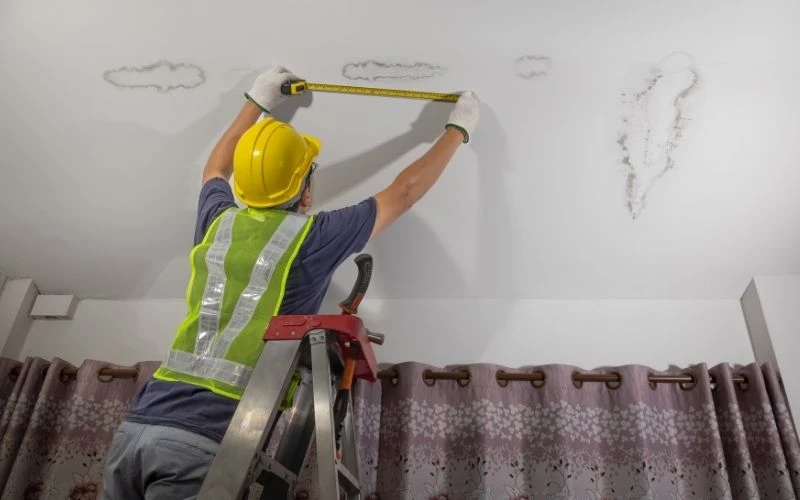


What do you do if your roof is leaking?
Who do you call if your water pump breaks down?
Where do you find a reliable repairman?
How often do your air conditioners need to be serviced?
How do you pay utility bills?
Why is the swimming pool turning green?
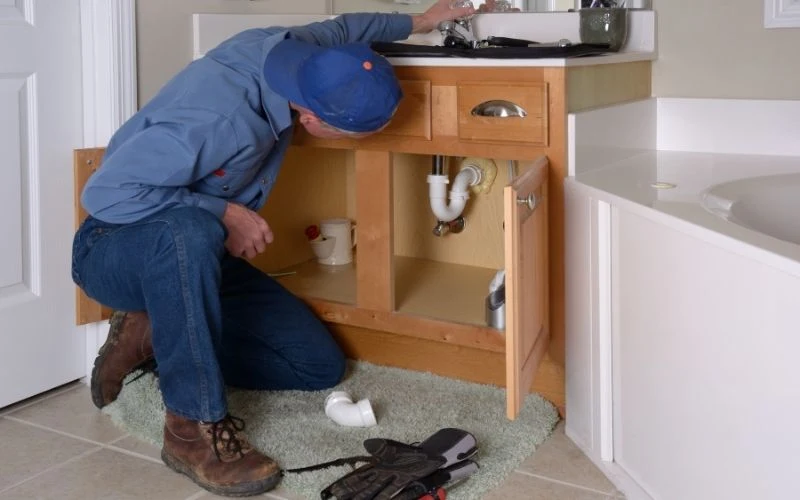
Dealing with household management and maintenance problems often proves to be one of the most frustrating experiences that expats have living in Indonesia. Due to poor workmanship and/or the poor quality materials used in the construction of many houses, and the rigors of the tropical climate, home repairs and maintenance are constantly needed. Common problems include leaks, problems with electrical wiring, plumbing and breakdown of electrical appliances, insufficient voltage to run numerous electrical appliances, and clogged rain drains.
There are several options available to expats in order to get the help that you need. These range from “do-it-yourself” or “get your domestic staff to do it”, through hiring a tukang (a low-skilled or semi-skilled laborer), calling your company’s maintenance personnel, to executive housing maintenance services.
Large companies sometimes have a maintenance agreement in place with their expat employee’s landlords or a service company which is set up to handle housing-related problems for their expatriate staff, but most expatriates are not so fortunate. Most leases that expats hold will state that major maintenance issues will be the responsibility of the landlord, however for smaller issues they will have to deal with repair and maintenance problems themselves.
Housing Repairs
For general house maintenance or repairs of household appliances there are numerous contractors or companies offering their services. If possible, it is always a good idea to consult your landlord to ask who he recommends, or find a repairman (tukang) who has been recommended by an expat friend who has used their services and is satisfied with them.
If you are not able to do this, or are not satisfied with the repairman your landlord has sent, there are now several well-established online platforms where you can find and book vetted tradespeople. Sejasa.com and Tukang.com are among the most widely used services in Indonesia, connecting homeowners with electricians, plumbers, AC technicians, pest control specialists and general handymen. Most service providers on these platforms are motivated to maintain good ratings, as positive reviews directly affect how much work they receive. In most major cities, WhatsApp has also become the default way to book, confirm and follow up on repair appointments — if a repair shop does not respond to calls, try messaging them directly.
It is worth noting that the availability and quality of repair services varies considerably depending on where you live in Indonesia. Expats based in Jakarta, Surabaya and Bali will generally find a wider range of options, including services accustomed to working in Western-style homes, than those living in smaller cities or more remote areas. If you are based outside the main expat hubs, tap into any local expat community groups — Facebook groups and WhatsApp communities for expats in specific cities are often the most reliable source of current, locally relevant recommendations.
One of the main difficulties in dealing with repairmen (they usually come in teams, rarely alone) is the language barrier. Miscommunication is common and your explanation of what you want is often met with blank looks, or perhaps even worse, nods of understanding when you are sure they haven’t got a clue what you want. You can also ask your driver or maid to help find someone or to interpret for you.
Your average tukang will most likely never have seen the interior of a true Western-style house and therefore has no idea of what a Westerner would consider standard, or the level of workmanship that you are expecting. An Indonesian tukang is seldom a highly trained tradesman as you would expect to find in a developed country. Most probably they have never been formally schooled in their trade or used modern power tools. In most cases, their tools are extremely basic and their knowledge is limited to problems that they have personally encountered or that their colleagues have told them about.
Commonly there are two ways of hiring a tukang: a set fee for the entire job (called borongan), or an arrangement where the client supplies the materials and pays the tukang a daily wage for his labour only. Both of these methods of payment have their drawbacks. If you agree on a set fee for the total completed job, be careful that the tukang uses the materials that you have agreed on. Tukang will often try to gain additional profit by substituting inferior materials to increase their margin. This is particularly important if you are having construction done and the proportion of cement to sand is being compromised. It is also common for the grade or dimensions of iron used in structural building supports to be switched for a lower specification, resulting in a weaker structure. It should be very clear to both parties which materials are to be used before agreeing on a price, and you or a trusted mandor (project manager/construction supervisor) should supervise the job throughout.
The other common payment arrangement, where the client pays for materials and pays labour on a daily basis, lends itself to prolonged jobs. Most tukang do not work at a fast pace, and this becomes even more pronounced when they are being paid by the day. To an expat the pace of work can be extremely frustrating. Before work begins it is advisable to discuss an estimated time frame with the tukang and make clear that you are not flexible if the job significantly exceeds that estimate. Tukang may need to be supervised during the day to ensure they are not taking excessive cigarette, coffee, tea, snack or chat breaks. It should also be understood that the tukang is responsible for bringing his own tools. If you have allowed the tukang to use your tools during the job, make sure they are returned before the team leaves.
When calling a repair shop you may find that the person you need to speak to is unavailable and your calls are not returned. They may promise to come at a certain time, then fail to show up after you have stayed home to wait for them. Estimates of when a job is likely to be completed are often inaccurate. Sometimes the repairs made are only temporary or stopgap measures, and the problem will recur shortly after any guarantee period has ended.
One of the best illustrations of this common frustration is a story that has circulated widely among the expat community. A family had a chronic leak in their house and tried several repairmen, but no one seemed able to fix it properly. Along came Fix-it Man number four who finally appeared to have solved the problem. The family was hugely relieved, until a month later when the barrel that had been placed in the attic to catch the leaking water crashed through the ceiling into the house. There is normally a good reason why quality repairmen charge more for their services.
Prices for repair services are not fixed and there can be significant differences between companies in both cost and quality of work. It is always best to compare prices and, if possible, inspect previous jobs that the workman has completed to satisfy yourself that they can produce the standard of work you are expecting. Negotiate both a price and a realistic time frame before allowing any repairs to begin.
The repair and maintenance process is often complicated by the fact that homes in Indonesia are constructed quite differently from homes in most expats’ countries of origin. What would never be considered safe or up to code elsewhere may be standard practice in Indonesia. Electrical wiring and plumbing may not be well planned, and the quickest fix is often taken when a problem arises rather than the better long-term solution, which in many cases would require disassembling cement walls or tiled floors. Many owners will similarly look for short-term solutions to problems in order to minimise cost.
Your Responsibilities under your Lease Agreement
It is very important for an expatriate living in a rented house or apartment to be aware of which maintenance matters are the responsibility of the landlord, and which should be handled by the tenant. Major structural problems, plumbing or well water problems, for example, should be taken care of by the landlord and this should be clearly included in the lease agreement. Smaller maintenance jobs are normally the responsibility of the tenant. In many cases, the determination of who is responsible for a repair is defined in the contract by specifying a monetary threshold. We recommend that you include in your lease agreement that repairs below a defined cost are the responsibility of the tenant, and those above that amount are the responsibility of the landlord.
Because of the common practice in Indonesia of paying the full lease cost for at least one year (and sometimes up to three years) in advance, the tenant has little leverage in ensuring the completion of any repairs or improvements agreed to in the lease after it has been signed. Some landlords are very helpful and take good care of their properties, however there are many who are reluctant to invest further money in the property once they have received their rental payment. Experts suggest that prospective tenants be very specific about what they want and have the property thoroughly inspected before signing any lease agreement. For a property that has been unoccupied for some time or has undergone large-scale renovations, a full housing audit is strongly recommended.
Many tenants opt to hold back a portion of the rental payment until all agreed renovations or repairs have been completed. Others make the final payment after a defined period — for example, one month after moving in — so that they have the opportunity to discover any additional problems with the property through actually living in it. These provisions should of course be written clearly into the lease agreement.
Air Conditioning
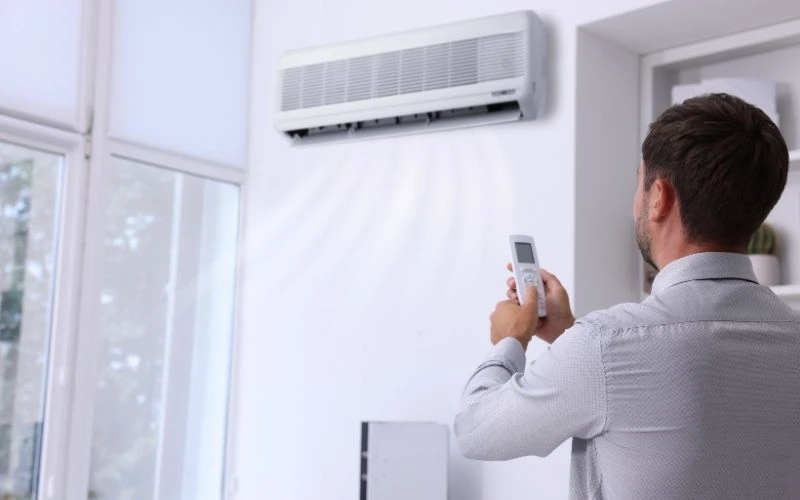
Air conditioners (AC) need to be serviced regularly by a professional maintenance company. This is due to the buildup of dust, dirt and mould within the interior blower and exterior compressor. Failure to service your AC systems regularly can cause units to underperform and may endanger your family’s health, particularly if any family members have allergies, due to the inevitable buildup of mould and mildew in an unserviced unit. Ensure that the service includes a complete cleaning of the interior and exterior air filter, blower and condensation coils. The technician should also check refrigerant levels and pressure as part of the service — acceptable values vary depending on the unit type and the refrigerant used, so rely on a qualified technician’s assessment rather than a single fixed figure.
As a general rule, AC units in Indonesian homes should be serviced every three months. In rooms that are used heavily, or in areas with particularly dusty conditions, more frequent servicing may be needed. Many expat families set up a quarterly service contract with a reputable AC company, which removes the need to remember to book each service individually and often works out cheaper than paying per visit.
The lack of regular AC maintenance, or running a unit continuously without breaks, can result in poor performance, leaking and damage to the compressor and other components. Typically, routine air conditioner maintenance is the responsibility of the tenant.
More information on Air Conditioners & Air Conditioning in Indonesia
Utility Outages
Electrical Outages
Disruption of electrical service does occur in Indonesia, though it is now more common in second and third tier cities and the provinces than in Jakarta. Outages can be caused by tropical storms resulting in broken connections, damaged cables or debris falling onto power lines. Most of the time the reason for an outage is not immediately obvious and is almost always unannounced.
For problems regarding electricity supply, the State Electricity Company (Perusahaan Listrik Negara, PLN) operates a 24-hour service line on 123 where you can report outages anywhere in Jakarta. PLN now also offers the PLN Mobile app (available on Android and iOS), which allows you to report outages, check your electricity token balance, pay your electricity bill and monitor your usage without needing to speak to anyone by phone. For expats who find the language barrier a challenge when calling, the app is a practical and increasingly popular alternative. You may still need an Indonesian-speaking staff member to assist with initial registration.
It is still advisable to report outages to PLN directly, whether by phone or through the app, as they may not be aware of a localised problem and will need to send someone to investigate. Your neighbourhood RT (Rukun Tetangga) head — the local community administrator — can also be a useful first point of contact for local infrastructure problems. If a power outage appears to be affecting only your immediate street or compound rather than a wider area, your RT head may already be aware of the situation and in contact with PLN.
If neither the hotline nor the app gives you satisfactory information, you can send your driver or household staff out into the neighbourhood to gauge the scope of the problem and check whether PLN staff are already on the scene.
Power outages in Jakarta are far less frequent than they used to be, but some families choose to have a diesel generator on standby. Depending on its capacity, a generator may be able to run a few lights and an air conditioner, or it may be capable of supplying the total power needs of the home. Any standby generator should be periodically tested to ensure it is in reliable working order when needed.
For more information on Electricity in your home
Information on Swimming Pool Maintenance & Repairs in Indonesia
Landline Telephone Repairs or Outages
The majority of expats living in Indonesia today rely primarily on their mobile phone and internet-based communication such as WhatsApp and email, and will have little or no need for a fixed landline in their home. This is entirely practical for most households.

However, it is worth being aware that some multinational companies with strict security or emergency communications requirements will specifically request that the expat residence has a functioning landline telephone installed. The reasoning is straightforward: in the event of a major disruption to mobile networks — whether caused by a natural disaster, infrastructure failure or an unusually high volume of simultaneous calls — a fixed landline provides a reliable backup channel through which the company can reach the household directly. If your employer has this requirement, confirm it before finalising your accommodation choice and ensure it is addressed in your lease agreement.
For those who do maintain a landline, it should be noted that fixed line telephone service in Indonesia is not entirely reliable. Bad connections, intermittent disconnections and overloaded cables do occur. For telephone repairs or complaints, contact PT Telkom at 117. PT Telkom also offers customer service through their MyTelkom app and website. As with other utility providers, having an Indonesian-speaking staff member assist with any telephone-based complaint remains advisable.
Note: Telkom’s customer service channels have expanded in recent years. We recommend verifying the current contact number or online reporting channel via Telkom’s official website before attempting to lodge a fault report.
For more information on Phones in your Home
Gas Service
Most expatriates use bottled Elpiji (LPG) gas for home cooking and for running certain models of water heaters and clothes dryers. The tanks can be purchased by your driver or household staff at a depot or shop, or delivered directly to your home. It is advisable to fit a gas safety gauge to your bottles to monitor for any leakage.
Substandard or counterfeit LPG hoses and regulators have been a known safety issue in Indonesia. Always purchase hoses and regulators from reputable hardware stores or directly through official Pertamina distributors rather than from street vendors, and replace them regularly regardless of apparent condition.
If you live in an area of Jakarta that has piped gas, report any problems to the State Gas Company (Perusahaan Gas Negara, PGN). Note: PGN’s contact details should be verified via their official website before use, as customer service numbers have changed in recent years. A number commonly cited is 1500-645, but please confirm this is current before relying on it.
For more information on Bottled Gas
City Water
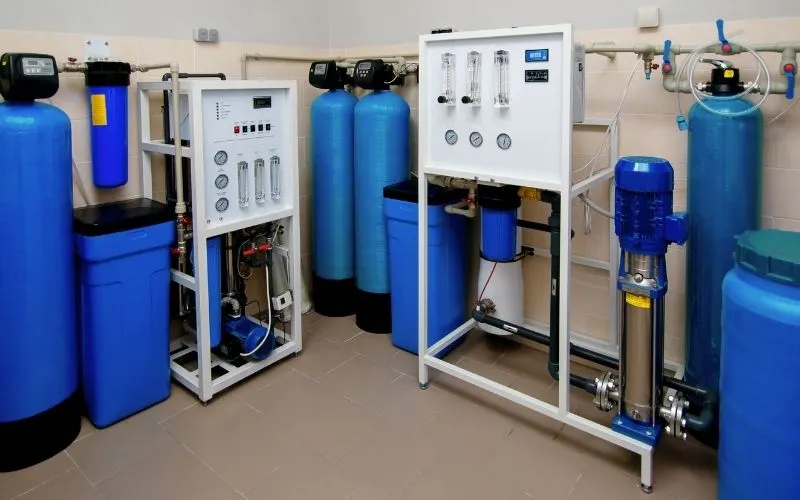
Many expatriate houses have their own deep well, water pump and water tower for their water supply, and some properties leased to expatriates have water treatment systems already installed. If your prospective residence does not have such a system, it is worth discussing with your landlord or your company the possibility of installing a water purification system. If they are unwilling to invest in a whole-home solution, they may be open to installing a smaller system servicing the kitchen only. In some areas, piped water is available from the city water authority.
For repairs or complaints regarding city water supply in Jakarta, contact PAM Jaya, which now operates as the state-managed water utility for the city following the renationalisation of Jakarta’s water supply. PAM Jaya customer service can be contacted on 021-573-7023 during business hours (Monday to Friday, 8.00am to 4.00pm). We recommend verifying current contact details via PAM Jaya’s official website before attempting to report a fault, as contact channels have changed in recent years.
Note: A number of the area-specific contact numbers that previously appeared in this article are no longer current following changes to Jakarta’s water supply management. All contact details should be verified directly with PAM Jaya before use.
A staff member or Indonesian speaker would need to make this call on your behalf in most cases.
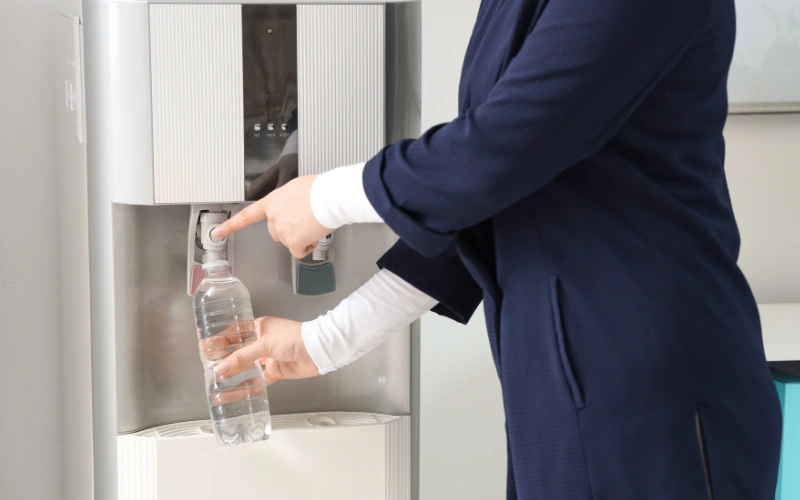
These water supplies are suitable for dishwashing, clothes washing, bathing and garden use only and are not safe for drinking. It is strongly recommended that you use bottled water or a properly installed filtration system for all drinking and cooking water.
For more information on Household Water Treatment Systems
For more information on Bottled Water
Utility Bill Payment
If you are responsible for paying your own utility bills, the following general guidance applies. Bills will usually arrive by mail, but can be delayed. If you are renting, the bill may well be addressed to the property owner rather than to you, and you may never receive it directly. Speak with your landlord early about how bills can be redirected to you in time for payment. If you do not receive a bill you can call the following numbers to find out the amount due — have your account numbers ready before calling:
- Electricity bill enquiries: 350-1412 (verify current number)
- Telephone bill enquiries: 109 or 147 (verify current number)
- PAM Jaya water bill enquiries: contact PAM Jaya directly via their official website for current details
Most bills must be paid by the 20th of the month. Late payment can result in a fine or termination of service, and reactivating a disconnected service can be both difficult and costly. Paying early in the month helps to avoid long queues at payment points.
Your driver or trusted household staff can pay bills on your behalf at designated payment points. However, the range of digital payment options now available in Indonesia makes cash payment largely unnecessary for most expats. Most utility bills can be paid through mobile banking apps, through e-wallet platforms such as GoPay, OVO and DANA, or at the payment counters of Alfamart and Indomaret convenience stores, which are found throughout Indonesian cities and towns. PLN electricity payments in particular are straightforward through the PLN Mobile app or through the apps of most major Indonesian banks. For electricity and water, each house is equipped with a meter, and PLN and PAM Jaya employees record meter readings monthly.
You can also arrange to have bills paid by automatic debit from a local bank account if you hold one. This removes the risk of late payment and means you do not need to handle the transaction through household staff. Your monthly bank statement will show the amounts debited, which can be compared against your utility bills. Major Indonesian banks including Bank Mandiri, BCA, BNI, BRI and Maybank Indonesia all offer utility bill payment through their mobile banking and ATM networks.
When you move into your new residence, your landlord should provide you with a copy of the most recent paid bill for each utility as a reference, and to confirm that all accounts are paid up to date. You may also choose to check directly with the relevant utility offices before signing your lease agreement to ensure there are no outstanding balances on the accounts. This protects you from inheriting unpaid bills for services you have not used. Keep a record of all receipts and payments throughout your tenancy, as these may need to be presented to the landlord on departure.
It is likely that the billing cycle will not coincide precisely with your move-out date. Note the meter readings on the day you depart so that you can calculate which portion of the following month’s bill is your responsibility and how much should be withheld from the security deposit accordingly.
Executive Housing Management
An alternative to managing all of these issues yourself is to engage the services of a professional housing management company to handle all housing-related matters on behalf of expat employees, either at the company’s or the individual’s expense. Many multinationals with a significant expat workforce take advantage of this type of arrangement. Executive Housing Management is a comprehensive professional service extended to expatriates and corporate clients to manage residential properties that they lease or own, covering property management, housing audits and consulting services.
For those using Facility Management services, qualified and certified technicians can carry out a pre-lease inspection to ensure that the property is electrically, mechanically and structurally sound before the lease is signed. Any problems discovered can be rectified in advance or negotiated into the lease agreement. In some cases, the audit may indicate that a property does not meet the security and safety standards required by the employer or embassy, in which case the family would need to select an alternative home.
Executive Housing Management services are no longer limited to Jakarta. As the expatriate population has grown in cities such as Surabaya, Bali, Medan and Makassar, a number of international and local facility management companies now offer comparable services in these locations. If your company is relocating you outside Jakarta, it is worth asking your HR or relocation coordinator whether a housing management arrangement is available in your destination city.
Under a preventive maintenance programme, residential properties are audited to assess the condition of electrical, plumbing, roofing, structural, mechanical and safety components. Each home is then scheduled into a quarterly maintenance programme that inspects, services and repairs problems as they arise. A professional team is available 24 hours a day to respond to emergency calls and address home repair or maintenance issues promptly.
Services can also include management of payments for household utilities, services and community dues, with the client receiving a single consolidated invoice each month. Optional services including pest control, pool cleaning and gardening are also commonly available.
The Facility Management team is typically required to present a quarterly report to the procurement team of the employing organisation. This report covers the number of service calls received, the types of repairs carried out, the time taken to resolve each issue and tenant satisfaction feedback. This reporting is then used by the corporate office to monitor and manage the costs and welfare of their overseas staff.
Executive Housing Management can take the headaches out of your home maintenance needs, whether managing a single family home or a portfolio of properties, delivering quality services in a timely and cost-efficient manner.
Frequently Asked Questions
How do I find a reliable repairman in Indonesia?
The best approach is a personal recommendation from another expat who has used the tradesperson and been satisfied with the result. The Expat Forum on this site is a good starting point. Online platforms such as Sejasa.com and Tukang.com now also connect homeowners with rated and reviewed tradespeople across a range of services including electrical, plumbing and air conditioning repair.
Who is responsible for repairs in a rented house in Indonesia?
This depends on your lease agreement, but the general rule is that major structural repairs, plumbing and well water problems are the landlord’s responsibility, while smaller day-to-day maintenance falls to the tenant. The lease should specify a monetary threshold that determines which party is responsible for a given repair. It is important to agree and clearly document this before signing.
How do I pay utility bills in Indonesia?
Utility bills can be paid through mobile banking apps, e-wallet platforms such as GoPay, OVO and DANA, at Alfamart or Indomaret convenience store payment counters, or through the ATM and app networks of major Indonesian banks. The PLN Mobile app allows direct payment of electricity bills. Cash payment at designated payment points remains an option but is no longer the most practical choice for most expats.
How often should air conditioners be serviced in Indonesia?
In Indonesia’s tropical climate, air conditioners should generally be serviced every three months. Heavy use or particularly dusty conditions may require more frequent attention. Regular servicing prevents mould buildup, maintains cooling efficiency and extends the life of the unit.
What should I do if the power goes out in my home in Indonesia?
First check whether the outage is limited to your home by checking your breaker box, or whether it is affecting the wider street or neighbourhood. For supply outages, contact PLN on their 24-hour hotline 123, or report through the PLN Mobile app. Your neighbourhood RT head may also be aware of local infrastructure issues and can be a useful first point of contact.
Is tap water safe to drink in Indonesia?
No. Tap water and household well water in Indonesia are not safe for drinking and are intended for washing, bathing and general household use only. Expats should use bottled water or a properly installed water purification system for all drinking and cooking water.
Mini Glossary
| Indonesian Term | Meaning |
|---|---|
| Tukang | Workman (skilled or semi-skilled) |
| Tukang kayu | Carpenter |
| Tukang listrik | Electrician |
| Tukang A/C (ah-say) | Air conditioning repairman |
| Tukang batu | Brick layer |
| Tukang kebun | Gardener |
| Kuli | Person who normally carries heavy objects (coolie) |
| Mandor | Job supervisor |