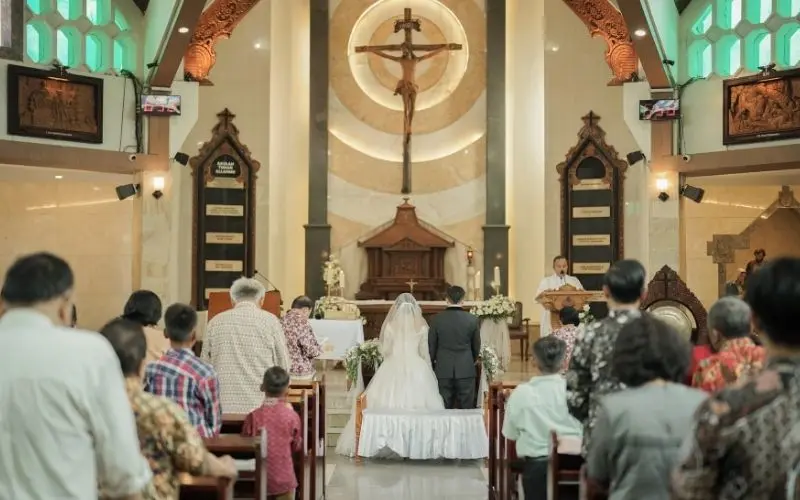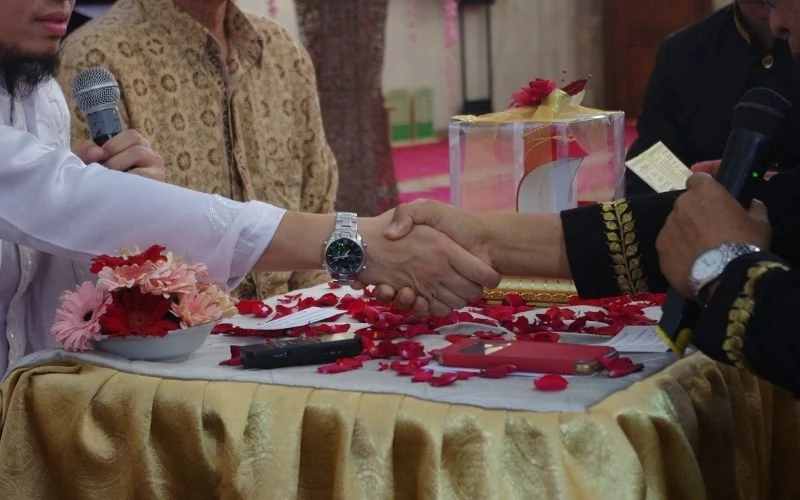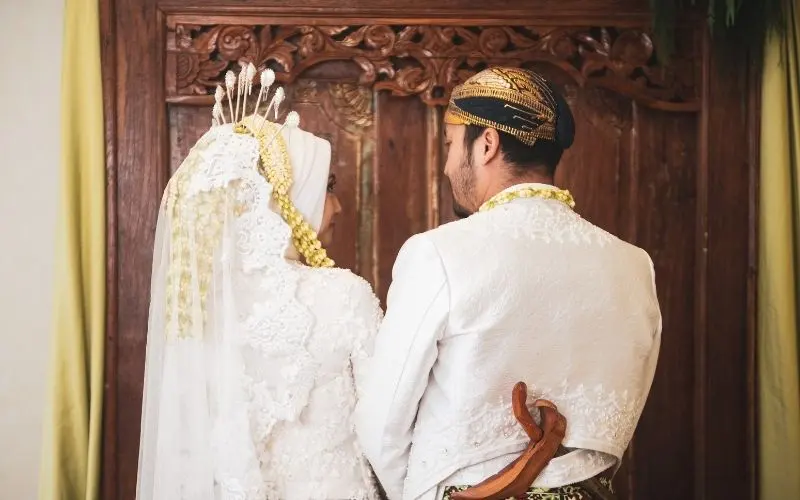
For expatriates living in or relocating to Indonesia, understanding the country’s marriage laws is essential — whether you are planning to marry an Indonesian national, raising a family here, or simply need to know how Indonesian law treats your existing marriage. Indonesia’s legal framework governing marriage is shaped by the 1974 Marriage Law (Undang-Undang No. 1 Tahun 1974), subsequent Constitutional Court rulings, religious law, and customary (adat) law. This article provides a practical overview of the key legal principles, with particular attention to the issues most relevant to expatriate families.
A married couple has the obligation to maintain a household that becomes the principal structure of any community. In Indonesia, the rights and obligations of a wife are equal with those of her husband in household life and social interaction in the community. Under the 1974 Marriage Law, the husband is designated as the head of the family and the wife as the manager of the household — a framework that reflects the law’s original drafting and continues to apply as written, though it is worth noting that Constitutional Court challenges to this provision have been raised over the years without resulting in amendment to date. As the head of the family, a husband is required to protect his wife and provide the household necessities, according to his capacity. A wife is required to manage the household affairs the best she can. Under Indonesian law, if a husband or wife fails to fulfill his or her obligations, the spouse may file a petition to a court of law for proper settlement.
Property in the Marriage
In Indonesia, as in other countries, a marriage has legal consequences concerning the property of the husband and wife (including gifts and inheritance), wealth acquired during the marriage, and legal consequences to any owned property if a divorce should occur. The property brought by the husband and wife separately, and the property earned by respective parties as gifts or inheritance, stays under their own possession, unless otherwise specified by the respective parties. Each party shall separately retain all rights and interests in all property of any kind which he or she owns and may dispose of such separate property. The property acquired during the marriage becomes joint property of the married couple. The husband and/or wife have a legal capacity to dispose of such property upon approval of both parties. In accordance with the Indonesian 1974 Marriage Law, such property shall be referred to as marital property. In the event a marriage is terminated due to divorce, the marital property must be arranged in accordance with respective law — meaning religious law, ethnic (adat) law, and other applicable laws.
Property separation agreements. A critical development for expatriate couples came in 2015, when the Constitutional Court issued Ruling No. 69/PUU-XIII/2015, which significantly expanded the options available to married couples regarding property arrangements. Prior to this ruling, a property separation agreement (perjanjian pemisahan harta, commonly referred to as a prenuptial agreement) had to be signed before the marriage ceremony and registered at the time of the marriage. The Constitutional Court ruling allows couples who are already married — including those in mixed marriages — to enter into a property separation agreement after the wedding, provided it is authenticated by a notary and registered with the relevant civil registry office.
This development is particularly important for mixed couples, meaning an Indonesian national married to a foreign national. Under Indonesian land law, foreign nationals cannot hold Hak Milik (freehold) title to land or property. In a mixed marriage without a property separation agreement, the Indonesian spouse’s ability to hold freehold title can be exposed to complication. A registered property separation agreement protects the Indonesian spouse’s full land rights and is strongly recommended for any mixed couple who own or intend to own property in Indonesia. Expats in this situation should consult a qualified Indonesian notary (notaris) for advice specific to their circumstances.
Mixed Marriages: Indonesian Nationals and Foreign Nationals
One of the most commonly asked legal questions among expatriates concerns mixed marriages (perkawinan campuran) — that is, a marriage between an Indonesian citizen and a citizen of another country. Mixed marriages are governed by the provisions of the 1974 Marriage Law and by Indonesia’s Citizenship Law (UU No. 12 Tahun 2006).
A marriage between an Indonesian national and a foreign national is legally valid in Indonesia provided that the marriage complies with the laws applicable in both parties’ home countries; the required documentation is submitted to the relevant Indonesian civil registry (Dinas Kependudukan dan Catatan Sipil) or, for Muslim couples, the Religious Affairs Office (Kantor Urusan Agama); and a Certificate of No Impediment (or equivalent document confirming legal capacity to marry) is obtained from the foreign national’s embassy or consulate.
It is also worth noting that Indonesia does not recognise marriages conducted purely on a secular or civil basis. Indonesian law requires that a marriage be conducted in accordance with the religion of both parties. Where the parties follow different religions, this can create practical and legal complications that require careful navigation, and seeking qualified legal advice in advance is strongly recommended.
Foreign marriages recognised in Indonesia. A marriage conducted legally overseas is generally recognised in Indonesia, provided it is reported to the Indonesian embassy or consulate in the country where it took place, or to the civil registry office in Indonesia within one year of the marriage. Failure to register a foreign marriage in Indonesia can create complications with visa applications, property transactions and inheritance matters.
Visa and residency. Marrying an Indonesian national opens the pathway to a spouse-sponsored Limited Stay Permit (KITAS) and ultimately a Permanent Stay Permit (KITAP) for the foreign spouse, subject to meeting the requirements set by the Directorate General of Immigration. The eligibility criteria and required documentation for these permits change periodically, and current requirements should be verified with a reputable immigration consultant or directly with the relevant immigration office.
Children or Offspring
A marriage also has legal implications for the children born within it. Pursuant to law, children are divided into two categories: legitimate children, being those born within a registered marriage; and illegitimate children, being those born out of wedlock.
It is worth noting that in 2012 the Constitutional Court issued a significant ruling (No. 46/PUU-VIII/2010) recognising that children born outside of a registered marriage may, under certain circumstances, establish a civil relationship with their biological father, provided paternity can be proven by scientific or other lawful evidence. This ruling was a departure from the strict position of the original 1974 law and is relevant to any expatriate in a relationship where the marriage has not been formally registered in Indonesia.
A husband may deny his fatherhood of a child given birth by his wife if he can prove that his wife has committed adultery and the child is the result of such activity. The party that will decide the legitimacy of the child is a court of law, upon request of the relevant party under oath.
Citizenship of children in mixed marriages. Under Indonesia’s Citizenship Law (UU No. 12 Tahun 2006), children born of a mixed marriage hold dual nationality from birth until the age of 21, at which point they must formally declare which citizenship they wish to retain. This is a significant and time-sensitive obligation for expatriate families, and parents are strongly advised to ensure they understand the declaration process well before their child approaches that age. The Indonesian spouse should also ensure the child’s birth is registered with the Indonesian civil registry at the earliest opportunity.
Evidence of Child Origin
The origin of a child can only be proven with an authentic birth certificate issued by the officer of civil registry. If the birth certificate does not exist, a court may issue a determination on the origin of the child after conducting a hearing based on lawful evidence. Based on the court decree, a birth registration agency in the jurisdiction of the court will in turn issue a birth certificate for the child.
For expatriate families, it is important to note that a child born in Indonesia to a foreign parent should be registered both with the Indonesian civil registry and with the relevant embassy or consulate of the foreign parent’s country. Many countries require birth registration within a specific time window in order to secure citizenship for the child, so this should be attended to promptly after the birth.

The Rights and Obligations of Parents and Children
The minimum legal age for marriage in Indonesia is 19 years for both men and women, following an amendment to the 1974 Marriage Law enacted in 2019 (Law No. 16/2019). This raised the previous minimum age for women, which had been set at 16 under the original law.
Parents are required to raise and educate their children properly. These obligations apply until the child gets married or becomes independent. A child under the age of 18 years, or one who has yet to marry, remains under the authority of the parents so long as that authority has not been revoked by a court. The parents represent the child in any legal action inside and outside an Indonesian court of law. Parents are not allowed to transfer the rights to any permanent property owned by the child, unless this is clearly in the child’s interest.
Either or both parents may have their parental authority revoked for one or more children for a certain period. This revocation does not include the power to act as guardian in a marriage. Parental authority may be revoked through court decision in the event that the parent seriously neglects their duties toward the child, or has demonstrated extremely bad conduct.
Although parents have had their authority revoked, they still carry the obligation to provide financial support for the children. Children are required to respect their parents and comply with their guidance. In the event that the child has grown up, he or she is required to take care of parents and lineal ascendants (the direct family line above them) if those relatives are in need of assistance and the adult child has the capacity to provide it.
Guardianship
A child under 18 years of age, or one who has yet to marry, remains under the authority of the parents as the guardian authority. Such guardianship applies both to the child and to the child’s property. A guardian can be appointed by a person to exercise parental authority after that person’s death, by means of a testamentary will or by an oral declaration before two witnesses. The guardian should, as far as possible, be chosen from the child’s relatives, or from another adult who is of sound mind, fair, honest and of good character.
A guardian may have their authority revoked in the event they fail to fulfill their obligations or have demonstrated extremely bad conduct. If such authority is revoked, a court will appoint another guardian as a replacement.
In exercising guardianship, the appointed guardian has the following obligations:
- To take good care of the children and their property, while respecting the child’s religion and beliefs;
- To make a list of the child’s property and to record any changes to that property;
- To be responsible for the property and to bear any damage arising out of their negligence — the replacement of a guardian in such circumstances is specified by court decision upon the claim of the child or the child’s family;
- Not to transfer the rights to or pawn the child’s permanent property, unless this is clearly required in the child’s interest.
Frequently Asked Questions: Marriage Law in Indonesia
Can a foreigner legally marry an Indonesian national in Indonesia?
Yes. Mixed marriages between Indonesian nationals and foreign nationals are legally recognised under the 1974 Marriage Law. The foreign national will typically need to obtain documentation from their embassy confirming they are legally free to marry, and the marriage must be registered with the appropriate Indonesian authority — the civil registry office for non-Muslim couples, or the Religious Affairs Office for Muslim couples.
Does Indonesia recognise marriages conducted overseas?
Generally yes, provided the marriage was legal in the country where it took place and is reported to the Indonesian embassy or consulate abroad, or registered with the Indonesian civil registry office within one year of the marriage.
Can a foreigner own property in Indonesia after marrying an Indonesian citizen?
Foreign nationals cannot hold Hak Milik (freehold) title to land or property in Indonesia, regardless of their marital status. In a mixed marriage, it is strongly advisable to enter into a property separation agreement (perjanjian pemisahan harta) authenticated by an Indonesian notary, to protect the Indonesian spouse’s full property rights. Since the 2015 Constitutional Court ruling, this agreement can be made after the wedding rather than only before it.
What happens to jointly owned property if a mixed couple divorces in Indonesia?
Marital property acquired during the marriage is subject to division under Indonesian law, with the applicable framework depending on the religion of the parties, customary law, and the terms of any property separation agreement in place. Legal advice from a qualified Indonesian advocate is strongly recommended.
What nationality do children of a mixed marriage hold?
Under the 2006 Citizenship Law, children born of a mixed marriage in Indonesia hold dual nationality from birth until they turn 21, at which point they must formally elect one citizenship. Parents should be aware of this deadline and begin the relevant process well in advance of the child’s 21st birthday.
What is the minimum age for marriage in Indonesia?
Since 2019, the minimum age for marriage in Indonesia is 19 years for both men and women, following an amendment to the 1974 Marriage Law.
What is a perjanjian pemisahan harta and do I need one?
A perjanjian pemisahan harta is a property separation agreement between spouses, authenticated by an Indonesian notary and registered with the civil registry. For mixed couples — where one spouse is a foreign national — it is generally strongly recommended, as it protects the Indonesian spouse’s rights to hold freehold (Hak Milik) title to land. Since 2015, this agreement can be made at any point during a marriage, not only before the wedding.
Disclaimer: The above is provided for informational purposes only and is NOT to be relied upon as legal advice. This information is not a substitute for the advice of an attorney and should not be construed as a solicitation. No attorney-client relationship is established by use of information found within this article or on this website.
Our thanks to Asep Wijaya, Managing Director of Wijaya & Company for his original contribution of this article. [Editorial note for publisher: please verify that Asep Wijaya’s title and firm details remain current before publishing. If the article has been updated with new material, consider adding: “Originally contributed by Asep Wijaya, Wijaya & Company. Updated editorially by the expat.or.id team, 2025.”]