Understanding Dowry in Indonesia: Culture, Religion, and Reality
When looking for Dowry Advice for Mixed Marriages in Indonesia, it is important to understand that there is no single national standard. Indonesia is a diverse country with hundreds of ethnic groups, each shaped by its own customs, family expectations, and social traditions.
In Islamic marriages, mahar is a religious requirement, but the form and value are flexible and agreed upon by the bride and groom. It may be money, gold, jewelry, prayer tools, or another meaningful item. In non-Muslim marriages, dowry is not always required, although symbolic gifts or family contributions may still be expected depending on cultural background.
For mixed marriages, expectations can vary widely depending on:
- Ethnic background, such as Javanese, Batak, or Sundanese
- Religious practices
- Family expectations
- Social and economic status
- Location, whether urban or rural
Much of the practical Dowry Advice for Mixed Marriages comes from personal experiences shared by expats and Indonesians who have gone through the process. What worked for one couple may not apply to another.
The best approach is to discuss expectations openly with both families early in the planning stage. Dowry should not be treated only as a financial matter, but as a cultural conversation that requires respect, sensitivity, and clear communication.
What Is Considered a Dowry in Indonesia?
When discussing Dowry Advice for Mixed Marriages, it is important to understand that “dowry” in Indonesia can mean different things depending on religion, culture, and family tradition.
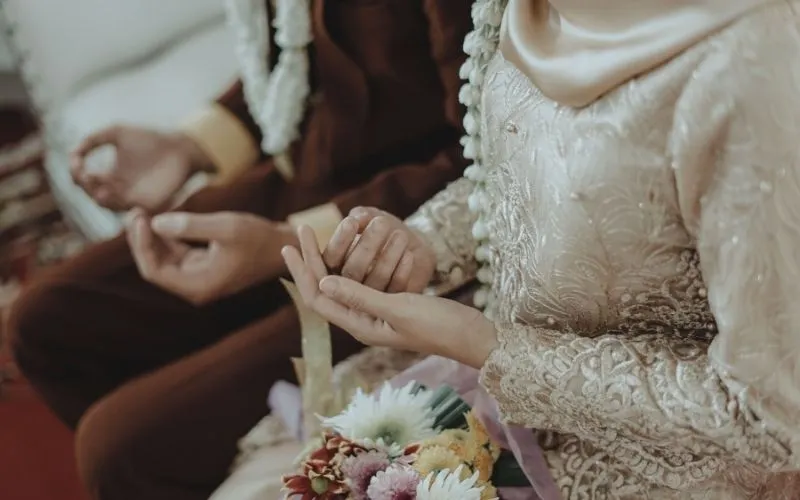
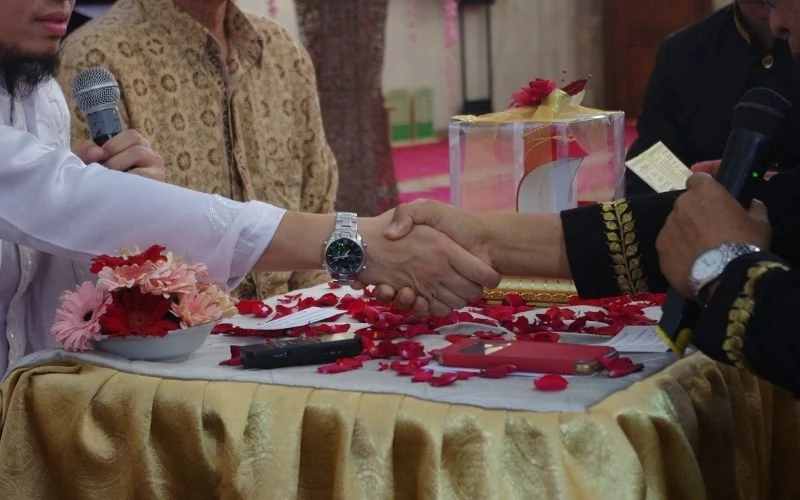
For Muslim couples, mahar is a required part of the marriage contract and is given directly to the bride. It can be money, gold jewelry, a Qur’an, a prayer set (seperangkat alat sholat), or another meaningful item. In many cases, the value does not need to be high, as the symbolic meaning is often more important than the amount.
Beyond mahar, many Indonesian families also prepare seserahan, which are pre-wedding gifts from the groom’s side to the bride. These may include clothing, shoes, cosmetics, handbags, and personal items arranged beautifully in decorative trays or baskets. The focus is usually on presentation, thoughtfulness, and tradition rather than pure monetary value.
In some mixed marriages, expats may also be expected to contribute to household setup, such as furniture or practical home items. However, this is not a formal rule and depends heavily on family expectations.
The best Dowry Advice for Mixed Marriages is to clarify early what the family means by “dowry,” whether they are referring to mahar, seserahan, or broader wedding-related contributions.
How Much Is an Appropriate Dowry in Indonesia?
Cultural Context: Why Dowry Exists
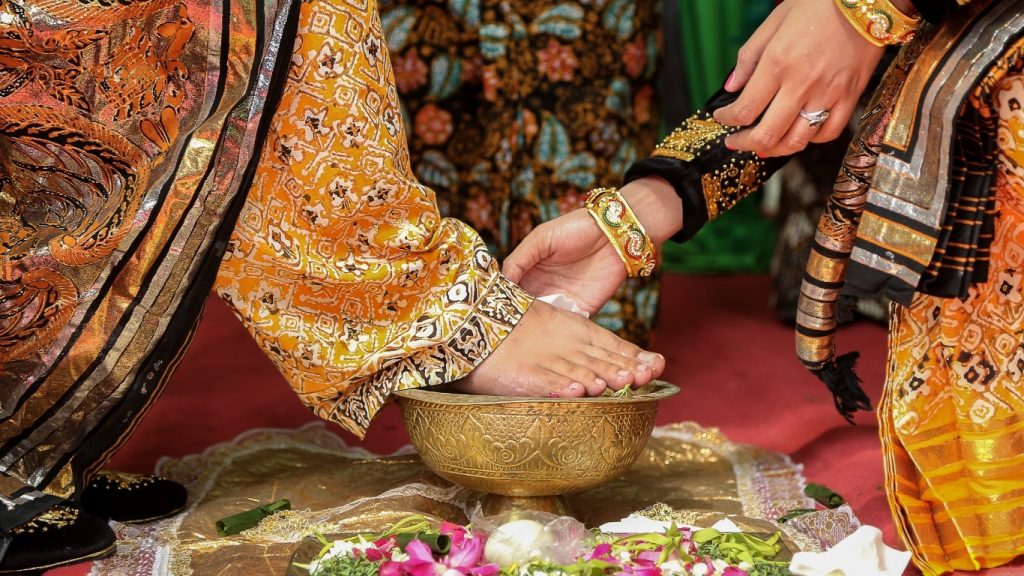
The concept of dowry in Indonesia is influenced by a combination of religious teachings, particularly in Islam, and local adat (customary traditions). Historically, it represented a sign of commitment from the groom, a form of respect toward the bride and her family, and in some cases, a form of financial security for the bride.

Today, while these meanings still exist, practices have become more flexible—especially in mixed marriages involving expats.
Dowry Expectations Across Different Ethnic Groups
Because Indonesia is so culturally diverse, expectations around dowry can vary significantly depending on the ethnic background of the bride’s family. The table below provides a general overview of common practices across several major groups:
| Ethnicity | Dowry / Mahar Practice | Key Pre-Wedding Traditions | Who Receives the Dowry | Typical Expectations | Notes for Expats |
|---|---|---|---|---|---|
| Javanese | Flexible; often symbolic for mahar | Seserahan (gift baskets with clothing, cosmetics, accessories) | Usually the bride | Moderate; focus on presentation and completeness | One of the most adaptable cultures for mixed marriages; aesthetics and etiquette matter |
| Sundanese | Similar to Javanese; symbolic or modest | Seserahan with emphasis on neat presentation | Bride | Generally moderate | Known for being relatively relaxed; family harmony is key |
| Batak (North Sumatra) | More structured; involves bride price (Sinamot) | Formal negotiations between families | Bride’s family (not just bride) | Can be significant depending on family status | Important to discuss expectations early—can be substantial |
| Minangkabau (West Sumatra) | Matrilineal system; sometimes reverse expectations | Family-led ceremonies with strong adat role | Varies; often symbolic | Often lower burden on groom | Women inherit property; different from most other groups |
| Balinese (Hindu) | Not structured as dowry; tied to ceremonies | Religious rituals and offerings | Not a direct transfer | Costs linked to ceremony scale | Expenses can be high due to rituals rather than dowry itself |
| Bugis / Makassar (Sulawesi) | Known for uang panai (bride price) | Formal negotiations | Bride’s family | Can be high depending on education and status | Strong cultural expectations; amounts can be significant |
| Chinese-Indonesian | Bride price + gifts | Gift exchange (sangjit) before wedding | Bride’s family (partial symbolic return possible) | Can be significant | Emphasis on symbolism, prosperity, and family reputation |
| Christian Indonesian | Often symbolic or optional | Engagement gifts or family agreements | Usually the bride | Flexible | More Western influence; varies widely by family |
While this table provides a general overview, it is important to remember that these are broad cultural patterns rather than fixed rules. In modern Indonesia—especially in cities like Jakarta, Bandung, and Surabaya—many families adapt or simplify these traditions.
For expats, the most important takeaway is that your partner’s specific family expectations matter far more than general cultural norms. Even within the same ethnic group, expectations can differ greatly depending on education, financial background, and how traditional the family is.
Mixed Marriages: What Expats Should Expect
In mixed marriages, expectations can vary significantly. Some families may choose to simplify or downplay traditional requirements, especially if they are concerned about placing pressure on the foreign spouse. Others may maintain traditional expectations, particularly in more conservative or traditional families.
It is common for:
- The dowry to go directly to the bride
- The groom to contribute to wedding costs
- Traditions to be adapted or combined
Open communication is essential to avoid misunderstandings.
Practical Dowry Advice for Mixed Marriages
The best Dowry Advice for Mixed Marriages is to discuss expectations early with your partner before the wedding planning becomes too detailed. If appropriate, involve both families in the conversation so everyone understands the cultural, religious, and symbolic meaning behind the dowry.
Try not to focus only on the financial value. In many Indonesian families, dowry is not just about money, but also about respect, sincerity, and honoring tradition.
Flexibility is also important. Expectations may change as discussions develop, especially when family members become more involved. Avoid comparing your situation with other couples, as every mixed marriage is shaped by different cultural backgrounds, family values, and personal circumstances.
Clear communication, patience, and respect will help make the process smoother.
A Note on Changing Trends (2026)
Modern Indonesian couples—particularly in urban areas—are increasingly choosing simpler ceremonies and more symbolic dowries. However, traditional expectations remain strong in many families, especially outside major cities.
Important Reminder on Dowry Advice for Mixed Marriages
This Dowry Advice for Mixed Marriages is based largely on personal experiences and shared opinions from both expats and Indonesians. It should be understood as general guidance, not a fixed rule.
Every family may have different expectations depending on ethnic background, religion, financial situation, and local customs. What feels appropriate in one mixed marriage may not apply to another.
The safest approach is to communicate openly with your partner and both families, ask questions early, and treat the dowry discussion with respect and cultural sensitivity.