

Editor’s Note:
Batik remains one of Indonesia’s most celebrated traditional art forms and continues to be widely practiced today, both by artisans using traditional hand-drawn methods and by modern workshops using adapted techniques. The process below reflects the classic multi-stage wax-resist dyeing method that has been passed down for generations.Last updated: May 2026
Step 1 in the batik making process
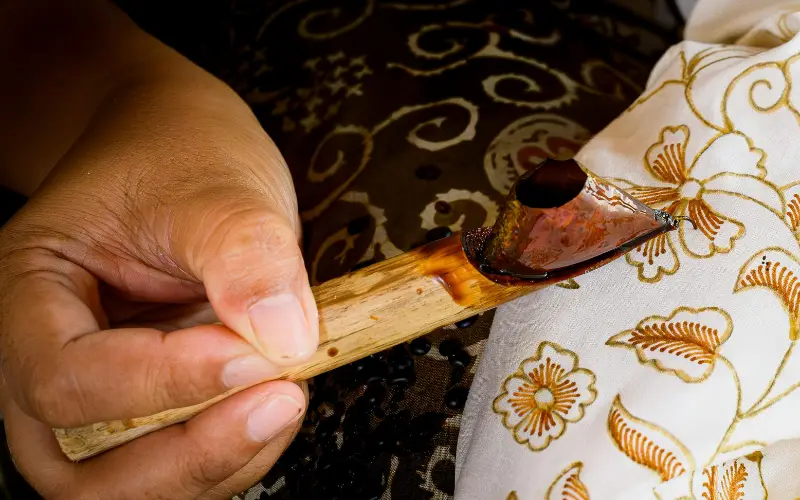
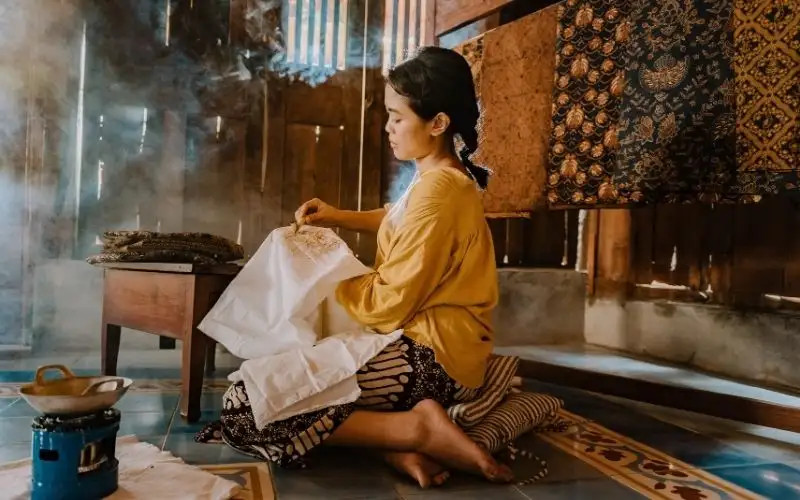
The first wax is applied over the penciled-in outline of the pattern. Almost always the original cloth is white or beige.
Added clarity: If it is true traditional batik, the process is done on natural materials such as cotton or silk. These fabrics allow the wax to penetrate properly and the dyes to bond with the cloth. Synthetic fabrics are sometimes used today, but they do not produce the same quality or authenticity.
This stage is typically done using a tool called a canting (a small copper pen-like instrument) for fine lines, or a stamp (cap) for repeating patterns. The wax acts as a barrier, preventing dye from penetrating the cloth.
Step 2 in the batik making process
The cloth is dyed in the first dye bath. In this case the first dye bath is indigo blue. The area of the cloth where the wax was applied in Step 1 will remain white.
Added clarity: Natural dyes such as indigo are often used in traditional batik. The cloth may be dipped multiple times to deepen the color.
Step 3 in the batik making process
Second application of wax is applied. In this case it is a dark brown color. A poorer quality of wax is used to cover larger areas of cloth. The darker color helps to differentiate it from the first wax applied. Any parts that are covered with this wax application will remain the indigo color.
Added clarity: At this stage, the artist is “locking in” the first color (indigo). Each additional wax layer protects previous colors as new dyes are added.
Step 4 in the batik making process
The cloth is dyed in the second dye bath. In this case it is a navy blue. Any areas that are not covered by wax will become dark blue.
Added clarity: The process of waxing and dyeing can be repeated many times depending on how complex the final design is.
Step 5 in the batik making process
All the wax that has been applied thus far is removed. This is done by heating the wax and scraping it off and also by applying hot water and sponging off the remaining wax.

Added clarity: This stage reveals the contrast between the white and blue areas created so far.
Step 6 in the batik making process
Wax is applied to the area of the fabric that the artist wishes to remain the indigo blue color.
Added clarity: This step prepares the fabric for the next dye stage by preserving the blue tones that have already been created.
Step 7 in the batik making process
Wax is applied to the area of the fabric that the artist wishes to remain white.
Added clarity: At this point, the artist is carefully planning the final composition, ensuring that all desired white and blue elements are protected before the final dye.
Step 8 in the batik making process
The fabric is submerged in the final dye bath. In this case it is brown. Any areas of the cloth that have not been covered with wax will become brown.
Added clarity: Traditional Javanese batik often uses sogan (a natural brown dye), which gives classic batik its recognizable earthy tones.
Step 9 in the batik making process
The finished cloth after all of the wax has been removed.
Added clarity: The final step involves removing all remaining wax, usually by boiling the cloth. What remains is the intricate pattern created through multiple layers of dye and wax.
Final Insight
Batik is not just a textile—it is a storytelling medium. Each layer of wax and dye represents careful planning, patience, and artistic skill. Depending on the complexity, a single piece of handmade batik (batik tulis) can take weeks or even months to complete.
Different regions of Indonesia are known for their distinct batik patterns and color styles. For example, Central Java is famous for its traditional brown sogan tones, while coastal areas such as Pekalongan are known for brighter colors and more intricate, influenced designs. These regional differences reflect local history, trade influences, and cultural identity.