



Introduction to Taxes in Indonesia
Understanding taxes in Indonesia is an important part of living and working in the country as an expatriate. This guide provides a practical overview of personal income tax obligations, including tax registration, income calculation, annual reporting, and basic compliance responsibilities.
For expats, tax rules can depend on residency status, income source, length of stay, and whether income is earned locally or overseas. Because regulations may change, it is important to stay updated and seek professional advice when needed.
This guide is designed to help expatriates better understand how taxes in Indonesia work and what steps may be required to remain compliant.
Employer and Individual Responsibilities for Taxes in Indonesia
When it comes to taxes in Indonesia, both the employer and the individual taxpayer have important responsibilities. Employers are generally responsible for withholding monthly income tax, known as PPh 21, paying it to the tax office, and issuing annual tax documents such as Form 1721-A1.
However, expatriates should not assume that tax compliance is only the employer’s responsibility. As an individual taxpayer, you are still legally responsible for registering for a tax number, checking that your taxes are correctly paid, and filing your annual income tax return, known as SPT Tahunan.
The annual tax return must usually be submitted by March 31 of the following year. Even if your employer handles monthly withholding, any underpayment, incorrect reporting, or missing annual filing may still become your responsibility. For expats, understanding this shared responsibility is essential to staying compliant with taxes in Indonesia.
Salary Structures and Tax Treatment in Indonesia
Salary arrangements can affect how taxes in Indonesia are calculated and reported. Employers usually structure expatriate salaries in one of three ways:
- Gross salary: tax is deducted from the employee’s salary
- Net salary: the employer calculates and grosses up the salary for tax purposes
- Tax borne by employer: the employer pays the tax, which may be treated as a benefit
For expatriates, a gross salary structure is usually the most transparent because you can clearly see your income, tax deductions, and net pay. If your salary is quoted as net, ask your employer for monthly proof of tax payment and make sure you receive Form 1721-A1 at the end of the year.
Understanding your salary structure is important because even if the company handles withholding, you are still responsible for ensuring your taxes in Indonesia are reported correctly.
NPWP – The Tax Identification Number
All tax-resident individuals in Indonesia, including expatriates, must obtain an NPWP (Nomor Pokok Wajib Pajak).
You are required to register if you:
- Earn above the non-taxable income threshold
- Have multiple sources of income
- Conduct business or freelance work
- Stay in Indonesia more than 183 days in a 12-month period or intend to reside
Indonesia is gradually integrating tax systems with national identity systems, but expatriates are still required to maintain an NPWP.
Tax Residency Rules
You are considered a tax resident if:
- You stay in Indonesia for more than 183 days in any 12-month period, or
- You intend to reside in Indonesia
Resident taxpayers are taxed on global income, while non-residents are taxed only on Indonesian-sourced income, typically through withholding tax.
Worldwide Income – Important Update for Expats
Indonesia applies a worldwide income taxation system for tax residents, meaning that individuals who reside in Indonesia or stay more than 183 days within a 12-month period are required to report their global income. This includes salary (even if paid offshore), investments, rental income, and capital gains earned outside Indonesia.
While this principle has existed for many years under Indonesia’s Income Tax Law, enforcement has become significantly stricter following the implementation of the Harmonization of Tax Regulations Law (UU HPP) in 2021. Indonesian tax authorities now have greater access to international financial data through global information-sharing systems, making overseas income more visible than in the past.
In practice, this does not necessarily mean that income will be taxed twice. Relief is often available through double taxation agreements (DTA) and foreign tax credits, and in certain cases, specific types of foreign income may receive preferential treatment depending on how they are structured.
Expats should not assume that income earned or paid outside Indonesia is exempt. Tax residency—not where the money is paid—determines your obligation. When in doubt, it is strongly recommended to consult a qualified tax advisor to ensure full compliance.
Filing Requirements and Deadlines
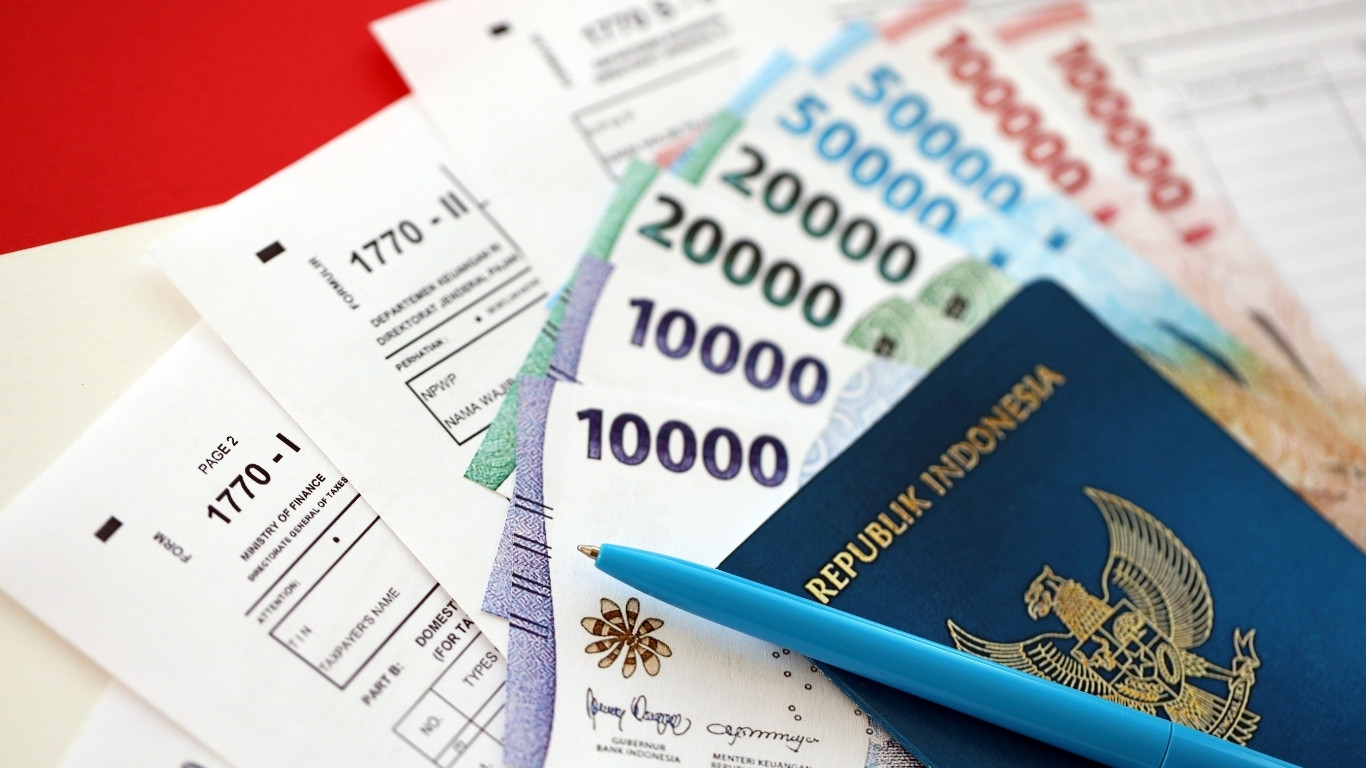
Monthly taxes must be paid by the 15th of the following month and reported by the 20th.
Annual tax returns must be filed by March 31 through the DJP Online system. To file electronically, taxpayers must first obtain an EFIN (Electronic Filing Identification Number).

Required Tax Forms
Form 1721-A1 – Annual summary from employer
Form 1770 / 1770S / 1770SS – Individual tax return
Form 1770-IV – Declaration of assets and liabilities
Asset reporting is required and increasingly monitored.
Income Subject to Tax
Taxable income includes:
- Salary and bonuses (onshore and offshore)
- Dividends and interest
- Rental income
- Capital gains
Benefits in kind such as housing, cars, and school fees may be taxable depending on how they are structured. These rules have evolved and should be reviewed carefully with a tax advisor.
2026 Personal Income Tax Rates
- Up to Rp 60 million: 5%
- Rp 60 – 250 million: 15%
- Rp 250 – 500 million: 25%
- Rp 500 million – 5 billion: 30%
- Above Rp 5 billion: 35%
Individuals without an NPWP may be subject to an additional 20% surcharge.
Deductions and Allowances
Non-taxable income (PTKP):
- Individual: Rp 54,000,000/year
- Spouse: Rp 4,500,000
- Per child (max 3): Rp 4,500,000
Position expense (Biaya Jabatan):
- 5% of income
- Maximum Rp 6,000,000/year
Double Taxation Agreements
Indonesia has agreements with many countries to avoid double taxation. These agreements may reduce tax liabilities or provide credits for taxes paid overseas.
Tax authorities may exchange information with other countries under these agreements.
Practical Compliance Risks for Expats
Expats should be aware of several common risks:
- Assuming offshore income is not taxable
- Relying on employers without verifying payments
- Undeclared foreign income
- Incorrect reporting of assets
Tax enforcement has increased significantly in recent years.
Additional Tax Responsibilities
In certain situations, individuals may be required to withhold tax when:
- Renting property directly from an owner
- Hiring services outside corporate structures
These obligations depend on the structure of the transaction.
NPWP and Daily Life
While previously required for many transactions, NPWP is now less commonly requested for everyday activities. However, it remains essential for tax compliance and certain financial transactions.
Leaving Indonesia – Important
Before leaving Indonesia:
- File your final tax return
- Request NPWP deactivation (non-efektif status) or closure
Failure to do so may result in ongoing tax obligations and penalties.
U.S. and Other Nationalities
U.S. citizens must continue to file U.S. tax returns regardless of residence.
Foreign Earned Income Exclusion (FEIE) and foreign tax credits may reduce or eliminate U.S. tax liability, but filing is still required.
How to Find a Tax Consultant
You may consider:
- International accounting firms
- Local licensed tax consultants
- Recommendations from chambers of commerce